Please ensure Javascript is enabled for purposes of website accessibility IRIS | Page 8: Professional Development
  • IRIS Center
  • Resources
    • IRIS Resource Locator
      Modules, case studies, activities, & more
    • Evidence-Based Practice Summaries
      Research annotations
    • High-Leverage Practices
      IRIS resources on HLPs
    • Films
      Portrayals of people with disabilities
    • Children's Books
      Portrayals of people with disabilities
    • For Faculty
      Top tips, coursework planning, & more
    • For PD Providers
      Sample PD activities, planning forms, & more
    • Website Navigation Videos
      Getting around our Website & modules
    • New & Coming Soon
      Latest modules & resources
    • Glossary
      Disability related terms
    • IRIS Archived Resources
      Modules, alignment tools, & more
  • PD Options
    • PD Certificates for Educators
      Our certificate, your PD hours
    • Log in to Your IRIS PD
    • For PD Providers
      Sample PD activities, planning forms, & more
    • IRIS+ School & District Platform
      A powerful tool for school leaders
  • Articles & Reports
    • Articles
      Articles about IRIS use & efficacy
    • Internal IRIS Reports
      Reports on IRIS use & accomplishments
    • External Evaluation Reports
      Evaluations of the IRIS Center
    • IRIS Stories
      Our resources, your stories
    • News & Events
      What, when, & where it's happening
  • About
    • Who We Are
      Our team & IRIS Ambassadors
    • What We Do
      Our resources & process
    • Contact Us
      Get in touch with IRIS
    • Careers at IRIS
      Join our team
  • Help
    • Help & Support
      Get the full benefit from our resources
    • Website Navigation Videos
      Getting around our Website & modules
  • Guiding the School Counselor: An Overview of Roles and Responsibilities (Archived)
Challenge
Initial Thoughts
Perspectives & Resources

How can Mr. Hunter effectively manage his responsibilities?

  • 1: Overview of School Counselors’ Roles

What are the roles and responsibilities of school counselors when working with students with disabilities?

  • 2: Participate in the Multidisciplinary Team Process
  • 3: Assist with Behavior Modification
  • 4: Provide Individual or Group Counseling
  • 5: Assist with Transition Planning
  • 6: Make Referrals to Outside Agencies

How can school counselors keep up with all of their responsibilities and also remain current?

  • 7: Advocating for Your Role
  • 8: Professional Development

Resources

  • 9: References & Additional Resources
  • 10: Credits
Wrap Up
Assessment
Provide Feedback

How can school counselors keep up with all of their responsibilities and also remain current?

Page 8: Professional Development

Continuing education and membership in professional organizations are extremely beneficial for school counselors. Both provide opportunities for additional training and networking with peers through conferences and workshops.

Continuing Education
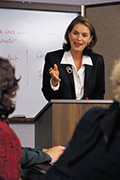
Speaker at the podiumMost states issue certification to school counselors for a defined period of time, usually five years. School counselors who wish to renew their certification must fulfill one or more requirements, which vary widely by state. These might include:

  • A number of years of practice in the field
  • Approved professional-development courses
  • Graduate coursework at an approved college or university

Such formal requirements are in place to ensure that school counselors continue to learn about new practices and to expand their knowledge of their profession. To view requirements for continuing education by state, visit the American School Counselor Association (ASCA) website.

In addition to these formal requirements, it is extremely important that school counselors continually learn about the latest research and counseling techniques in their profession, especially regarding information about students with disabilities. This continuing education can be achieved through the following resources:

Counselor at computer

  • Research journals
  • Internet sites
  • Community agencies and resources
  • Professional publications
  • Professional organization activities (e.g., conferences, workshops)

Keep in Mind

An important aspect of continuing education is staying current on ethical standards. Professional counselors, just like medical physicians, have an obligation to adhere to high ethical standards as part of their certification. ASCA lists 18 specific standards in Ethical Standards for School Counselors. These topics fall under broad categories such as:

  • Responsibilities to students
  • Responsibilities to parents and guardians
  • Responsibilities to school and community
  • Responsibilities to the profession and diversity

To view the specifics of these responsibilities, visit the ASCA website. Professional counselors’ continuing education should include most, if not all, of these topics. For more information and links to some of these resources, see the Additional Resources and Information page in this module.

Professional Counseling Organizations

Professional organizations provide opportunities for interacting with colleagues about issues related to the practice of school counseling. These organizations exist at the local, state, and national levels, and they focus on providing professional development to school counselors, enhancing school counseling programs, and researching effective school counseling practices. The Internet, local phone book, or agency resource book are good tools for learning about local and state organizations and opportunities.

Print Friendly, PDF & Email
Back Next
12345678910
Join Our E-Newsletter Sign Up
  • Home
  • About IRIS
  • Sitemap
  • Web Accessibility
  • Glossary
  • Terms of Use
  • Careers at IRIS
  • Contact Us
Join Our E-Newsletter Sign Up

The IRIS Center Peabody College Vanderbilt University Nashville, TN 37203 [email protected]. The IRIS Center is funded through a cooperative agreement with the U.S. Department of Education, Office of Special Education Programs (OSEP) Grant #H325E220001. The contents of this website do not necessarily represent the policy of the U.S. Department of Education, and you should not assume endorsement by the Federal Government. Project Officer, Sarah Allen.

Copyright 2025 Vanderbilt University. All rights reserved.

* For refund and privacy policy information visit our Help & Support page.

Creative Commons License This work is licensed under a Creative Commons Attribution-NonCommercial-NoDerivatives 4.0 International License.

  • Vanderbilt Peabody College
We use cookies to ensure that we give you the best experience on our website. If you continue to use this site we will assume that you are happy with it.Ok