International Student Support
First year graduate students will be choosing their Ph.D. advisors and programs in the spring for an official start date of June 1. By way of reminder, NIH training grant-ineligible international IGP and QCB students in good academic standing who choose advisors that have primary appointments in the Vanderbilt School of Medicine (either VU- or VUMC-employed) will be supported by the Office of the Dean of Basic Sciences from July 1, a month after joining their Ph.D. laboratory, to the following June 30 (12 months total). This commitment includes tuition coverage for 12 hours of course/research credits for the summer, fall, and spring semesters (36 hours total), and also payment of the student’s stipend, activity fees, and health insurance at the same level as provided by training grants, which is capped by NIH. The advisor and/or department is responsible for covering the shortfall between this cap and the actual (higher) student stipend. As usual, the advisor and/or department is responsible for student support during the month of June, immediately after the student joins a lab.
Exciting Accomplishments!
 Chancellor’s Faculty Fellows Chancellor’s Faculty Fellows
Our heartfelt congratulations to Bingshan Li (Molecular Physiology & Biophysics) and Dave Weaver (Pharmacology) ) and to School of Medicine colleagues Anna Hemnes (Medicine) and Digna Velez Edwards (Obstetrics and Gynecology) for having been named Chancellor’s Faculty Fellows!
 Vanderbilt Lundbeck Partnership Vanderbilt Lundbeck Partnership
New licensing and research collaboration agreements with global pharmaceutical company Lundbeck will support the development of drugs for schizophrenia led by by Jeff Conn, Craig Lindsley and their colleagues at the VCNDD.
 Lilly Innovation Fellowship Lilly Innovation Fellowship
Kudos to Molecular Physiology and Biophysics postdoctoral fellow Jessica Overstreet of the Ray Harris lab (Nephrology/Medicine) for winning a Lilly Innovation Fellowship Award! The Lilly Fellowships provide four years of support for research that addresses topics viewed by the company as “grand challenges”. Jessica’s project focuses on diabetic kidney disease, and she will be mentored by Dr. Harris and Shannon Harlon (Senior Scientist, Lilly).
 New VUMC Directorship New VUMC Directorship
Congratulations to Jennifer Pietenpol, who has been named Brock Family Director of Career Development in the VUMC.
 In the Pink In the Pink
Ian Macara (Cell & Developmental Biology) has been named a Pink Tie Guy by the Susan G. Komen Central Tennessee Organization for his commitment to the local fight against breast cancer. Congratulations!
 Structural Biology’s Karpay Award Structural Biology’s Karpay Award
Congratulations to Meredith Frazier of the Lauren Parker Jackson lab (Biological Sciences) for winning the Center for Structural Biology’s Karpay Award!
 VCNDD In – Pfizer Out VCNDD In – Pfizer Out
A recent article in Chemical and Engineering News highlights the VCNDD’s work in neuroscience drug discovery as pharmaceutical giant Pfizer leaves the field.
Career Stories
 Vanderbilt is one of only ten institutions nationwide to have received a Broadening Experiences in Scientific Training (BEST) award from the NIH. Through this funding, the Biomedical Research Education and Training (BRET) Office created its ASPIRE (Augmenting Scholar Preparation and Integration with Research-Related Endeavors) career development program. Since its inception in 2013, ASPIRE has touched the lives of numerous graduate students and postdocs as they pursued a wide range of career goals. To highlight the successes of these students and postdocs, Basically Speaking is sharing their stories. Here we feature Henry Ong, who blends his talent for science communication with a desire to stay engaged with the research community through his current position with the Vanderbilt Institute for Clinical and Translational Research. Vanderbilt is one of only ten institutions nationwide to have received a Broadening Experiences in Scientific Training (BEST) award from the NIH. Through this funding, the Biomedical Research Education and Training (BRET) Office created its ASPIRE (Augmenting Scholar Preparation and Integration with Research-Related Endeavors) career development program. Since its inception in 2013, ASPIRE has touched the lives of numerous graduate students and postdocs as they pursued a wide range of career goals. To highlight the successes of these students and postdocs, Basically Speaking is sharing their stories. Here we feature Henry Ong, who blends his talent for science communication with a desire to stay engaged with the research community through his current position with the Vanderbilt Institute for Clinical and Translational Research.
New Discoveries
Targeting Glutamine Transport in Cancer
 Recent findings from Charles Manning and his lab show the efficacy of V-9302, an antagonist of glutamine transporter ACST2, against cancers that are dependent on high concentrations of glutamine. Recent findings from Charles Manning and his lab show the efficacy of V-9302, an antagonist of glutamine transporter ACST2, against cancers that are dependent on high concentrations of glutamine.
The Neuronal Response to Stress
 Jeff Conn, Craig Lindsley, and their laboratories demonstrate how the stress-related failure of mGlu3-mediated neuroplasticity leads to a reduced ability to execute motivation-dependent tasks. Jeff Conn, Craig Lindsley, and their laboratories demonstrate how the stress-related failure of mGlu3-mediated neuroplasticity leads to a reduced ability to execute motivation-dependent tasks.
Multiplexing Natural Products Discovery
 A collaboration between Jonathan Irish, Brian Bachmann, and their labs has led to the development of Multiplexed Activity Metabolomics, a new, highly efficient approach to natural products discovery. A collaboration between Jonathan Irish, Brian Bachmann, and their labs has led to the development of Multiplexed Activity Metabolomics, a new, highly efficient approach to natural products discovery.
Path to Flavinylation
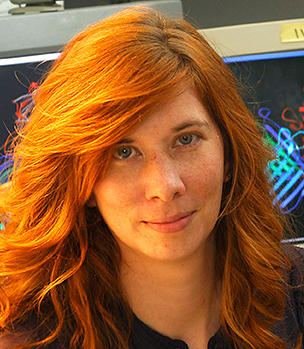 A new report from Tina Iverson and her lab on the structure of a respiratory complex II subunit provides key insights into how this protein is flavinylated by its FAD cofactor. A new report from Tina Iverson and her lab on the structure of a respiratory complex II subunit provides key insights into how this protein is flavinylated by its FAD cofactor.
Autism’s Link to Cannabinoids
 Brian Shonesy, in collaboration with Roger Colbran, Danny Winder, and Sachin Patel, reports that loss of endocannabinoid-mediated modulation of excitatory neurotransmission in the striatum leads to behaviors consistent with autism spectrum disorder. Brian Shonesy, in collaboration with Roger Colbran, Danny Winder, and Sachin Patel, reports that loss of endocannabinoid-mediated modulation of excitatory neurotransmission in the striatum leads to behaviors consistent with autism spectrum disorder.
Insulin Makes its Escape
 New work from David Wasserman and his laboratory shows how insulin crosses the capillary endothelium to exert its effects on muscle cells. New work from David Wasserman and his laboratory shows how insulin crosses the capillary endothelium to exert its effects on muscle cells.
Case Against Eosinophils in Obesity
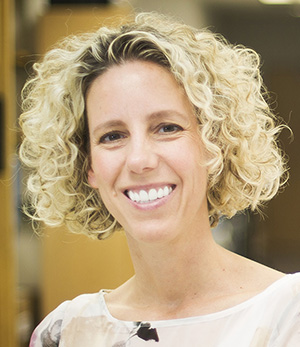 Alyssa Hasty and her laboratory provide data that dispute a current hypothesis that adipose tissue eosinophils play a critical role in metabolic homeostasis and reduce obesity. Alyssa Hasty and her laboratory provide data that dispute a current hypothesis that adipose tissue eosinophils play a critical role in metabolic homeostasis and reduce obesity.
Progress on Therapy for Movement Disorders
 Work from Jeff Conn, Craig Lindsley, Carrie Jones, Colleen Niswender and their colleagues reveals that the M4 muscarinic receptor may be a valuable target for the treatment of movement disorders. Work from Jeff Conn, Craig Lindsley, Carrie Jones, Colleen Niswender and their colleagues reveals that the M4 muscarinic receptor may be a valuable target for the treatment of movement disorders.
Eye-Heart Link
 A recent report from Hassane Mchaourab, Kevin Schey, and their laboratories demonstrates a role for alpha-B crystallin in both eye lens transparency and response to stress in the heart. A recent report from Hassane Mchaourab, Kevin Schey, and their laboratories demonstrates a role for alpha-B crystallin in both eye lens transparency and response to stress in the heart.
Blocking a Toxin
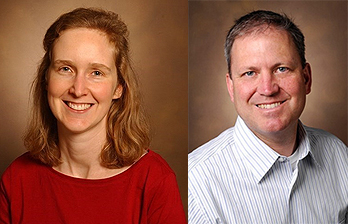 Studies from the laboratories of Borden Lacy and Ben Spiller reveal a unique mechanism by which a monoclonal antibody blocks the entry of C. difficile toxin TcdB into cells. Studies from the laboratories of Borden Lacy and Ben Spiller reveal a unique mechanism by which a monoclonal antibody blocks the entry of C. difficile toxin TcdB into cells.
Anti-inflammatory Activity of Curcumin
 Claus Schneider and his laboratory show that curcumin is oxidized to reactive metabolites that are likely responsible for many of its reported anti-inflammatory activities. Claus Schneider and his laboratory show that curcumin is oxidized to reactive metabolites that are likely responsible for many of its reported anti-inflammatory activities.
Key to Microtubule Assembly
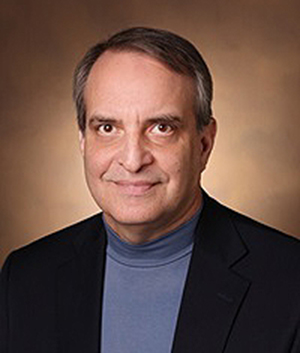 New insight into the role of AKAP350 in microtubule assembly comes from James Goldenring’s laboratory. New insight into the role of AKAP350 in microtubule assembly comes from James Goldenring’s laboratory.
Roadblocks to Faculty Diversity
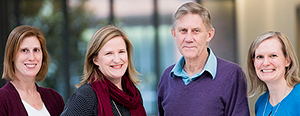 In an important recent publication, Roger Chalkley and his colleagues in the Office for Biomedical Research Education and Training (BRET) show where, along the pipeline for biomedical research faculty, we lose underrepresented minority candidates. In an important recent publication, Roger Chalkley and his colleagues in the Office for Biomedical Research Education and Training (BRET) show where, along the pipeline for biomedical research faculty, we lose underrepresented minority candidates.
External Funding Opportunities
2018 NIH S10 Shared and High-end Instrumentation Grants
The NIH will be posting information for the 2018 S10 Shared and High-end Instrumentation Grants in the next few weeks. These funding mechanisms are intended for instrument purchases in the range of $50k – $2M. In addition, NIH sometimes requests proposals for unique award programs in a specific area of interest (e.g., the Shared Instrumentation for Animal Research in 2017). Submission of an S10 proposal to the NIH requires institutional pre-approval. For Basic Science faculty, this is obtained by submitting a pre-proposal to the Office of the Dean of Basic Sciences via a REDCap survey. Required items to provide with your pre-proposal include a 5-year operational budget, a list of major users, an instrument quote, and a statement of support from a department or center. During the Dean’s review, matching funds are allocated that can be used to help offset the operational costs for the first 5 years of the instrument as long as the instrument is placed in and maintained by a Vanderbilt core. Once the programs are announced, you will be provided with additional instructions. If approved to move forward in the process, final submissions to the NIH are typically due in late May. Throughout the application process, please direct all questions related to the S10 program to Anthony Tharp. This announcement is provided to encourage planning for submission of a pre-proposal once NIH issues the formal program announcement in early 2018.
L’Oréal USA for Women in Science
L’Oréal USA partners with AAAS to provide funding to support the research of five female postdoctoral scientists per year. Research in the biomedical and natural sciences is supported. The application deadline is Feb. 2nd.
Michelson Prizes for Human Immunology and Vaccine Research
The Michelson Medical Research Foundation offers two $150,000 prizes to young researchers who are applying innovative concepts and technologies to advance development of vaccines and immunotherapies for major global diseases. Applicants must be under the age of 35. A pre-application is due Feb. 12th.
LUNGevity Career Development Award
LUNGevity offers awards of up to $100,000/year for three years to support research focusing on the early detection or personalized treatment of lung cancer. Applicants must be within the first five years of their faculty appointment, and a mentoring plan is required. Letters of intent are due Feb. 20th.
Agilent Early Career Professor Award
Agilent Technologies provides an award of $100,000 to support the research of an early career investigator who is working to develop and advance techniques and approaches for the study of the human microbiome and host/microbiome interactions. The application deadline is Feb. 28th.
Ono Pharma Foundation Oligonucleotide Medicine Research Award
The Ono Pharma Foundation offers grants of up to $300,000 per year for three years to support novel research in the field of oligonucleotide medicine. Letters of Intent (Pre-proposals) are due Feb. 28th.
Brain Research Foundation Opioid Relapse Reduction Therapeutics Grant
The Brain Research Foundation offers funding of up to $50,000 for one year to support research into mechanisms of or new therapies for opioid addiction relapse. Letters of intent are due Feb. 28th.
The Science-PINS Prize for Neuromodulation
The Science-PINS Prize is a $25,000 award that honors the work of a young scientist for outstanding contributions to research in neuromodulation. Deadline for nomination submissions is Mar. 15th.
Prostate Cancer Foundation Young Investigator Awards
The Prostate Cancer Foundation offers grants of up to $75,000 per year for three years to support research in prostate cancer by young investigators within 6 years of obtaining their degree. The award requires a mentoring plan and favors those with an appointment at a VA hospital. Deadline for applications is Mar. 19th.
| ![CAS - Basic Sciences - Internal E-Newsletter [Vanderbilt University]](https://van.preservation.mirrorweb.com/public/20250322100156im_/https://cdn.vanderbilt.edu/vu-URL/wp-content/uploads/sites/119/2021/04/19142723/basically-speaking-banner-04-2021.jpg)


