Honoring Richard Armstrong
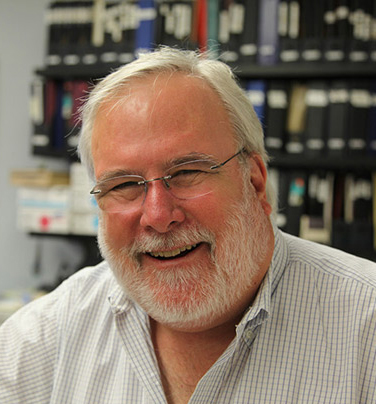 We are pleased to announce the establishment of the Richard N. Armstrong, Ph.D. Chair for Innovation in Biochemistry, which will support the research of a faculty member in the Biochemistry Department. The new Chair is endowed by a generous gift from the family of the late Professor Armstrong and matching funds from the Chancellor’s Chair Challenge. We are pleased to announce the establishment of the Richard N. Armstrong, Ph.D. Chair for Innovation in Biochemistry, which will support the research of a faculty member in the Biochemistry Department. The new Chair is endowed by a generous gift from the family of the late Professor Armstrong and matching funds from the Chancellor’s Chair Challenge.
Celebrating Our Gilliam Fellows
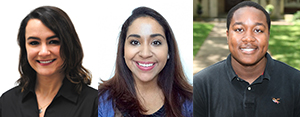 Please join us in congratulating Jordan Brown and her mentor Danny Winder, Francis Cambronero and her mentor Angela Jefferson, and Tolu Omokehinde and his mentor Rachelle Johnson, on their receipt of Gilliam Fellowships from the Howard Hughes Medical Institute. Awarded to only 45 trainees nationwide, the Gilliam Fellowships provide $50,000 per year for 3 years in support of highly promising doctoral students from underrepresented groups who aspire to careers in academic science. Please join us in congratulating Jordan Brown and her mentor Danny Winder, Francis Cambronero and her mentor Angela Jefferson, and Tolu Omokehinde and his mentor Rachelle Johnson, on their receipt of Gilliam Fellowships from the Howard Hughes Medical Institute. Awarded to only 45 trainees nationwide, the Gilliam Fellowships provide $50,000 per year for 3 years in support of highly promising doctoral students from underrepresented groups who aspire to careers in academic science.
One of the Talented 12
 We are exceedingly proud of Pedro García Barrantes, a Craig Lindsley Lab alum, who was named by Chemical & Engineering News as one of its Talented Twelve of 2018. We are exceedingly proud of Pedro García Barrantes, a Craig Lindsley Lab alum, who was named by Chemical & Engineering News as one of its Talented Twelve of 2018.
Deans Award for Exceptional Achievement in Graduate Studies
Hearty congratulations to our second group of inaugural recipients of the new Dean’s Award for Exceptional Achievement in Graduate Studies. These students, who are being honored for outstanding work as they enter their 5th year of study will receive a $5,000 stipend for one year. The awardees are:
 Jenny Aguilar (Aurelio Galli lab): Jenny integrates microscopy, genetics and computation with the lab’s expertise in electrophysiology and biochemistry to explore dopamine transporter function. Jenny Aguilar (Aurelio Galli lab): Jenny integrates microscopy, genetics and computation with the lab’s expertise in electrophysiology and biochemistry to explore dopamine transporter function.
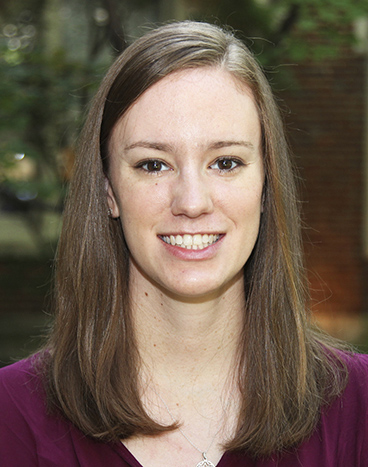 Nicole Fisher (Colleen Niswender lab): Nicole is exploring the role of the mGlu7 receptor as a regulator of Rett syndrome phenotypes and the therapeutic potential of modulators of this receptor. Nicole Fisher (Colleen Niswender lab): Nicole is exploring the role of the mGlu7 receptor as a regulator of Rett syndrome phenotypes and the therapeutic potential of modulators of this receptor.
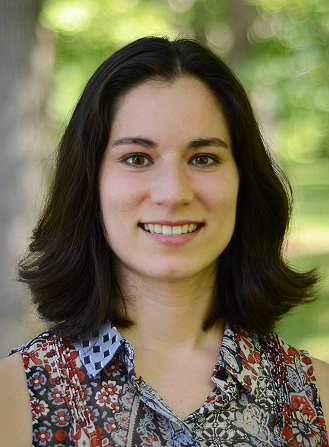 Katherine Konvinse (Elizabeth Phillips lab): Katherine’s research has revealed genetic and cellular risk factors leading to the immunopathogenesis of hypersensitivity to the HIV drug nevirapine. Katherine Konvinse (Elizabeth Phillips lab): Katherine’s research has revealed genetic and cellular risk factors leading to the immunopathogenesis of hypersensitivity to the HIV drug nevirapine.
 Nicole Perry (Tina Iverson lab): Nicole integrates receptor pharmacology, structural biology, and chemical biology to explore mechanisms of signaling bias in mitogen activated protein kinases. Nicole Perry (Tina Iverson lab): Nicole integrates receptor pharmacology, structural biology, and chemical biology to explore mechanisms of signaling bias in mitogen activated protein kinases.
 Chloe Snider (Kathy Gould lab): Chloe is investigating how the actomyosin contractile ring is anchored to the plasma membrane to regulate cell division. Chloe Snider (Kathy Gould lab): Chloe is investigating how the actomyosin contractile ring is anchored to the plasma membrane to regulate cell division.
 Aimee Wilde (Jim Cassat lab): Aimee studies mechanisms by which bacterial pathogens invade, survive within, and trigger alterations in the homeostasis of bone. Aimee Wilde (Jim Cassat lab): Aimee studies mechanisms by which bacterial pathogens invade, survive within, and trigger alterations in the homeostasis of bone.
Sutherland Prize to Gould
 Kathy Gould has been awarded the Earl Sutherland Prize for Achievement in Research, a well-deserved recognition! Kathy Gould has been awarded the Earl Sutherland Prize for Achievement in Research, a well-deserved recognition!
Kudos to Townsend
 Steve Townsend (VICB) has received a Chancellor’s Award for Research! Steve Townsend (VICB) has received a Chancellor’s Award for Research!
A Highly Honorable Mention
 The U.S. Patent Office has awarded the James Crowe lab a Patents for Humanity Honorable Mention! The U.S. Patent Office has awarded the James Crowe lab a Patents for Humanity Honorable Mention!
Support for Our Neuroscientists
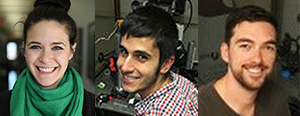 We are pleased to announce that Erin Calipari (Pharmacology) has received grants from both the Whitehall Foundation and NARSAD (the National Alliance for Research in Schizophrenia and Affective Disorders). Also receiving NARSAD Awards are Oliver Vranjkovic and Sam Centanni, both in Danny Winder’s lab. Congrats to all! We are pleased to announce that Erin Calipari (Pharmacology) has received grants from both the Whitehall Foundation and NARSAD (the National Alliance for Research in Schizophrenia and Affective Disorders). Also receiving NARSAD Awards are Oliver Vranjkovic and Sam Centanni, both in Danny Winder’s lab. Congrats to all!
New AHA Fellowships
 Congratulations to Tyler Perfitt (Colbran lab) and Alexander Thiemicke (Neuert lab) for receiving American Heart Association Fellowships! Congratulations to Tyler Perfitt (Colbran lab) and Alexander Thiemicke (Neuert lab) for receiving American Heart Association Fellowships!
Carrasco to Lead MPB
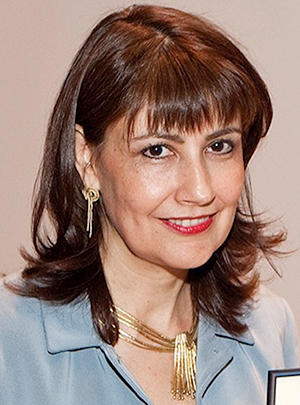 Heartiest welcome to Nancy Carrasco, who has been named Chair of the Dept. of Molecular Physiology & Biophysics! Heartiest welcome to Nancy Carrasco, who has been named Chair of the Dept. of Molecular Physiology & Biophysics!
Welcome Our New Students
 We extend the spirit of the annual Simple Beginnings ceremony held Aug. 31 and welcome all of our new graduate students! We extend the spirit of the annual Simple Beginnings ceremony held Aug. 31 and welcome all of our new graduate students!
New Discoveries
Targeting Melanoma by CXCR4
 Ann Richmond and her lab report that NK cell activation plays a role in the anti-cancer effects of CXCR4 blockade. Ann Richmond and her lab report that NK cell activation plays a role in the anti-cancer effects of CXCR4 blockade.
Axon-Mediated Neuronal Degeneration
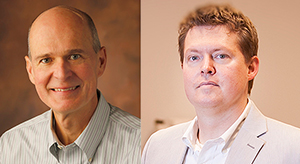 A recent report from Bruce Carter, Dylan Burnette, & collaborators demonstrates the role of axonal p75NTR-dependent signaling in neuronal degeneration. A recent report from Bruce Carter, Dylan Burnette, & collaborators demonstrates the role of axonal p75NTR-dependent signaling in neuronal degeneration.
New Player in DNA Repair
 Ian Macara and his lab have discovered SAN1, a 5′-exonuclease that plays a role in DNA interstrand cross-link repair. Ian Macara and his lab have discovered SAN1, a 5′-exonuclease that plays a role in DNA interstrand cross-link repair.
New Target for Flu Vaccine Development
 James Crowe and his lab have identified a human monoclonal antibody that binds to a novel epitope on potentially dangerous H3N2 variant influenza viral strains. James Crowe and his lab have identified a human monoclonal antibody that binds to a novel epitope on potentially dangerous H3N2 variant influenza viral strains.
New Tools to Fight Ebola
Also from the James Crowe lab is a report on potent human monoclonal antibodies that neutralize all three major Ebola virus strains.
Nanoplexes Against Cancer
 Recent research from John Wilson, Sebastian Joyce, and their labs demonstrates the potential of nanoplex packaging of neoantigens for the generation of antitumor vaccines. Recent research from John Wilson, Sebastian Joyce, and their labs demonstrates the potential of nanoplex packaging of neoantigens for the generation of antitumor vaccines.
Visualizing the Circadian Clock
 Carl Johnson and his lab have used atomic force microscopy to reveal how the S. elongatus circadian clock maintains its rhythm under changing conditions. Carl Johnson and his lab have used atomic force microscopy to reveal how the S. elongatus circadian clock maintains its rhythm under changing conditions.
Stabilizing Replication
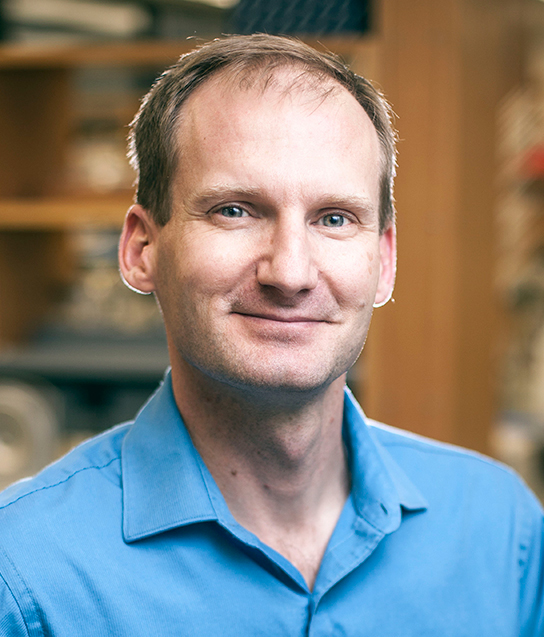 In a recent report, David Cortez and his lab explore the opposing actions of RADX and RAD51 in stabilizing stalled DNA replication forks. In a recent report, David Cortez and his lab explore the opposing actions of RADX and RAD51 in stabilizing stalled DNA replication forks.
Organizing Microtubules
 New work from Marija Zanic and her lab reveals how kinesin-14 family proteins promote microtubule aster formation. New work from Marija Zanic and her lab reveals how kinesin-14 family proteins promote microtubule aster formation.
Basement Membrane Repair
 Research from Andrea Page-McCaw and her lab explores the dynamics of basement membrane protein deposition during wound repair. Research from Andrea Page-McCaw and her lab explores the dynamics of basement membrane protein deposition during wound repair.
Control of Body Weight
 A recent report from Masoud Ghamari-Langroudi reveals the role of MC3R in energy homeostasis. A recent report from Masoud Ghamari-Langroudi reveals the role of MC3R in energy homeostasis.
Recovery from Kidney Injury
 Raymond Harris and colleagues demonstrate the role of the Hippo signaling pathway in recovery after acute kidney injury. Raymond Harris and colleagues demonstrate the role of the Hippo signaling pathway in recovery after acute kidney injury.
External Funding Opportunities
Department of Defense Epilepsy Research Program
One of two award mechanisms remains available through the Dept. of Defense’s Epilepsy Research Program. The pre-application deadline is Sept. 20.
Fondation Leducq Transatlantic Networks
The Fondation Leducq plans to fund 5 transatlantic networks of excellence in cardiovascular and neurovascular disease at levels of $6,000,000 over 5 years per network. Letters of intent are due Sept. 5. Anyone interested in applying should contact Aaron Conley.
Alzheimer’s Drug Discovery Foundation Diagnostics Accelerator
The ADDF announces its new Diagnostics Accelerator to fund proof-of-principle and validation studies for biomarkers and new diagnostic technologies. Letters of intent are due Sept. 14.
Israel Binational Foundation (BSF)
The BSF partners with the NSF to offer a variety of funding and travel opportunities. For more information and deadlines, click here.
Limited Submission Opportunities
NSF Research Traineeship Program
Vanderbilt may submit up to two letters of intent to the NSF Research Traineeship Program, which provides $3 million over 5 years to support development of transformative models for STEM graduate education training. The deadline to apply to be the nominee is Sept. 17.
Simons Foundation Program
Vanderbilt may nominate one faculty member each for three award categories – chemistry, physical science & engineering, and life sciences – for the Blavatnik National Awards for Young Scientists, which provide $250,000 to support investigators born after 1977. The deadline to apply to be the nominee is Sept. 19.
Internal Funding Opportunities
Vanderbilt Bridge Funding
Applications for the next round of Bridge Funding should be submitted no later than Sept. 15. Primary Basic Sciences faculty are encouraged to take advantage of this excellent mechanism to help them maintain momentum on a project during temporary funding lapses or to reorient projects in need of a new alignment.
| ![CAS - Basic Sciences - Internal E-Newsletter [Vanderbilt University]](https://van.preservation.mirrorweb.com/public/20250322101214im_/https://cdn.vanderbilt.edu/vu-URL/wp-content/uploads/sites/119/2021/04/19142723/basically-speaking-banner-04-2021.jpg)


