From The Dean
“What we have here is a failure to communicate.”
This classic line from Cool Hand Luke is too broadly applicable in today’s society – especially at the level of our national leaders. But it also applies to scientists trying to tell stories about their research to friends, family, and funders. We need to do a much better job of communicating with each other and with society at large.
 Vanderbilt has a remarkable community of basic scientists who are working hard to expand our knowledge and improve human health, and people need to know what we are doing. To help us reach this goal, the School of Medicine Basic Sciences has hired Lorena Infante Lara to expand and enhance our communications program. Lorena recently received her Ph.D. under the direction of Neil Osheroff of the Department of Biochemistry, and she identified science writing as her passion early in her career. She has written for many different science publications, was a member of the Editors’ Club, and for the past six issues, she either wrote for or edited the BRET Results and Discussion Newsletter. Fluent in both English and Spanish, she was chosen to be a AAAS Media Science and Engineering Spanish Language Fellow and spent the summer of 2017 working at Univisión Noticias, an online news and TV network. Vanderbilt has a remarkable community of basic scientists who are working hard to expand our knowledge and improve human health, and people need to know what we are doing. To help us reach this goal, the School of Medicine Basic Sciences has hired Lorena Infante Lara to expand and enhance our communications program. Lorena recently received her Ph.D. under the direction of Neil Osheroff of the Department of Biochemistry, and she identified science writing as her passion early in her career. She has written for many different science publications, was a member of the Editors’ Club, and for the past six issues, she either wrote for or edited the BRET Results and Discussion Newsletter. Fluent in both English and Spanish, she was chosen to be a AAAS Media Science and Engineering Spanish Language Fellow and spent the summer of 2017 working at Univisión Noticias, an online news and TV network.
With this issue, Lorena has taken over as Editor of Basically Speaking. She will generate content about the amazing members of our community, and she will build our social media presence to provide a more immediate outlet for our discoveries. We are thrilled Lorena is staying at Vanderbilt, and we look forward to working with her on a range of projects. Please join me in warmly welcoming her to this important new role, and feel free to contact her with your news and suggestions.

Larry Marnett
Dean of Basic Sciences
Welcome to the newest VBS members!
 This month we welcome five new members to our Basic Sciences family. Melissa Chambers has just become the new Co-Director of Operations for the Vanderbilt Cryo-EM Microscopy Facility. Kris Burkewitz has accepted a position in the Department of Cell & Developmental Biology. The Department of Biochemistry has seen big growth with three recent arrivals: Breann Brown is now setting up her lab, and Chris Merrikh and Lucia Rameh Plant have joined as research faculty. This month we welcome five new members to our Basic Sciences family. Melissa Chambers has just become the new Co-Director of Operations for the Vanderbilt Cryo-EM Microscopy Facility. Kris Burkewitz has accepted a position in the Department of Cell & Developmental Biology. The Department of Biochemistry has seen big growth with three recent arrivals: Breann Brown is now setting up her lab, and Chris Merrikh and Lucia Rameh Plant have joined as research faculty.
Mchaourab awarded IES Silver Medal
 The International EPR (ESR) Society (IES) has announced that Hassane Mchaourab (Molecular Physiology & Biophysics) will receive the 2019 Silver Medal in Biology/Medicine! The Silver Medal is awarded for significant contributions in the applications, developments, and/or improvements to EPR/ESR spectroscopy. Mchaourab will be presented with the award at the 2019 EUROMAR/ISMAR joint conference in Berlin in August, where he will be a plenary speaker. The International EPR (ESR) Society (IES) has announced that Hassane Mchaourab (Molecular Physiology & Biophysics) will receive the 2019 Silver Medal in Biology/Medicine! The Silver Medal is awarded for significant contributions in the applications, developments, and/or improvements to EPR/ESR spectroscopy. Mchaourab will be presented with the award at the 2019 EUROMAR/ISMAR joint conference in Berlin in August, where he will be a plenary speaker.
Caprioli receives ABRF research award
 The Association of Biomolecular Resource Facilities has announced that Richard Caprioli (Biochemistry) will be the recipient of the 2019 ABRF Award for Outstanding Contributions to Biomolecular Technologies. This is the organization’s most prestigious award, and is given to scientific pioneers responsible for developing powerful and pivotal tools that serve as a foundation for the modern biological research enterprise. Caprioli will be presented with the award at the annual meeting in March in San Antonio, TX. The Association of Biomolecular Resource Facilities has announced that Richard Caprioli (Biochemistry) will be the recipient of the 2019 ABRF Award for Outstanding Contributions to Biomolecular Technologies. This is the organization’s most prestigious award, and is given to scientific pioneers responsible for developing powerful and pivotal tools that serve as a foundation for the modern biological research enterprise. Caprioli will be presented with the award at the annual meeting in March in San Antonio, TX.
And the 2019 Award for Excellence in Medicinal Chemistry goes to… Lindsley!
 Craig Lindsley’s (Pharmacology) stellar research has been recognized yet again, this time by the American Chemical Society (ACS). The Robert M. Scarborough Award, given to researchers under the age of 50, recognizes Lindsley’s research on allosteric modulators. He will be presented with the award in August 2019 during the ACS national meeting in San Diego, CA. Craig Lindsley’s (Pharmacology) stellar research has been recognized yet again, this time by the American Chemical Society (ACS). The Robert M. Scarborough Award, given to researchers under the age of 50, recognizes Lindsley’s research on allosteric modulators. He will be presented with the award in August 2019 during the ACS national meeting in San Diego, CA.
Guarnaccia recognized as a “truly outstanding student”
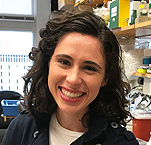 Alissa Guarnaccia of the Tansey lab in Cell & Developmental Biology has been named the 2018 Vanderbilt Prize Student Scholar. She will be mentored by Angelika Amon from the Massachusetts Institute of Technology, the winner of the 2018 Vanderbilt Prize. Alissa Guarnaccia of the Tansey lab in Cell & Developmental Biology has been named the 2018 Vanderbilt Prize Student Scholar. She will be mentored by Angelika Amon from the Massachusetts Institute of Technology, the winner of the 2018 Vanderbilt Prize.
Clock ticking on the #VUMCDarpaSprint
 There are fewer than 70 days to go on the DARPA-funded sprint to develop a protective antibody-based treatment against Zika. James Crowe (Pediatrics) heads the Vanderbilt effort, which is occurring in conjunction with researchers in Boston, Seattle, and St. Louis. The “sprint” gives scientists 90 days to deploy therapeutic antibodies, a process that normally takes months to years. Follow their updates on Twitter. There are fewer than 70 days to go on the DARPA-funded sprint to develop a protective antibody-based treatment against Zika. James Crowe (Pediatrics) heads the Vanderbilt effort, which is occurring in conjunction with researchers in Boston, Seattle, and St. Louis. The “sprint” gives scientists 90 days to deploy therapeutic antibodies, a process that normally takes months to years. Follow their updates on Twitter.
Goldenring lands major Cancer Research UK grant
 The 20-million-pound grant was awarded to a collaborative team of international researchers that include Cell & Developmental Biology faculty member Jim Goldenring (Surgery). The grant is destined for work on developing treatments for cancers in people with chronic inflammation. The 20-million-pound grant was awarded to a collaborative team of international researchers that include Cell & Developmental Biology faculty member Jim Goldenring (Surgery). The grant is destined for work on developing treatments for cancers in people with chronic inflammation.
Blind named to editorial position
 Congratulations to Ray Blind (Medicine), who has just been named Jr. Associate Editor for the Journal of Lipid Research for 2019-2021! Congratulations to Ray Blind (Medicine), who has just been named Jr. Associate Editor for the Journal of Lipid Research for 2019-2021!
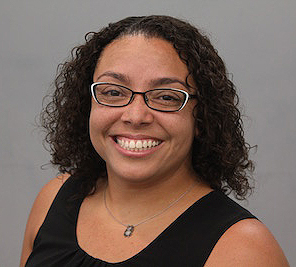 Lawrence Givens selected for Staff Steering Committee for Women’s Initiatives Lawrence Givens selected for Staff Steering Committee for Women’s Initiatives
Tiffany Lawrence Givens (Basic Sciences Administration) has been chosen from a highly competitive pool of women to sit on this committee. The group is made up of 21 members and has been tasked with analyzing and evaluating the university’s practices, culture, and support structures for women staff at Vanderbilt.
Latest round of trainee fellowships
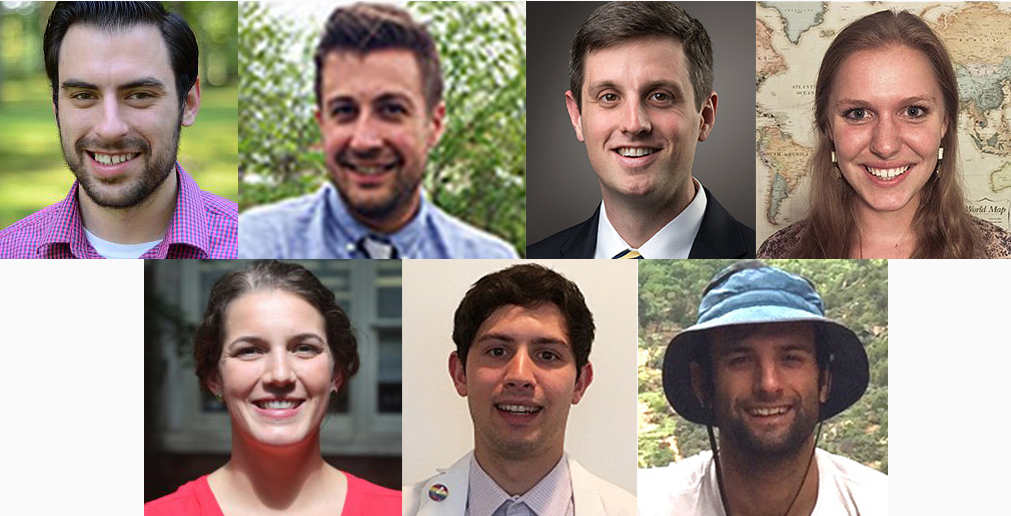 Congratulations to the following trainees who have been recently awarded fellowships: Matthew Wleklinski (Knollmann lab, Medicine) for his NHLBI fellowship, Kevin Lang (Merrikh lab, Biochemistry) and Kevin Graepel (Denison lab, Pathology, Microbiology & Immunology) for their NIAID fellowships, Shannon Smith (Meiler/Manning labs, Pharmacology/Radiology & Radiological Sciences) and Brittany Spitznagel (Weaver lab, Pharmacology) for their PhRMA Foundation fellowships, and Chris Peek (Cassat lab, Pediatrics) and Michael Joshua Litt (Cone lab, Molecular Physiology & Biophysics) for their NIDDK fellowships. Congratulations to the following trainees who have been recently awarded fellowships: Matthew Wleklinski (Knollmann lab, Medicine) for his NHLBI fellowship, Kevin Lang (Merrikh lab, Biochemistry) and Kevin Graepel (Denison lab, Pathology, Microbiology & Immunology) for their NIAID fellowships, Shannon Smith (Meiler/Manning labs, Pharmacology/Radiology & Radiological Sciences) and Brittany Spitznagel (Weaver lab, Pharmacology) for their PhRMA Foundation fellowships, and Chris Peek (Cassat lab, Pediatrics) and Michael Joshua Litt (Cone lab, Molecular Physiology & Biophysics) for their NIDDK fellowships.
New Discoveries
Earliest detectable mark on pancreatic progenitor identified
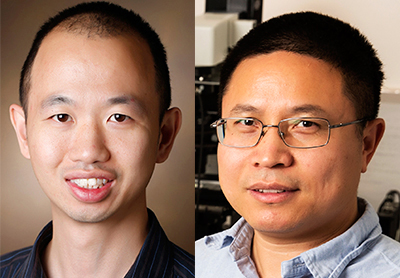 A collaboration of various Basic Sciences labs, spearheaded by Ken Lau and Guonqiang Gu (Cell & Developmental Biology), has recently identified the earliest detectable marker of pancreatic progenitors. A collaboration of various Basic Sciences labs, spearheaded by Ken Lau and Guonqiang Gu (Cell & Developmental Biology), has recently identified the earliest detectable marker of pancreatic progenitors.
Cargo selection during endocytosis
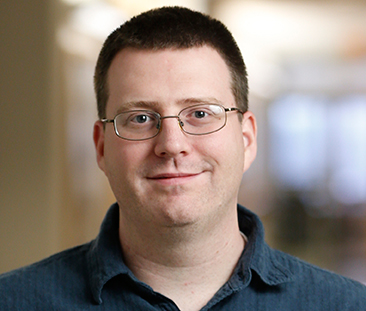 The lab of Jason MacGurn, of Cell & Developmental Biology, has recently reported on the first known Art1 phosphatases, Ppz phosphatases, which help mediate cargo selection by an E3 ligase. The lab of Jason MacGurn, of Cell & Developmental Biology, has recently reported on the first known Art1 phosphatases, Ppz phosphatases, which help mediate cargo selection by an E3 ligase.
“Conveyor belt” amplifies signaling by scaffold proteins
 VBS faculty Carlos Lopez (Biochemistry), Tina Iverson (Pharmacology), and Vsevolod Gurevich (Pharmacology) have proposed a new model to explain how scaffold proteins amplify signal cascades by exchanging active enzymes for inactive ones. VBS faculty Carlos Lopez (Biochemistry), Tina Iverson (Pharmacology), and Vsevolod Gurevich (Pharmacology) have proposed a new model to explain how scaffold proteins amplify signal cascades by exchanging active enzymes for inactive ones.
Protocadherin implicated in correct brush border morphology
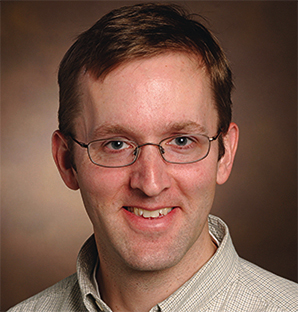 Joint research between the lab of Matt Tyska (Cell & Developmental Biology) and the Cell Imaging Shared Resource has determined that CDHR2 function helps to elongate and maximize the number of microvilli on the surface of enterocytes. Their work was featured on the cover of Molecular Biology of the Cell. Joint research between the lab of Matt Tyska (Cell & Developmental Biology) and the Cell Imaging Shared Resource has determined that CDHR2 function helps to elongate and maximize the number of microvilli on the surface of enterocytes. Their work was featured on the cover of Molecular Biology of the Cell.
Nanoparticles rearm immune system to fight cancer
 A collaboration between the lab of John Wilson (Chemical and Biomolecular Engineering) and other Vanderbilt faculty, including Manny Ascano (Biochemistry), has developed nanoparticles that can be used to deliver cGAMP to tumor cells and facilitate targeting by the immune system. A collaboration between the lab of John Wilson (Chemical and Biomolecular Engineering) and other Vanderbilt faculty, including Manny Ascano (Biochemistry), has developed nanoparticles that can be used to deliver cGAMP to tumor cells and facilitate targeting by the immune system.
Inflammatory programmed cell death might play role in myelodysplastic syndrome
 The lab of Sandra Zinkel (Medicine) has found that an increase in necroptosis is associated with bone marrow failure in mice. The work was featured on the cover of the journal and was accompanied by commentary by peers. The lab of Sandra Zinkel (Medicine) has found that an increase in necroptosis is associated with bone marrow failure in mice. The work was featured on the cover of the journal and was accompanied by commentary by peers.
An alternative to heart transplant
 Recent research from the lab of Hind Lal (Medicine) indicates that deleting glycogen synthase kinase GSK-3 in cardiomyocytes can induce their proliferation, providing hope for patients with heart failure. This research has been featured in the cover of the journal Cardiovascular Research and has been named an Editor’s Choice article. Recent research from the lab of Hind Lal (Medicine) indicates that deleting glycogen synthase kinase GSK-3 in cardiomyocytes can induce their proliferation, providing hope for patients with heart failure. This research has been featured in the cover of the journal Cardiovascular Research and has been named an Editor’s Choice article.
TASCC formation promotes kidney fibrosis
 A multi-institutional collaboration that includes the lab of Craig Brooks of Medicine has recently identified a potential therapeutic target to treat or prevent fibrosis in human chronic kidney disease. Their research was featured on the journal home page. A multi-institutional collaboration that includes the lab of Craig Brooks of Medicine has recently identified a potential therapeutic target to treat or prevent fibrosis in human chronic kidney disease. Their research was featured on the journal home page.
Foundation laid for improved obesity and diabetes treatments
 Recent work carried out in collaboration with the Mouse Metabolic Phenotyping Center points to the important effects of biliary acids in mediating the metabolic benefits of bariatric operations. Recent work carried out in collaboration with the Mouse Metabolic Phenotyping Center points to the important effects of biliary acids in mediating the metabolic benefits of bariatric operations.
Enantioselective synthesis of cyclic carbamates
 Jeffrey Johnston and Nathan Schley (Chemistry) have detailed a CO2 capture-based synthesis of cyclic carbamates, which are important for small-molecule therapeutics. Jeffrey Johnston and Nathan Schley (Chemistry) have detailed a CO2 capture-based synthesis of cyclic carbamates, which are important for small-molecule therapeutics.
Multistate computational approach to targeting flu virus
 James Crowe and Jens Meiler (Chemistry) have recently described their latest attempts to design broadly neutralizing antibodies against the influenza virus. James Crowe and Jens Meiler (Chemistry) have recently described their latest attempts to design broadly neutralizing antibodies against the influenza virus.
GWAS study IDs risk-associated loci
 A large-scale collaboration that included Molecular Physiology & Biophysics faculty member Bingshan Li has found novel genetic risk factors for colorectal cancer in East Asian populations. A large-scale collaboration that included Molecular Physiology & Biophysics faculty member Bingshan Li has found novel genetic risk factors for colorectal cancer in East Asian populations.
Rare type of diabetes – and possible therapies – identified
 Research by a group that included VBS faculty Ray Blind (Medicine), Roland Stein (Molecular Physiology & Biophysics), and Al Powers (Medicine) has identified a subset of patients with type 1 diabetes that retain the ability to generate insulin. Research by a group that included VBS faculty Ray Blind (Medicine), Roland Stein (Molecular Physiology & Biophysics), and Al Powers (Medicine) has identified a subset of patients with type 1 diabetes that retain the ability to generate insulin.
Painkillers might worsen C. diff symptoms
 Mouse studies by Eric Skaar (Pathology, Microbiology & Immunology) and associates suggest that the use of NSAIDs can exacerbate Cloistridium difficile-associated pathologies. Mouse studies by Eric Skaar (Pathology, Microbiology & Immunology) and associates suggest that the use of NSAIDs can exacerbate Cloistridium difficile-associated pathologies.
External Funding Opportunities
NIH Guide
If you have not already done so, you are encouraged to subscribe to the NIH Guide email list, which provides a wealth of information on NIH grant programs. Subscribe here.
NIH S10 Instrumentation Program
Details of the NIH S10 Instrumentation Program for 2019 have been announced. The submission deadline is May 31, but you must submit a pre-application to the Office of the Vice Provost for Research by April 2.
PIs of NIGMS research grants are eligible to apply for a supplement to purchase equipment. The deadline is March 15. Read here for more information on all these opportunities.
NCI Cancer Moonshot
The NCI has recently updated funding opportunities through the Cancer Moonshot program. Details are here.
Undiagnosed Diseases Network Gene Foundation Studies Award
The UDN is accepting proposals for gene function studies that attempt to elucidate the mechanistic basis of action of genetic variants identified by the organization. Proposals are due by February 28.
Cystic Fibrosis Foundation Awards for Gene Editing
The Cystic Fibrosis Foundation provides a number of different award mechanisms to support research into gene editing to repair CFTR mutations. Proposals are due March 12.
The Science & PINS Prize for Neuromodulation
The Science & PINS Prize is a $25,000 award that honors the work of a young scientist for outstanding contributions to research in neuromodulation. Deadline for nomination submissions is March 15.
Limited Submission Opportunities
Information regarding limited submission opportunities may be found at the University website. You can also sign up to receive regular updates by email.
Internal Funding Opportunities
Second Round of Ancora Innovation Proposals
Ancora Innovation will be accepting a second round of pre-proposals for projects intended to move Vanderbilt discoveries toward possible clinical applications. The pre-application window is March 14-April 15. Refer to the Ancora website for the most up to date information.
Vanderbilt O’Brien Kidney Center (VOKC) and Vanderbilt Center for Kidney Disease (VCKD) Pilot and Feasibility Awards
These awards support studies in any aspect of kidney disease research. Funds must be used for young investigators, investigators from other fields willing to bring their research expertise to nephrology, or for investigators currently in the nephrology area whose proposed research would constitute a totally new direction. Applications are due April 1.
| ![CAS - Basic Sciences - Internal E-Newsletter [Vanderbilt University]](https://van.preservation.mirrorweb.com/public/20250322094326im_/https://cdn.vanderbilt.edu/vu-URL/wp-content/uploads/sites/119/2021/04/19142723/basically-speaking-banner-04-2021.jpg)


