Happy 2019!
We have a very exciting issue of Basically Speaking to welcome the new year. It is replete with highlights of new faculty recruiting, faculty, staff and student awards, and exciting scientific discoveries. These are harbingers of what we feel is going to be a great year. We hope you enjoy reading these capsule summaries and that you will let us know when you have something newsworthy to share.
Happy New Year,

Larry Marnett
Dean of Basic Sciences
Welcome Houra Merrikh!
 Houra Merrikh brings her exciting research on the role of the protein MFD in antibiotic resistance to the Department of Biochemistry. Welcome! Houra Merrikh brings her exciting research on the role of the protein MFD in antibiotic resistance to the Department of Biochemistry. Welcome!
Lindsley Lauded Twice!
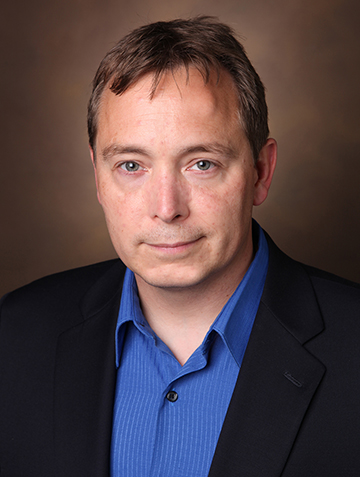 Craig Lindsley (Pharmacology) has been chosen as the recipient of the inaugural Scientific Achievement Award in Drug Discovery and Development from the ASPET Division for Drug Discovery and Development. Craig is “being recognized for his highly integrated approach to drug discovery and development that bridges synthetic chemistry, novel approaches to characterization of PK/PD and target validation leading to pre-clinical development of therapeutics for treatments of neurological disorders, cancer and metabolic diseases.” In addition, we are celebrating Craig’s recent appointment to the National Academy of Inventors! Craig Lindsley (Pharmacology) has been chosen as the recipient of the inaugural Scientific Achievement Award in Drug Discovery and Development from the ASPET Division for Drug Discovery and Development. Craig is “being recognized for his highly integrated approach to drug discovery and development that bridges synthetic chemistry, novel approaches to characterization of PK/PD and target validation leading to pre-clinical development of therapeutics for treatments of neurological disorders, cancer and metabolic diseases.” In addition, we are celebrating Craig’s recent appointment to the National Academy of Inventors!
Townsend Recognized
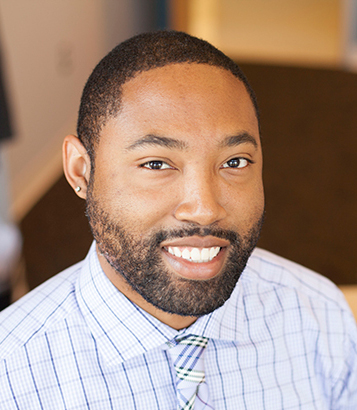 Congratulations to Steve Townsend (Chemistry, VICB) on receiving the Jeffrey Nordhaus Award for Excellence in Undergraduate Teaching! Congratulations to Steve Townsend (Chemistry, VICB) on receiving the Jeffrey Nordhaus Award for Excellence in Undergraduate Teaching!
Casey Honored With Heart & Soul Award
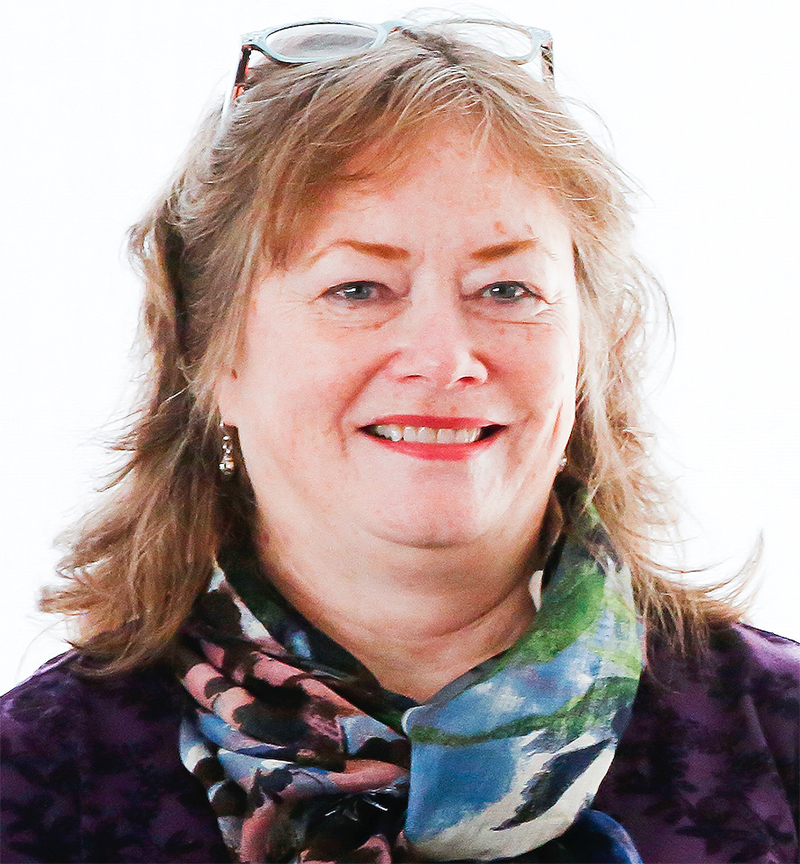 Chancellor Nicholas S. Zeppos surprised Maureen Casey at the Mass Spectrometry Research Center with the Heart and Soul Staff Appreciation Award just prior to Winter Break. See photos. Chancellor Nicholas S. Zeppos surprised Maureen Casey at the Mass Spectrometry Research Center with the Heart and Soul Staff Appreciation Award just prior to Winter Break. See photos.
Staff Awards to Kett and Stevenson
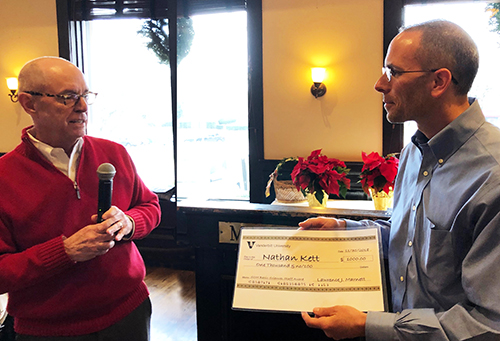 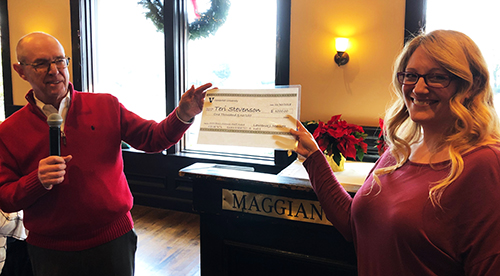 Warmest regards to Nathan Kett (Drug Discovery Scientist II, VCNDD) and Teri Stevenson (Research Assistant I, Molecular Physiology & Biophysics), our two latest Basic Sciences Research Staff Award winners! Warmest regards to Nathan Kett (Drug Discovery Scientist II, VCNDD) and Teri Stevenson (Research Assistant I, Molecular Physiology & Biophysics), our two latest Basic Sciences Research Staff Award winners!
Azumaya Receives Karpay Award
 Best wishes to Caleigh Azumaya (Molecular Physiology & Biophysics, Nakagawa lab) for receiving the Anne Karpay Award in Structural Biology! Caleigh was chosen for her ability to perform outstanding research and for her collegiality and willingness to engage those around her. She will present the MBTP/CSB Seminar on Jan. 22, at which time she will also receive her award. Best wishes to Caleigh Azumaya (Molecular Physiology & Biophysics, Nakagawa lab) for receiving the Anne Karpay Award in Structural Biology! Caleigh was chosen for her ability to perform outstanding research and for her collegiality and willingness to engage those around her. She will present the MBTP/CSB Seminar on Jan. 22, at which time she will also receive her award.
New Fellowship Awards
 Congratulations to James O’Connor (CDB, Page-McCaw lab), Merlyn Emmanuel (CDB, Weaver lab), Veronica Farmer (CDB, Zanic lab), Megan Rasmussen (CDB, Gama lab), Sierra Palumbos (Neuroscience, Miller lab), and Cody Strothers (Anesthesiology, Sherwood lab) for their recently awarded American Heart Association predoctoral fellowships. Congratulations also go out to Gabrielle Rushing (Neuroscience, Ihrie lab) and Caitlyn Kirby (Biological Sciences, Patel lab), who received fellowships from NINDS and NIGMS, respectively, and to Pankaj Sharma (Pharmacology, Iverson lab) who received a post-doctoral fellowship from the American Heart Association. Congratulations to James O’Connor (CDB, Page-McCaw lab), Merlyn Emmanuel (CDB, Weaver lab), Veronica Farmer (CDB, Zanic lab), Megan Rasmussen (CDB, Gama lab), Sierra Palumbos (Neuroscience, Miller lab), and Cody Strothers (Anesthesiology, Sherwood lab) for their recently awarded American Heart Association predoctoral fellowships. Congratulations also go out to Gabrielle Rushing (Neuroscience, Ihrie lab) and Caitlyn Kirby (Biological Sciences, Patel lab), who received fellowships from NINDS and NIGMS, respectively, and to Pankaj Sharma (Pharmacology, Iverson lab) who received a post-doctoral fellowship from the American Heart Association.
First VBS Core Development Grants Awarded
 We are pleased to announce the recipients of the 2019 Core Development Grants, which provide $50,000 each to support the scientific mission of our cores. The awardees are: Jonathan Irish (Mass Cytometry Center of Excellence), Kwangho Kim (Chemical Synthesis Core), Mark Magnuson (Vanderbilt Genome Editing Resource), Ginger Milne (Neurochemistry Core), Jenny Schafer (Cell Imaging Shared Resource), Kevin Schey (Proteomics Core), and Donald Stec (Small Molecule NMR Facility). We are pleased to announce the recipients of the 2019 Core Development Grants, which provide $50,000 each to support the scientific mission of our cores. The awardees are: Jonathan Irish (Mass Cytometry Center of Excellence), Kwangho Kim (Chemical Synthesis Core), Mark Magnuson (Vanderbilt Genome Editing Resource), Ginger Milne (Neurochemistry Core), Jenny Schafer (Cell Imaging Shared Resource), Kevin Schey (Proteomics Core), and Donald Stec (Small Molecule NMR Facility).
Boehringer Ingelheim and VCNDD Announce New Partnership
 The Vanderbilt Center for Neuroscience Drug Discovery will join with Boehringer Ingelheim in two new global agreements to develop novel therapies for psychiatric disorders. The Vanderbilt Center for Neuroscience Drug Discovery will join with Boehringer Ingelheim in two new global agreements to develop novel therapies for psychiatric disorders.
VUMC to Partner with GE Healthcare
VUMC and GE Healthcare have announced the start of a 5-year partnership to develop safer and more precise immunotherapies for cancer.
New Discoveries
Protecting Cells from Abasic Sites
 Recent research from David Cortez and his lab shows how the protein HMCES protects cells from mutations caused by abasic sites in single-stranded DNA. Recent research from David Cortez and his lab shows how the protein HMCES protects cells from mutations caused by abasic sites in single-stranded DNA.
Dissecting Exocyst Dynamics
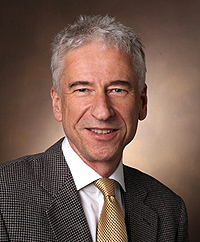 New findings from Ian Macara and his lab provide a detailed picture of the dynamics of exocyst assembly and function. New findings from Ian Macara and his lab provide a detailed picture of the dynamics of exocyst assembly and function.
Redox Control of DNA Replication
 Walter Chazin and his collaborators have two new publications on the role of redox signaling in the control of DNA primase. Walter Chazin and his collaborators have two new publications on the role of redox signaling in the control of DNA primase.
New Revelations from Single-Cell Cytomics

A new computational approach to single cell cytomic data from Jonathan Irish and his laboratory reveals novel insights into immune cell populations.
Keys to Sarcomere Assembly
 New findings from Dylan Burnette, Matt Tyska, and their laboratories provide insight into the process of sarcomere assembly in cardiomyocytes. New findings from Dylan Burnette, Matt Tyska, and their laboratories provide insight into the process of sarcomere assembly in cardiomyocytes.
β-Cell Transcription Factor Function
 A collaboration between Roland Stein and Alvin Powers and their labs explores the role of MAFA and MAFB in human islet β-cells. A collaboration between Roland Stein and Alvin Powers and their labs explores the role of MAFA and MAFB in human islet β-cells.
How Cancer Cell Death Thwarts Therapy
 Recent research from Rebecca Cook and her laboratory reveals how apoptotic cell death in response to therapy can lead to immunosuppression. Recent research from Rebecca Cook and her laboratory reveals how apoptotic cell death in response to therapy can lead to immunosuppression.
Fat and Inflammation

Alyssa Hasty and her lab report on the effects of weight loss on key inflammatory cell populations in adipose tissue and liver.
Encoding the Nervous System
 New research from David Miller and colleagues seeks to define the genetic programming underlying the entire nematode nervous system. New research from David Miller and colleagues seeks to define the genetic programming underlying the entire nematode nervous system.
Antiviral Response Triggered by Host RNA
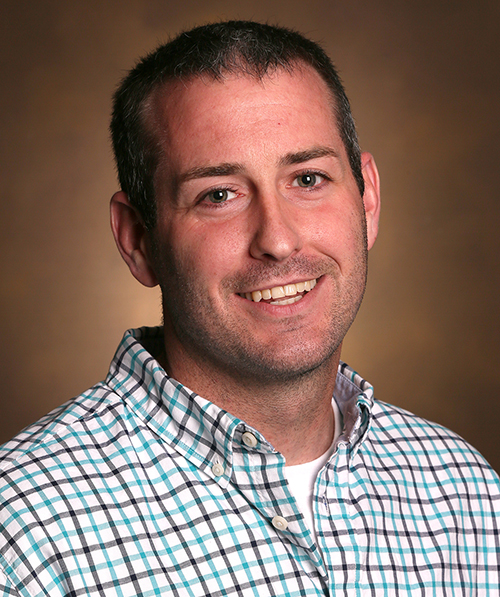 Work from John Karijolich and his lab shows how changes in RNA metabolism following reactivation of latent Kaposi’s Sarcoma virus lead to an antiviral response. Work from John Karijolich and his lab shows how changes in RNA metabolism following reactivation of latent Kaposi’s Sarcoma virus lead to an antiviral response.
Promising New Antibody Against West Nile Virus
 James Crowe and his laboratory report the discovery of a highly potent human monoclonal antibody that neutralizes West Nile virus. James Crowe and his laboratory report the discovery of a highly potent human monoclonal antibody that neutralizes West Nile virus.
Ethnicity and the Microbiome
 Studies from Seth Bordenstein and his laboratory reveal that the gut microbiota varies in subtle ways with ethnicity. Studies from Seth Bordenstein and his laboratory reveal that the gut microbiota varies in subtle ways with ethnicity.
Clue to Auto-immune Diseases
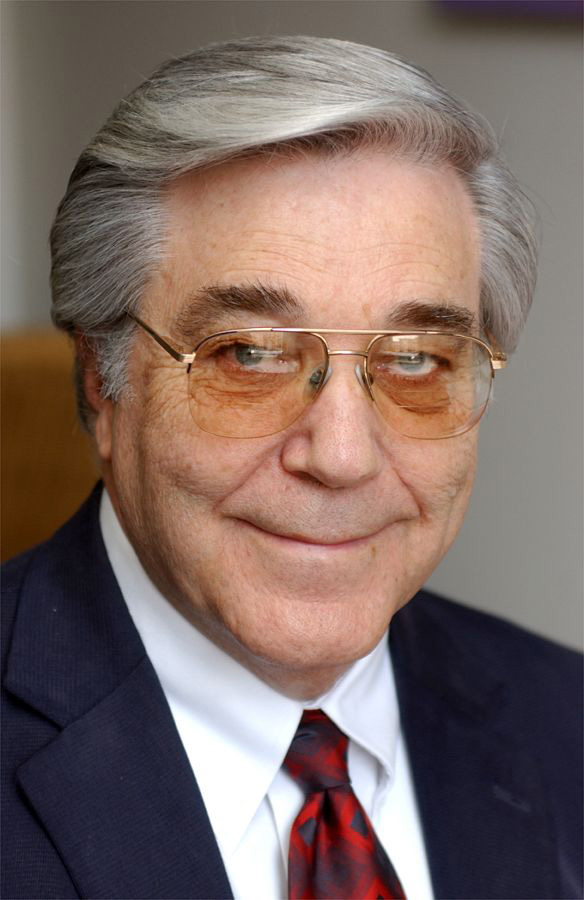 A recent report from Billy Hudson and his laboratory defines the role of a newly discovered auto-antibody in pulmonary renal syndrome. A recent report from Billy Hudson and his laboratory defines the role of a newly discovered auto-antibody in pulmonary renal syndrome.
External Funding Opportunities
NIH Guide
If you have not already done so, you are encouraged to subscribe to the NIH Guide email list, which provides a wealth of information on NIH grant programs. Subscribe here.
NCI Cancer Moonshot
The NCI has recently updated funding opportunities through the Cancer Moonshot program. Details are here.
HHMI Hanna H. Gray Fellows Program
The Howard Hughes Medical Institute is seeking applications for the Hanna H. Gray Fellows Program, which supports postdoctoral fellows from underrepresented groups. Applications are due Jan. 9.
Simons Foundation Autism Research Initiative
The Simons Foundation requests proposals for research into key unresolved questions in autism. The application deadline is Jan. 11. More details are here.
L’Oréal USA for Women in Science
The L’Oréal USA for Women in Science Fellowship Program offers 5 fellowships of $60,000 each per year to female postdoctoral scientists. Proposals are due Feb. 1.
Cystic Fibrosis Foundation Awards for Gene Editing
The Cystic Fibrosis Foundation provides a number of different award mechanisms to support research into gene editing to repair CFTR mutations. Proposals are due Mar. 12.
The Science-PINS Prize for Neuromodulation
The Science-PINS Prize is a $25,000 award that honors the work of a young scientist for outstanding contributions to research in neuromodulation. Deadline for nomination submissions is Mar. 15th.
Limited Submission Opportunities
Information regarding limited submission opportunities may be found at the University website. You can also sign up to receive regular updates by e-mail.
Internal Funding Opportunities
Discovery Grants
Proposals for Discovery Grant funding are being accepted until Jan. 28. All full-time VU faculty are eligible.
Research Scholar Grants
Proposals for Research Scholar Grant funding are being accepted until Feb. 4. All full-time VU faculty are eligible.
Diabetes and Obesity Research Pilot Projects
The Vanderbilt Diabetes Center, Diabetes Research and Training Center, and Center for Translational Research are offering funding for pilot projects in the area of diabetes and obesity research. The deadline is Feb. 4. Details are here.
| ![CAS - Basic Sciences - Internal E-Newsletter [Vanderbilt University]](https://van.preservation.mirrorweb.com/public/20250322094107im_/https://cdn.vanderbilt.edu/vu-URL/wp-content/uploads/sites/119/2021/04/19142723/basically-speaking-banner-04-2021.jpg)


