Back to the Future
Two giants of the Vanderbilt scientific community, Joel Hardman and John Oates, died recently within a month of each other – Joel on June 30 and John on July 30. They were the subjects of two wonderful essays in the VUMC Reporter that chronicle the accomplishments and the impact of Drs. Hardman and Oates on their peers and the institution. They were contemporaries with complementary research interests and careers that were closely intertwined, and the products of their efforts put Vanderbilt at the forefront of pharmacological sciences from the laboratory to the clinic.
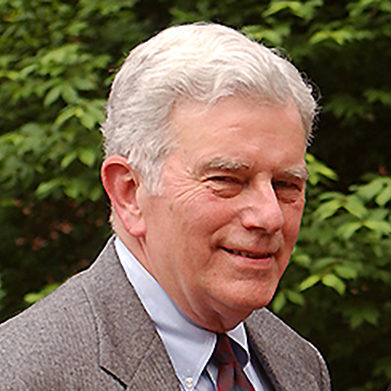
Dr. Hardman came to Vanderbilt in 1964 at age 30 as a postdoc with Earl Sutherland in Physiology. He was hired as an Assistant Professor of Pharmacology in 1964, promoted to Professor in 1967, and became Department Chair in 1975. He worked on cyclic nucleotides in Sutherland’s lab and discovered guanylate cyclase, a key enzyme in vasodilatation that is activated by nitric oxide. Studying this enzyme system became his lifelong passion.

Dr. Oates was recruited from NIH to Pharmacology and Medicine in 1963 at age 31 by the Chair of Pharmacology, Allan Bass, and was tasked with building a Division of Clinical Pharmacology that bridged the two departments. Before coming to Vanderbilt, Dr. Oates discovered the blood pressure-lowering effects of methyldopa, leading ultimately to its introduction as a drug to treat hypertension. Later in his career, he did pioneering work on the generation and metabolism of prostaglandins and their role in vascular biology.
By the time Dr. Hardman took over as Chair, Dr. Oates had made significant strides building Clinical Pharmacology as a joint program, so Dr. Hardman focused on building the core component of the Pharmacology Department. Clinical Pharmacology faculty had primary appointments in either Pharmacology or Medicine, and the Department and Division spaces were immediately adjacent. Thus, Drs. Hardman and Oates created a unique environment in which faculty with primary appointments in either department could collaborate freely and train students in the laboratory interchangeably.
Joel and John were rigorous scientists who transmitted their values to scores of trainees at Vanderbilt in the classroom, lecture hall, and laboratory. The emphasis was on critical thinking while working on complex problems, and the Pharmacology/Clinical Pharmacology alliance fostered discovery both through the study of fundamental processes and through follow up on unusual patient observations. Dysfunction associated with disease would highlight the necessity of understanding how the system functioned when healthy. As Lee Limbird says, “It was not linear, it was circular – everything was connected.”
This model contributed tremendously to the reputation that Vanderbilt developed for collaboration and collegiality. It’s a culture that we need to respect and to nurture. There are many doors to discovery, and they are connected to translation and clinical application. We need to keep them open.
To be sure, it seems harder these days when collaborators have to develop sub-contracts to submit collaborative grants and when the practices that used to be taken for granted now need to be codified. But as the loss of our two colleagues – so close in life and death – highlights, the reward is worth the effort. It’s the special sauce of Vanderbilt.
Larry Marnett
News
Welcome, new students!
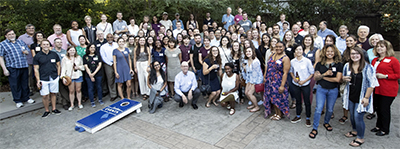
Last week, the Dean of Basic Sciences welcomed all the new Ph.D. students in the School of Medicine at the Loveless Barn. Students from the IGP, QCB, Biostatistics, Epidemiology, Hearing and Speech Science, Neuroscience, Biological Sciences, Nursing, CPB, PMI, Pharmacology, CDB, Biochemistry, and MPB were represented. Check out the photos from the event, or click on the photo to view a larger version.
Eleven students earn Dean’s Award for Exceptional Achievement
 Huge congratulations to the 11 students who earned the Dean’s Award for Exceptional Achievement for Advanced Students! This honor is bestowed upon third-year Ph.D. students in the School of Medicine whose research is original, significant, and rigorous; who have demonstrated excellence in research discovery; and who have mastered a discipline, as evidenced by classwork, qualifying exam, and performance in committee meetings. This year’s awardees are Margaret Axelrod (Justin Balko lab, Medicine), Manuel Castro (Chuck Sanders lab, Biochemistry), Matthew Cottam (Alyssa Hasty lab, MPB), Michael Doyle (James Crowe lab, Pediatrics), Azadeh Hadadianpour (Scott Smith lab, Medicine), Abigail Neininger (Dylan Burnette lab, CDB), James O’Connor (Andrea Page-McCaw lab, CDB), Alejandra Romero-Morales (Vivian Gama lab, CDB), Sheryl Vermudez (Jeff Conn and Colleen Niswender labs, Pharmacology), Demond Williams (Barbara Fingleton lab, Pharmacology), and Matthew Wleklinski (Bjorn Knollman lab, Medicine). Huge congratulations to the 11 students who earned the Dean’s Award for Exceptional Achievement for Advanced Students! This honor is bestowed upon third-year Ph.D. students in the School of Medicine whose research is original, significant, and rigorous; who have demonstrated excellence in research discovery; and who have mastered a discipline, as evidenced by classwork, qualifying exam, and performance in committee meetings. This year’s awardees are Margaret Axelrod (Justin Balko lab, Medicine), Manuel Castro (Chuck Sanders lab, Biochemistry), Matthew Cottam (Alyssa Hasty lab, MPB), Michael Doyle (James Crowe lab, Pediatrics), Azadeh Hadadianpour (Scott Smith lab, Medicine), Abigail Neininger (Dylan Burnette lab, CDB), James O’Connor (Andrea Page-McCaw lab, CDB), Alejandra Romero-Morales (Vivian Gama lab, CDB), Sheryl Vermudez (Jeff Conn and Colleen Niswender labs, Pharmacology), Demond Williams (Barbara Fingleton lab, Pharmacology), and Matthew Wleklinski (Bjorn Knollman lab, Medicine).
Student/mentor pairs awarded Gilliam Fellowships
 Three pairs of graduate students and their mentors have been awarded prestigious HHMI Gilliam Fellowships for Advanced Study. These fellowships are granted on the basis of scientific merit and a commitment to diversity and inclusion within the scientific workforce and leadership. Vanderbilt’s 2019 fellows are Justin Avila and mentor Michelle Southard-Smith (Medicine), Jacob Steenwyk and mentor Antonis Rokas (Biological Sciences), and Kellie Williford and mentor Danny Winder (MPB). Congratulations! Three pairs of graduate students and their mentors have been awarded prestigious HHMI Gilliam Fellowships for Advanced Study. These fellowships are granted on the basis of scientific merit and a commitment to diversity and inclusion within the scientific workforce and leadership. Vanderbilt’s 2019 fellows are Justin Avila and mentor Michelle Southard-Smith (Medicine), Jacob Steenwyk and mentor Antonis Rokas (Biological Sciences), and Kellie Williford and mentor Danny Winder (MPB). Congratulations!
Calipari honored for exceptional basic research
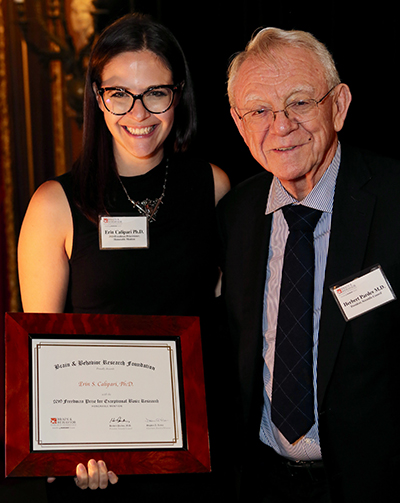 The Brain & Behavior Research Foundation has recognized Erin Calipari (Pharmacology) with a 2019 Freedman Prize for Exceptional Basic Research honorable mention for her recent work on the sex differences in the brain that make women particularly vulnerable to substance abuse disorder. Congrats! The Brain & Behavior Research Foundation has recognized Erin Calipari (Pharmacology) with a 2019 Freedman Prize for Exceptional Basic Research honorable mention for her recent work on the sex differences in the brain that make women particularly vulnerable to substance abuse disorder. Congrats!
Rasmussen named Vanderbilt Prize Student Scholar
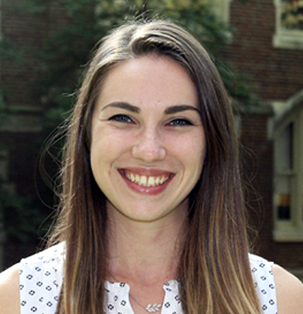 Megan Rasmussen (lab of Vivian Gama, CDB) has been named the 2019 Vanderbilt Prize Student Scholar! This award is given to a female Ph.D. candidate within the School of Medicine who demonstrates excellent leadership qualities and who exhibit outstanding potential to impact medicine through research. Megan will be recognized during the Flexner Discovery Lecture by the 2019 Vanderbilt Prize in Biomedical Science awardee, Christine Seidman, on September 12. Kudos, Megan! Megan Rasmussen (lab of Vivian Gama, CDB) has been named the 2019 Vanderbilt Prize Student Scholar! This award is given to a female Ph.D. candidate within the School of Medicine who demonstrates excellent leadership qualities and who exhibit outstanding potential to impact medicine through research. Megan will be recognized during the Flexner Discovery Lecture by the 2019 Vanderbilt Prize in Biomedical Science awardee, Christine Seidman, on September 12. Kudos, Megan!
Trainees win fellowships
 Shout out to the graduate students and postdocs who were awarded fellowships for their research this month! The following students have been awarded F31 grants: Isabella Gaeta (lab of Matt Tyska, CDB), Colbie Chinowsky (lab of Matt Tyska, CDB), Shannon Smith (lab of Jens Meiler, Chemistry), and Jade Williams (lab of Gary Sulikowski, Chemistry) from the NIH; Melanie Hurst (lab of Maria Hadjifragiskou, PMI) from NIAID; and Sheryl Anne Vermudez (labs of Colleen Niswender and Jeff Conn, Pharmacology) from NIMH. Postdoc Justin Buchanan (lab of Ann Tate, Biological Sciences) received funding from the USDA. Shout out to the graduate students and postdocs who were awarded fellowships for their research this month! The following students have been awarded F31 grants: Isabella Gaeta (lab of Matt Tyska, CDB), Colbie Chinowsky (lab of Matt Tyska, CDB), Shannon Smith (lab of Jens Meiler, Chemistry), and Jade Williams (lab of Gary Sulikowski, Chemistry) from the NIH; Melanie Hurst (lab of Maria Hadjifragiskou, PMI) from NIAID; and Sheryl Anne Vermudez (labs of Colleen Niswender and Jeff Conn, Pharmacology) from NIMH. Postdoc Justin Buchanan (lab of Ann Tate, Biological Sciences) received funding from the USDA.
Program in Quantitative and Chemical Biology has new directors
 Each year, the QCB program welcomes graduate students interested in pursuing Ph.D.’s in disciplines at the interface of the chemical, physical, and biological sciences. This year, the program will have new leadership, who will be taking over from Hassane Mchaourab (MPB); Tina Iverson (Pharmacology) will assume the role of Director and Vito Quaranta (Biochemistry) will assume the role of Associate Director. What changes are in store for the program? We interviewed the new leadership to learn what their plans are. Read more. Each year, the QCB program welcomes graduate students interested in pursuing Ph.D.’s in disciplines at the interface of the chemical, physical, and biological sciences. This year, the program will have new leadership, who will be taking over from Hassane Mchaourab (MPB); Tina Iverson (Pharmacology) will assume the role of Director and Vito Quaranta (Biochemistry) will assume the role of Associate Director. What changes are in store for the program? We interviewed the new leadership to learn what their plans are. Read more.
Gannon named Associate Dean for Faculty Development
 Effective September 1, Maureen Gannon (Medicine) will be the School of Medicine’s Associate Dean for Faculty Development. Gannon will be working on projects to advance school-wide programs associated with faculty training, mentoring, and career development. Congratulations! Effective September 1, Maureen Gannon (Medicine) will be the School of Medicine’s Associate Dean for Faculty Development. Gannon will be working on projects to advance school-wide programs associated with faculty training, mentoring, and career development. Congratulations!
ASPIRE module wins second-place in Innovations in Research and Research Education
Data Science Essentials, a short module held by the ASPIRE Program, has been recognized as the second-place winner of the 2019 Innovations in Research and Research Education Award of the American Association of Medical Colleges (AAMC). This is the second time that the AAMC has recognized ASPIRE for innovation in research training.
Richard Armstrong Mentoring Award Lecture
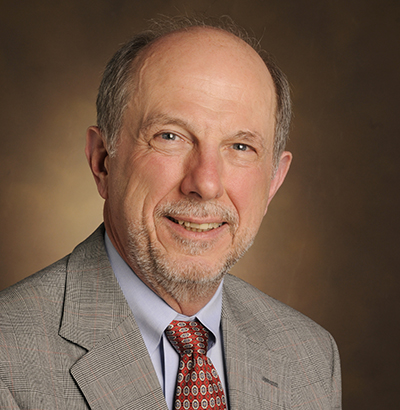 Congratulations to Fred Guengerich, who has been recognized by the Department of Biochemistry for his efforts in mentoring graduate students and postdocs! Nominations for this award require a strong history of mentorship and are strengthened by letters of support from current or former mentees. Guengerich will be presented with the award on August 23 at 12:00 PM in 214 Light Hall, after which he will present a lecture on the research conducted in his lab. Congratulations to Fred Guengerich, who has been recognized by the Department of Biochemistry for his efforts in mentoring graduate students and postdocs! Nominations for this award require a strong history of mentorship and are strengthened by letters of support from current or former mentees. Guengerich will be presented with the award on August 23 at 12:00 PM in 214 Light Hall, after which he will present a lecture on the research conducted in his lab.
Meyer recognized for research excellence
 Christian Meyer is a Pharmacology graduate student in the lab of Vito Quaranta (Biochemistry). He was recently awarded the 2019 Richard Armstrong Prize for Research Excellence, which was presented to him at the VICB Symposium. Congrats, Christian! Christian Meyer is a Pharmacology graduate student in the lab of Vito Quaranta (Biochemistry). He was recently awarded the 2019 Richard Armstrong Prize for Research Excellence, which was presented to him at the VICB Symposium. Congrats, Christian!
Alpacas in research? Sure thing!
 Did you know faculty members Brian Wadzinski (Pharmacology), Ben Spiller (Pharmacology), and Richard Breyer (Medicine) started an alpaca farm? They use these animals’ amazing antibodies, which are made up of two heavy chains, for research, diagnostic, and therapeutic purposes. Check out these fuzzy ungulates here. Did you know faculty members Brian Wadzinski (Pharmacology), Ben Spiller (Pharmacology), and Richard Breyer (Medicine) started an alpaca farm? They use these animals’ amazing antibodies, which are made up of two heavy chains, for research, diagnostic, and therapeutic purposes. Check out these fuzzy ungulates here.
Did you miss the Biomedical Sciences Graduate Student Town Hall?
Fear not, for we have a recording of the event. Check out this link to learn about what was covered at the town hall, including the search for a new chancellor, changes in the QCB leadership, updates and upgrades to our facilities, our response to the NAS Report on Sexual Harassment, and more. If you don’t want to watch the video, you can also check out our Twitter page, where we live tweeted the event.
Support the Simple Beginnings Ceremony
 The annual Simple Beginnings Ph.D. Lab Coat Ceremony celebrates the promise of each new class of doctoral students in the School of Medicine and in the School of Nursing by presenting them with a lab coat embroidered with their name. This year’s ceremony will take place on August 30, and could not happen without the generous support of the faculty, alumni, and current students who – if they are able – want to help support the next generation of trainees. To make a gift to the Simple Beginnings Fund, please visit the online giving form. The annual Simple Beginnings Ph.D. Lab Coat Ceremony celebrates the promise of each new class of doctoral students in the School of Medicine and in the School of Nursing by presenting them with a lab coat embroidered with their name. This year’s ceremony will take place on August 30, and could not happen without the generous support of the faculty, alumni, and current students who – if they are able – want to help support the next generation of trainees. To make a gift to the Simple Beginnings Fund, please visit the online giving form.
New Discoveries
Microvilli glide across the cell surface
 A new Developmental Cell paper from the lab of Matt Tyska (CDB) describes a previously unknown form of microvilli motility, which helps them mature into their characteristic, densely packed structure. A new Developmental Cell paper from the lab of Matt Tyska (CDB) describes a previously unknown form of microvilli motility, which helps them mature into their characteristic, densely packed structure.
Predicting the outcome of MIMO systems
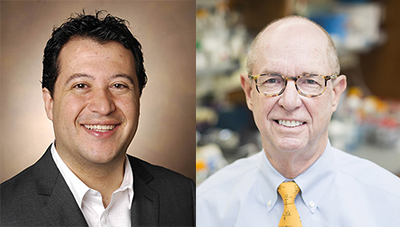 The complexity of multi-input/multi-output (MIMO) systems led the labs of Carlos Lopez (Biochemistry) and Larry Marnett (Biochemistry) to use a systems biochemistry approach, combining physiochemical modeling and information theory, to probe the complexity of cyclooxygenase 2 allostery. The complexity of multi-input/multi-output (MIMO) systems led the labs of Carlos Lopez (Biochemistry) and Larry Marnett (Biochemistry) to use a systems biochemistry approach, combining physiochemical modeling and information theory, to probe the complexity of cyclooxygenase 2 allostery.
Targeting melanoma through CDK4/6 and MDM2 inhibitors
 The Department of Pharmacology’s Ann Richmond has a new paper out in Science Translational Medicine that describes a potential new second-line treatment for melanoma patients. The combination therapy comprises CDK4/6 and MDM2 inhibitors. The Department of Pharmacology’s Ann Richmond has a new paper out in Science Translational Medicine that describes a potential new second-line treatment for melanoma patients. The combination therapy comprises CDK4/6 and MDM2 inhibitors.
Golgi-derived microtubules have essential role in insulin secretion
 Pancreatic β cells are responsible for insulin production and storage, but recent research from the lab of Irina Kaverina (CDB) points to the vital role of GDMTs in regulating this balance. Pancreatic β cells are responsible for insulin production and storage, but recent research from the lab of Irina Kaverina (CDB) points to the vital role of GDMTs in regulating this balance.
Shielding DNA damage before repairing it
 A collaboration between the labs of Brandt Eichman (Biological Sciences) and Dave Cortez (Biochemistry) has determined how a DNA repair protein forms extremely stable DNA-protein crosslinks with abasic sites on single-stranded DNA, protecting the sites from mutation. A collaboration between the labs of Brandt Eichman (Biological Sciences) and Dave Cortez (Biochemistry) has determined how a DNA repair protein forms extremely stable DNA-protein crosslinks with abasic sites on single-stranded DNA, protecting the sites from mutation.
Modulation of DVL2 through ubiquitylation and deubiquitylation
 A recent paper from the lab of Jason MacGurn (CBD) describes how an E3 ligase and a deubiquitylating enzyme create a rheostat that modulates disheveled 2 (DVL2) and the selection of the canonical or non-canonical Wnt pathway. A recent paper from the lab of Jason MacGurn (CBD) describes how an E3 ligase and a deubiquitylating enzyme create a rheostat that modulates disheveled 2 (DVL2) and the selection of the canonical or non-canonical Wnt pathway.
Sex differences in progressive renal injury
 The labs of Raymond Harris (Medicine) and Agnes Fogo (PMI) published a paper describing sex differences in the risk of progressive renal injury, which can be partly attributed to renal EGFR expression. The labs of Raymond Harris (Medicine) and Agnes Fogo (PMI) published a paper describing sex differences in the risk of progressive renal injury, which can be partly attributed to renal EGFR expression.
RTK can be targeted in fibrotic diseases
 Ambra Pozzi’s lab (Medicine) has published research that indicates that DDR1, a receptor tyrosine kinase (RTK), can translocate to the nucleus and act as a transcription factor that regulates the transcription of pro-fibrotic molecules, including collagen IV. Ambra Pozzi’s lab (Medicine) has published research that indicates that DDR1, a receptor tyrosine kinase (RTK), can translocate to the nucleus and act as a transcription factor that regulates the transcription of pro-fibrotic molecules, including collagen IV.
Making your own zwitterion
 The Steve Townsend lab (Chemistry) has overcome difficulties in isolating and purifying the repeating unit of a zwitterionic capsular polysaccharide and describes the novel synthesis method in the Journal of the American Chemical Society. The Steve Townsend lab (Chemistry) has overcome difficulties in isolating and purifying the repeating unit of a zwitterionic capsular polysaccharide and describes the novel synthesis method in the Journal of the American Chemical Society.
Healing without scarring
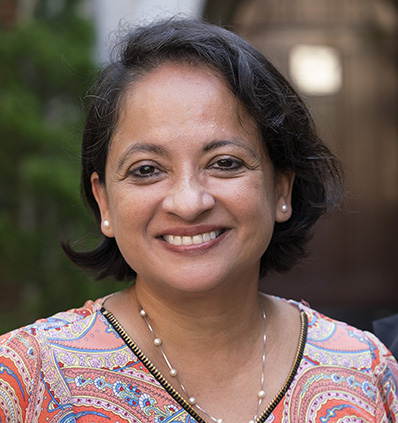 Research from Pampee Young (PMI) indicates that fibroblasts have distinct roles during wound repair, suggesting that it can be possible to decrease scarring without negatively affecting wound healing. Research from Pampee Young (PMI) indicates that fibroblasts have distinct roles during wound repair, suggesting that it can be possible to decrease scarring without negatively affecting wound healing.
External Funding Opportunities
NIH Guide
If you have not already done so, you are encouraged to subscribe to the NIH Guide email list, which provides a wealth of information on NIH grant programs. Subscribe here.
NCI Cancer Moonshot
The Cancer Moonshot program at the NCI has a variety of funding opportunities available. Details are here.
Basic Experimental Studies with Humans
The NIH has recently announced the publication of new funding opportunities specifically for research involving human subjects that aims to understand the fundamental aspects of phenomena without an immediate or apparent application. See their FAQs here and keep on the lookout for these opportunities.
New NIH F33 grant opens for NIGMS-funded PIs
This F33 is targeted toward experienced scientists who wish to make major changes in the direction of their research careers or who wish to broaden their scientific background by acquiring new research capabilities. Standard application dates apply to this grant. Visit the program announcement for more details.
2019 NIH Director’s Award Programs
Requests for applications for the following Common Fund/Office of the Director NIH programs have now been issued:
- New Innovator Award Program (DP2) – Application deadline is August 26. RFA-RM-19-006.
- Pioneer Award Program (DP1) – Application deadline is September 6. RFA-RM-19-005.
- Early Independence Awards Program (DP5) – Letter of intent was due August 13. Application deadline is September 13. RFA-RM-19-008.
- Transformative Research Awards Program (R01) – Application deadline is September 20. RFA-RM-19-007.
Arnold and Mabel Beckman Postdoctoral Fellowship
The Arnold O. Beckman Postdoctoral Fellowship in Chemical Sciences or Chemical Instrumentation Award Program has an open call for postdocs conducting advanced research within the core areas of fundamental chemistry or the development and building of chemical instrumentation. Their research must be innovative in method, speed, or process, or must represent new instrument technology. The 2020 applications are open between June 12, 2019 and September 6, 2019. Visit the Beckman website for more information and to apply.
NIH Director’s Early Independence Awards (DP5 Clinical Trial Optional)
Investigators wishing to forgo the traditional postdoc route after completing their doctoral studies may apply for this grant designed to accelerate their entry into research careers. Applications are due by September 13, 2019, at 5:00 PM local time of the applicant organization.
NIH Director’s Transformative Research Awards (R01 Clinical Trial Optional)
This FOA is a Common Fund initiative for scientists proposing “groundbreaking, exceptionally innovative, original, and/or unconventional research with the potential to create new scientific paradigms, establish entirely new and improved clinical approaches, or develop transformative technologies.” Applications must be submitted by September 20, 2019, at 5:00 PM local time of the applicant organization. More details here.
Internal Funding Opportunities
VU Bridge Program
Primary Basic Sciences faculty with lapses in federal grant support are invited to apply for the VU Bridge Program. The next submission deadline for Bridge/Realignment Grant funding is September 15. The instructions for submission of proposals have been completely overhauled and have been posted on the VBS website. It is critical that faculty who wish to apply follow the posted instructions.
Call for TIPS Proposals
The Office of the Provost has issued a call for proposals for Trans-Institutional Programs, designed to support new ideas, cutting-edge research, and the development of infrastructure by supporting emerging and existing trans-institutional centers and institutes. Pre-proposals are due October 29. More information is available here.
Call for Chancellor Faculty Fellows Nominations
The Office of the Provost has issued a call for nominations of associate professors to appointment as Chancellor Faculty Fellow, which provides research support of $40,000/year for two years. Nominations are due November 8. More information is available here.
Limited Submission Opportunities
Precision Medicine & Health Disparities Collaborative seeks pilot projects
The Precision Medicine & Health Disparities Collaborative (PMHDC) invites pilot projects that meet three key requirements: they have relevance to precision medicine, relevance to health disparities, and community engagement. You can request a pre-application consultation for guidance on preparing your application by September 30. For more information, please refer to the RFA.
Additional LSO information
Information regarding limited submission opportunities may be found on the University and Medical Center websites. You can also sign up to receive regular updates by email. These opportunities are not limited only to faculty. Make sure you check these opportunities out, as some are open to postdocs and graduate and medical students.
| ![CAS - Basic Sciences - Internal E-Newsletter [Vanderbilt University]](https://van.preservation.mirrorweb.com/public/20250322095225im_/https://cdn.vanderbilt.edu/vu-URL/wp-content/uploads/sites/119/2021/04/19142723/basically-speaking-banner-04-2021.jpg)


 2020 Vanderbilt Prize open for nominations
 VCAR Science Day
 Alexandria Oviatt, a graduate student in the lab of Neil Osheroff, works with bacterial topoisomerases, enzymes that regulate supercoiling and that can remove knots and tangles from DNA. This image is a 2D gel that she generated after testing the ability of a Staphylococcus aureus gyrase (a type II topoisomerase that can introduce negative supercoils) to relax DNA. DNA can be electrophoresed on agarose gels to discern its supercoiling state, but positively and negatively supercoiled DNA run at similar speeds. To get around this problem, Oviatt runs her gels in two directions, which helps separate the different DNA species. This 2D gel shows a time course in which the gyrase relaxed positively supercoiled DNA and then introduced negative supercoils (six time points are shown, progressing from left to right, top to bottom). Image courtesy of Alexandria Oviatt and Elizabeth Gibson.


