From The Dean
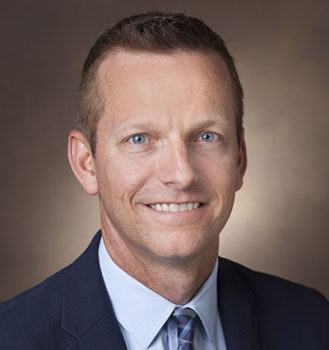
Steve Hann, Professor of Cell and Developmental Biology and long-time member of the Vanderbilt community, died on February 27, 2019. Steve was a cornerstone of the research and education enterprises at Vanderbilt and his many accomplishments are celebrated below by his friend and colleague, Bill Tansey.

Stephen Hann, Professor of Cell and Developmental Biology and a mainstay of the Vanderbilt community for more than 30 years, died February 27 after a brief illness. He was 67.
Steve came to Vanderbilt as a freshly minted Assistant Professor in 1986, joining what was then the Department of Cell Biology. Previously, he had earned his Bachelor’s degree from the University of California, Berkeley, and his Ph.D. from the University of California, Riverside. After a brief postdoc at the Albert Einstein College of Medicine in New York, Steve went to train with Bob Eisenman at the Fred Hutchinson Cancer Research Center in Seattle. It was here, working side-by-side with Bob, that Steve laid the groundwork for his long and impactful career studying the oncoprotein MYC, the deregulation of which—we now recognize—probably underlies the etiology of all cancers.
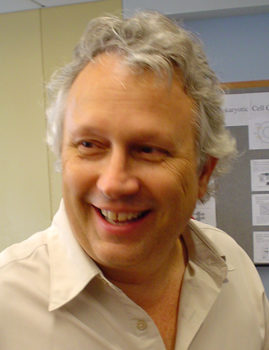 Steve was a pioneer in the MYC field. When he went to the Hutch in 1982, the cellular MYC oncogene had just been cloned, but there was no understanding of how it caused cancer or of the extent to which it was involved in human malignancies. Importantly, there was also no way to track the MYC protein, something that hindered even the most basic characterization of its regulation and activities. Steve developed the first antibodies against a human MYC family member, and with this, typified what was a signature aspect of his career—the capacity to make ground-breaking discoveries himself while at the same time selflessly fueling discoveries by others. Steve’s reagents enabled him to characterize multiple isoforms of MYC, visualize its overexpression in cancer cell lines for the first time, and show that a leucine codon could unexpectedly act to initiate translation of MYC. His generosity with these reagents allowed others to move the needle further, defining MYC as a nuclear protein, revealing its modifications, exposing interaction partners, and tracking it in human cancer samples. Steve’s impact on the MYC field was immediate and impressive, and he continued in this vein for over 35 years, delineating critical functional elements within MYC, characterizing its metabolic stability, and setting the paradigm for how MYC uses different co-activators to achieve its multifaceted oncogenic functions. Steve was a pioneer in the MYC field. When he went to the Hutch in 1982, the cellular MYC oncogene had just been cloned, but there was no understanding of how it caused cancer or of the extent to which it was involved in human malignancies. Importantly, there was also no way to track the MYC protein, something that hindered even the most basic characterization of its regulation and activities. Steve developed the first antibodies against a human MYC family member, and with this, typified what was a signature aspect of his career—the capacity to make ground-breaking discoveries himself while at the same time selflessly fueling discoveries by others. Steve’s reagents enabled him to characterize multiple isoforms of MYC, visualize its overexpression in cancer cell lines for the first time, and show that a leucine codon could unexpectedly act to initiate translation of MYC. His generosity with these reagents allowed others to move the needle further, defining MYC as a nuclear protein, revealing its modifications, exposing interaction partners, and tracking it in human cancer samples. Steve’s impact on the MYC field was immediate and impressive, and he continued in this vein for over 35 years, delineating critical functional elements within MYC, characterizing its metabolic stability, and setting the paradigm for how MYC uses different co-activators to achieve its multifaceted oncogenic functions.
At Vanderbilt, Steve epitomized every value we treasure: scholarly pursuit, collegiality, generosity, and service. During his time here, he served as Interim Chair and Vice Chair of Cell and Developmental Biology, and most recently as a highly-effective Director of Graduate Studies. Steve was passionate about mentoring and training, and his service as DGS was marked by reinvigoration of the curriculum and an emphasis on the practical skills required for a career in science. In 2006, Steve was awarded a training grant from the NCI, Integrated Biological Systems Training in Oncology, which has subsequently supported more than 40 pre- and post-doctoral trainees from nine basic and clinical departments across campus. He was Director of this program for a decade, and played a vital role in its successful renewal last year. Across the broader community, Steve was no less generous with his time and energy, frequently serving on Study Sections and advisory panels, and working with institutions across the country to help them develop and implement cancer-focused training programs. Steve’s impact on training and mentoring the next generation of scientists is as significant as that of his cancer research. Those who knew Steve well will miss his humor and his wisdom, and the no-nonsense way he approached everything he did. But the legacy he leaves, to those whose lives he touched with friendship, education, and through his research, is both profound and enduring.
Bill Tansey
Professor of Cell and Developmental Biology
Help us in welcoming the newest VBS members!
 This month we’d like to welcome six new members to our Basic Sciences family. Syed Ahmed is a Research Assistant Professor in the Department of Cell and Developmental Biology (CDB). Rui Chen and Brinda Selvaraj, Research Instructors, recently started in the Department of Molecular Physiology & Biophysics (MPB). The Department of Biochemistry continues to grow with the arrival of Amanda Linkous (Research Associate Professor) and Courtney Lovejoy (Research Assistant Professor). Finally, Pharmacology also welcomed the arrival of Bartholomew Roland, Research Instructor. This month we’d like to welcome six new members to our Basic Sciences family. Syed Ahmed is a Research Assistant Professor in the Department of Cell and Developmental Biology (CDB). Rui Chen and Brinda Selvaraj, Research Instructors, recently started in the Department of Molecular Physiology & Biophysics (MPB). The Department of Biochemistry continues to grow with the arrival of Amanda Linkous (Research Associate Professor) and Courtney Lovejoy (Research Assistant Professor). Finally, Pharmacology also welcomed the arrival of Bartholomew Roland, Research Instructor.
Congratulations, trainees!
 Join us in congratulating the following graduate students for being the recipients of fellowships: Zach Lonergan [Skaar lab, Pathology, Microbiology and Immunology (PMI)] from NIAID; Stephanie Dudzinski (Giorgio/J. Rathmell labs, Biomedical Engineering/PMI) from NCI; Shan Parikh (Knollman lab, Medicine) from NHLBI; Sheryl Vermudez (Niswender lab, Pharmacology) from NIMH; and Resh Gupta (Vago lab, Physical Medicine and Rehabilitation), Alexandra Sundermann (Velez Edwards/Edwards labs, Obstetrics and Gynecology/Medicine), and Eric Figueroa (Denton lab, Anesthesiology) from NIH. Join us in congratulating the following graduate students for being the recipients of fellowships: Zach Lonergan [Skaar lab, Pathology, Microbiology and Immunology (PMI)] from NIAID; Stephanie Dudzinski (Giorgio/J. Rathmell labs, Biomedical Engineering/PMI) from NCI; Shan Parikh (Knollman lab, Medicine) from NHLBI; Sheryl Vermudez (Niswender lab, Pharmacology) from NIMH; and Resh Gupta (Vago lab, Physical Medicine and Rehabilitation), Alexandra Sundermann (Velez Edwards/Edwards labs, Obstetrics and Gynecology/Medicine), and Eric Figueroa (Denton lab, Anesthesiology) from NIH.
Calipari captures the limelight
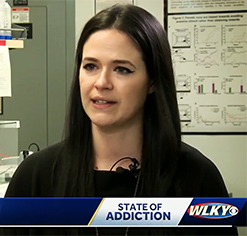 WLKY (Louisville) recently aired a segment on Erin Calipari (Pharmacology) and her research on addiction. Calipari shared research findings that include sex differences in how addiction manifests, and explained that she uses her famous name as a platform to communicate science to people who might not otherwise be exposed to it. WLKY (Louisville) recently aired a segment on Erin Calipari (Pharmacology) and her research on addiction. Calipari shared research findings that include sex differences in how addiction manifests, and explained that she uses her famous name as a platform to communicate science to people who might not otherwise be exposed to it.
Bordensteins tag-team outreach efforts
 Seth and Sarah Bordenstein (Biological Sciences) are the dynamic duo behind the efforts driving The Wolbachia Project, an integrative lab series that brings scientific research into classrooms all the way from middle school up through college. If you want a closer look into what this project entails and how it works, check it out here. Seth and Sarah Bordenstein (Biological Sciences) are the dynamic duo behind the efforts driving The Wolbachia Project, an integrative lab series that brings scientific research into classrooms all the way from middle school up through college. If you want a closer look into what this project entails and how it works, check it out here.
Crowe chases chikungunya into clinical trials
 An RNA-coded monoclonal antibody against the chikungunya virus has recently become the first such biomolecule to enter a clinical trial. Researchers in the lab of James Crowe (Pediatrics) isolated the mRNA that encodes the antibody, and Moderna, Inc., a biotechnology company based in Cambridge, MA, encased it in a proprietary lipid nanoparticle. An RNA-coded monoclonal antibody against the chikungunya virus has recently become the first such biomolecule to enter a clinical trial. Researchers in the lab of James Crowe (Pediatrics) isolated the mRNA that encodes the antibody, and Moderna, Inc., a biotechnology company based in Cambridge, MA, encased it in a proprietary lipid nanoparticle.
Meiler celebrated as new endowed chair holder
 A February 25 ceremony celebrated Vanderbilt University’s eight newest endowed chair holders. Amongst them, Basic Sciences member Jens Meiler was recognized as the new Stevenson Chair in Chemistry. Congratulations! A February 25 ceremony celebrated Vanderbilt University’s eight newest endowed chair holders. Amongst them, Basic Sciences member Jens Meiler was recognized as the new Stevenson Chair in Chemistry. Congratulations!
VINSE to seek community input on plan for future
 Sandra Rosenthal (Chemistry) will be stepping down as head of the Vanderbilt Institute for Nanoscale Science and Engineering on June 30, 2019. Vice Provost for Research Padma Raghavan, along with the deans of the College of Arts and Science, Engineering, and Basic Sciences, will host a series of events with the VINSE community and stakeholders to plan for the future of the institute. Sandra Rosenthal (Chemistry) will be stepping down as head of the Vanderbilt Institute for Nanoscale Science and Engineering on June 30, 2019. Vice Provost for Research Padma Raghavan, along with the deans of the College of Arts and Science, Engineering, and Basic Sciences, will host a series of events with the VINSE community and stakeholders to plan for the future of the institute.
Why do you #Give4TheGold?
 Bruce Carter, Professor of Biochemistry, has a short message for us: Vanderbilt University’s Giving Day is coming up on April 4. Together, we can make an immediate and meaningful difference for Basic Sciences. If you’re like me, you’re grateful for the commitment to excellence and supportive environment that exists at Vanderbilt. I hope you will join me and make a gift of any size to the Basic Sciences, as this will help talented students who are passionate about biomedical research and could not otherwise study at Vanderbilt, plus it will help our programs make further progress with innovations in teaching and discovery. Mark your calendars for April 4, bookmark this page, and join me in supporting the Basic Sciences! Bruce Carter, Professor of Biochemistry, has a short message for us: Vanderbilt University’s Giving Day is coming up on April 4. Together, we can make an immediate and meaningful difference for Basic Sciences. If you’re like me, you’re grateful for the commitment to excellence and supportive environment that exists at Vanderbilt. I hope you will join me and make a gift of any size to the Basic Sciences, as this will help talented students who are passionate about biomedical research and could not otherwise study at Vanderbilt, plus it will help our programs make further progress with innovations in teaching and discovery. Mark your calendars for April 4, bookmark this page, and join me in supporting the Basic Sciences!
New Discoveries
Defining a new form of DNA repair and differences in ATR activation
 The lab of David Cortez (Biochemistry) has recently published a paper that describes a new DNA repair mechanism, and another one that elucidates the differences between the functions of ATR when it is activated by either ETAA1 or TOPBP1. The lab of David Cortez (Biochemistry) has recently published a paper that describes a new DNA repair mechanism, and another one that elucidates the differences between the functions of ATR when it is activated by either ETAA1 or TOPBP1.
Reintegrating females into addiction studies
 The lab of Erin Calipari has recently published a paper in Neuropsychopharmacology that looks at how the estrous cycle in mice affects addiction to cocaine. The lab of Erin Calipari has recently published a paper in Neuropsychopharmacology that looks at how the estrous cycle in mice affects addiction to cocaine.
Lipid homeostasis and lysophospholipid signaling
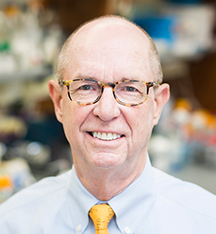 A recent paper from the Marnett lab (Biochemistry, Chemistry, Pharmacology) shows that two related lysophospholipases work together to maintain cellular levels of lysophospholipids constant. A recent paper from the Marnett lab (Biochemistry, Chemistry, Pharmacology) shows that two related lysophospholipases work together to maintain cellular levels of lysophospholipids constant.
A better way to predict synergy
 The lab of Vito Quaranta (Biochemistry) has developed a new algorithm, MuSyC, that decouples synergistic potency from synergistic efficacy in drug combinations as a way to reduce biases and ambiguities. The lab of Vito Quaranta (Biochemistry) has developed a new algorithm, MuSyC, that decouples synergistic potency from synergistic efficacy in drug combinations as a way to reduce biases and ambiguities.
Stressful results
 The lab of MPB Professor Danny Winder has recently published that stress induces the activation of corticotropin releasing factor (CRF)-producing neurons and that adrenergic receptor signaling suppresses this activity in mice. The lab of MPB Professor Danny Winder has recently published that stress induces the activation of corticotropin releasing factor (CRF)-producing neurons and that adrenergic receptor signaling suppresses this activity in mice.
New mouse model allows study of neurotransmitter release
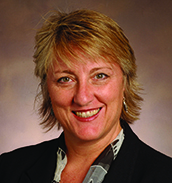 Heidi Hamm (Pharmacology) and colleagues have generated a new mouse model with defects in SNAP25, a SNARE protein,which decreased the inhibition of neurotransmitter exocytosis and led to physiological and behavioral phenotypes. Heidi Hamm (Pharmacology) and colleagues have generated a new mouse model with defects in SNAP25, a SNARE protein,which decreased the inhibition of neurotransmitter exocytosis and led to physiological and behavioral phenotypes.
Gearing up to fight infection
 As reported in a recent Nature paper, the lab of James Crowe cloned and sequenced the B cell receptors of up to 40 billion B cells from three individuals to determine their clonotypes, finding a surprising level of overlap. As reported in a recent Nature paper, the lab of James Crowe cloned and sequenced the B cell receptors of up to 40 billion B cells from three individuals to determine their clonotypes, finding a surprising level of overlap.
Peptidase protects cell wall
 The lab of Eric Skaar (Pathology, Microbiology and Immunology) has published in Cell Reports how a peptidase promotes bacterial survival and drug resistance in Acinetobacter baumannii. The lab of Eric Skaar (Pathology, Microbiology and Immunology) has published in Cell Reports how a peptidase promotes bacterial survival and drug resistance in Acinetobacter baumannii.
A precision medicine potential against renal cell carcinoma

Mutations in the multifaceted methyltransferase SETD2 sensitize renal cell carcinoma cells to inhibitors of PI3K and AKT, the lab of Kim Rathmell (Medicine) has found out.
Antibacterial properties in breast milk
 Steven Townsend (Chemistry) has recently published an editor’s choice conspectus that describes the multidisciplinary efforts that aim to characterize how human breast milk protects infants from infectious diseases. Steven Townsend (Chemistry) has recently published an editor’s choice conspectus that describes the multidisciplinary efforts that aim to characterize how human breast milk protects infants from infectious diseases.
Developing a lipid atlas for disease prediction

As lipids can be the “bellwether” of disease, the team of John McLean (Chemistry) has developed an atlas that can match individual lipid molecules to their shapes, which could one day help with the early diagnosis of many disorders.
Potential for new arrhythmia treatment
 Jeffrey Johnston (Chemistry) and Bjorn Knollmann (Medicine) have found that the unnatural enantiomer of a fungal natural product, verticilide, can target ryanodine receptor type 2, which can cause irregular heartbeats. Jeffrey Johnston (Chemistry) and Bjorn Knollmann (Medicine) have found that the unnatural enantiomer of a fungal natural product, verticilide, can target ryanodine receptor type 2, which can cause irregular heartbeats.
External Funding Opportunities
NIH Guide
If you have not already done so, you are encouraged to subscribe to the NIH Guide email list, which provides a wealth of information on NIH grant programs. Subscribe here.
NIH S10 Instrumentation Program
Details of the NIH S10 Instrumentation Program for 2019 have been announced. The submission deadline is May 31, but you must submit a pre-application to the Office of the Vice Provost for Research by April 2.
NCI Cancer Moonshot
The NCI has recently updated funding opportunities through the Cancer Moonshot program. Details are here.
The Science-PINS Prize for Neuromodulation
The Science-PINS Prize is a $25,000 award that honors the work of a young scientist for outstanding contributions to research in neuromodulation. Deadline for nomination submissions is March 15.
Basic Experimental Studies with Humans
The NIH has recently announced the publication of new funding opportunities specifically for research involving human subjects that aims to understand the fundamental aspects of phenomena without an immediate or apparent application. See their FAQs here and keep on the lookout for these opportunities.
New NIH F33 grant opens for NIGMS-funded PIs
This F33 is targeted toward experienced scientists who wish to make major changes in the direction of their research careers or who wish to broaden their scientific background by acquiring new research capabilities. Standard application dates apply to this grant. Visit the program announcement for more details.
Limited Submission Opportunities
Information regarding limited submission opportunities may be found at the University website. You can also sign up to receive regular updates by email.
Internal Funding Opportunities
Second Round of Ancora Innovation Proposals
Ancora Innovation has announced a second round of pre-proposals for projects intended to move Vanderbilt discoveries toward possible clinical applications. The pre-application window is March 14-April 15. Apply here.
Vanderbilt O’Brien Kidney Center (VOKC) and Vanderbilt Center for Kidney Disease (VCKD) Pilot and Feasibility Awards
This award supports studies in any aspect of kidney disease research. Funds must be used for young investigators, investigators from other fields willing to bring their research expertise to nephrology, or for investigators currently in the nephrology area whose proposed research would constitute a totally new direction. Applications are due April 1.
VU Bridge Program
Primary Basic Sciences faculty with lapses in federal grant support are invited to apply for this program. The next submission deadline for Bridge/Realignment Grant funding is May 15. The instructions for submission of proposals have been completely overhauled and have been posted on the VBS website. It is critical that faculty who wish to apply follow the posted instructions.
Call for Nominations for the 2020 Chancellor’s Public Voices Fellowship
The purpose of this fellowship is to help disseminate the discovery and knowledge of Vanderbilt faculty to broader national and global audiences. The proposed projects must be at or near the promotional stage. The deadline for nominations is May 20.
| ![CAS - Basic Sciences - Internal E-Newsletter [Vanderbilt University]](https://van.preservation.mirrorweb.com/public/20250322094455im_/https://cdn.vanderbilt.edu/vu-URL/wp-content/uploads/sites/119/2021/04/19142723/basically-speaking-banner-04-2021.jpg)


 Primary sympathetic neurons cultured in microfluidic devices. Cells are stained with neuronal marker TUJ1 (green) and nuclei are labeled with DAPI (blue). Submitted by Amrita Pathak, Research Instructor in the lab of Bruce Carter, through


