From The Dean
Chancellor Zeppos announced last week that he will resign from his position on August 15 because of a health issue. He will take a one-year sabbatical before returning to the faculty of the Law School, where he began his career at Vanderbilt. The man everyone knows as Nick has been deeply engaged in University affairs throughout his tenure and especially so in recent days. Thus, his decision caught virtually everyone in the community by surprise. It is hard to imagine Vanderbilt without him at the helm.
 Nick’s impact on this institution has been enormous. When he became Chancellor in the depths of the 2008 recession, the endowment had dropped to $2.9 B in value. Eleven years later, the endowment is valued at $6.4 B, and Vanderbilt’s debt is among the lowest of the top 40 institutions. During his tenure, Vanderbilt has invested aggressively in residential colleges and established Opportunity Vanderbilt as a mechanism to enable students to graduate from our undergraduate colleges debt-free. This combination has helped recruit an extraordinarily talented and diverse group of students. Vanderbilt is truly one of the nation’s great universities. Nick’s impact on this institution has been enormous. When he became Chancellor in the depths of the 2008 recession, the endowment had dropped to $2.9 B in value. Eleven years later, the endowment is valued at $6.4 B, and Vanderbilt’s debt is among the lowest of the top 40 institutions. During his tenure, Vanderbilt has invested aggressively in residential colleges and established Opportunity Vanderbilt as a mechanism to enable students to graduate from our undergraduate colleges debt-free. This combination has helped recruit an extraordinarily talented and diverse group of students. Vanderbilt is truly one of the nation’s great universities.
Nick possesses a powerful intellect and a deep understanding of the University’s operations. He is particularly supportive of basic research across the institution. This was one of the motivating factors in keeping the Basic Sciences of the School of Medicine as a separate entity within the University at the time of the VU-VUMC separation. He worked closely with Jeff Balser and Susan Wente to create this new and innovative structure, and it is paying great dividends for us and the institution.
We are grateful to Chancellor Zeppos for all he has done for Vanderbilt, its faculty, students, and staff. We are a much, much better institution because of his vision, hard work, and dedication. We wish him well as he focuses on his health and look forward to his return to the faculty. He has a lot to teach us.
Larry Marnett
Dean of Basic Sciences
Wente named Interim Chancellor

Chancellor Zeppos’s announcement also brought with it the word that Provost Susan Wente would be stepping up as interim chancellor beginning August 15. Read more about this transition and about the Chancellor’s accomplishments during his decade-long tenure, including a by-the-numbers infographic, here.
Basic Sciences #Gave4TheGold!
 We are incredibly thankful to the more than 245 donors who gave back to Basic Sciences during this past Giving Day. We raised over $70K – over $57,000 more than last year! The money you all donated will help fund a broad range of activities, including early-stage, high-risk research and travel and career development activities for students and postdocs. Special thanks to Bruce Carter (Biochemistry) for being a Basic Sciences Ambassador. How much will we raise next year? Up to you. We are incredibly thankful to the more than 245 donors who gave back to Basic Sciences during this past Giving Day. We raised over $70K – over $57,000 more than last year! The money you all donated will help fund a broad range of activities, including early-stage, high-risk research and travel and career development activities for students and postdocs. Special thanks to Bruce Carter (Biochemistry) for being a Basic Sciences Ambassador. How much will we raise next year? Up to you.
P.S. Check out the leaderboards. VBS placed within the top 15 in both money raised and number of donors!
Striving to reduce the power imbalance between PIs and graduate students
One of the recommendations of the recent National Academies report on the sexual harassment of women in the academic sciences was to diffuse the hierarchical and dependent relationship between trainees and faculty. In order to explore possible means of accomplishing this, the DGSs of all Basic Sciences graduate programs held brainstorming sessions with their students throughout the month of March. The students’ input was recorded anonymously, and, at their next meeting, Basic Sciences leadership (deans, department chairs, center directors, DGSs) will discuss this input, how to best implement it, and how to account for students’ concerns on the subject. Thank you to all students who attended these sessions!
Capital Planning Town Hall available for viewing
 A recent Town Hall on Capital Planning brought together senior university leadership, including Vice Chancellor for Administration Eric Kopstain, Provost Susan Wente, and the deans of the College of Arts & Sciences (John Geer), Engineering (Philippe Fauchet), and Basic Sciences (Larry Marnett). They shared the results of two capital improvement studies with the Vanderbilt community and answered audience questions. To make sure your comments and concerns are registered, you can view the recording of the event here, and can give any feedback for the leadership here. A recent Town Hall on Capital Planning brought together senior university leadership, including Vice Chancellor for Administration Eric Kopstain, Provost Susan Wente, and the deans of the College of Arts & Sciences (John Geer), Engineering (Philippe Fauchet), and Basic Sciences (Larry Marnett). They shared the results of two capital improvement studies with the Vanderbilt community and answered audience questions. To make sure your comments and concerns are registered, you can view the recording of the event here, and can give any feedback for the leadership here.
Grad student recognized for efforts to further gender equity
 Ph.D. student Jessie Perlmutter (Bordenstein lab, Biological Sciences) has been awarded the Margaret Cuninggim Women’s Center Leadership Award in recognition of her achievements during her tenure on the Inclusivity in the Biosciences Association group. Ph.D. student Jessie Perlmutter (Bordenstein lab, Biological Sciences) has been awarded the Margaret Cuninggim Women’s Center Leadership Award in recognition of her achievements during her tenure on the Inclusivity in the Biosciences Association group.
VBS students snag 3MT competition honors
 Congratulations to all the graduate students in VBS labs who competed in the 3 Minute Thesis competition on March 29. Special congratulations go to Colbie Chinowsky (Tyska lab, Cell and Developmental Biology [CDB]), Jessie Perlmutter (Bordenstein lab, Biological Sciences), Brittany Spitznagel (Weaver lab, CDB), Mackenzie Sunday (Gauthier lab, Psychology) and Megan van der Horst (Wright lab, Chemistry) who were selected as finalists. Major kudos to Perlmutter, who placed 2nd overall and won $500! Congratulations to all the graduate students in VBS labs who competed in the 3 Minute Thesis competition on March 29. Special congratulations go to Colbie Chinowsky (Tyska lab, Cell and Developmental Biology [CDB]), Jessie Perlmutter (Bordenstein lab, Biological Sciences), Brittany Spitznagel (Weaver lab, CDB), Mackenzie Sunday (Gauthier lab, Psychology) and Megan van der Horst (Wright lab, Chemistry) who were selected as finalists. Major kudos to Perlmutter, who placed 2nd overall and won $500!
Spring Faculty Assembly sees VCAR’s Dewey recognized
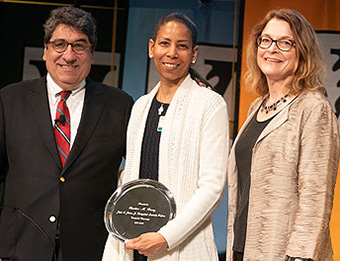 Chancellor Zeppos presented seven Vanderbilt faculty with awards that recognize teaching, research, service and commitment to diversity. Amongst the honored faculty members was Charlene Dewey (Medical Education and Administration, Vanderbilt Center for Addiction Research [VCAR]), who received the Joseph A. Johnson, Jr. Distinguished Leadership Professor Award. Congratulations, Professor Dewey! Chancellor Zeppos presented seven Vanderbilt faculty with awards that recognize teaching, research, service and commitment to diversity. Amongst the honored faculty members was Charlene Dewey (Medical Education and Administration, Vanderbilt Center for Addiction Research [VCAR]), who received the Joseph A. Johnson, Jr. Distinguished Leadership Professor Award. Congratulations, Professor Dewey!
Calipari featured by The Tennessean
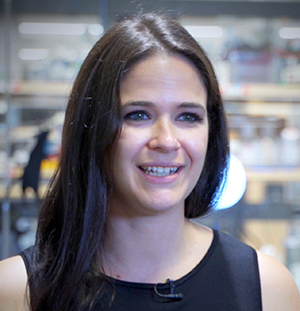 Erin Calipari (Pharmacology) and her research have recently been profiled by the Tennessean. Check it out here and learn something new about a fellow faculty member. Erin Calipari (Pharmacology) and her research have recently been profiled by the Tennessean. Check it out here and learn something new about a fellow faculty member.
A slice of a $24.5 million-grant for Crowe
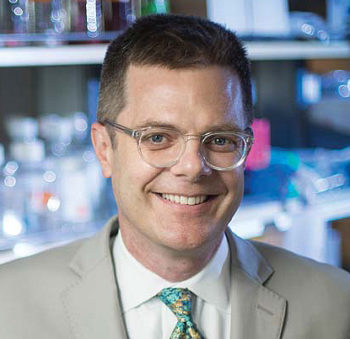
An interdisciplinary, multi-institutional team of researchers has recently landed a grant to help develop vaccines and other countermeasures against the Nipah and Hendra viruses. The lab of James Crowe (Pediatrics) is tasked with identifying, developing, and characterizing human monoclonal antibodies against both viruses.
New grant to study treatment-resistant mental disorders
 A $3.4 million-grant will be split evenly between VUMC and Massachusetts General Hospital to study major depressive disorder and schizophrenia. Vanderbilt Brain Institute member Douglas Ruderfer (Medicine) will be co-PI for the Vanderbilt portion of the grant. A $3.4 million-grant will be split evenly between VUMC and Massachusetts General Hospital to study major depressive disorder and schizophrenia. Vanderbilt Brain Institute member Douglas Ruderfer (Medicine) will be co-PI for the Vanderbilt portion of the grant.
Trainee fellowships
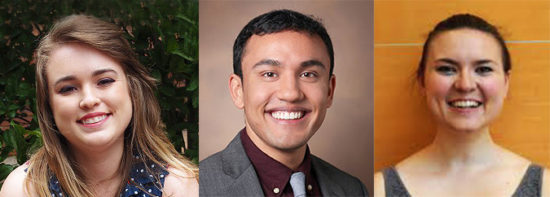 This past month, the following trainees were awarded fellowships: Natalya Ortolano (Gama lab, CDB); Jacob Steenwyk (Rokas lab, Biological Sciences) from NIH; and Jennifer Pilat (C.S. Williams lab, Medicine). These are highly competitive applications, so we are very proud of our trainees’ achievements. This past month, the following trainees were awarded fellowships: Natalya Ortolano (Gama lab, CDB); Jacob Steenwyk (Rokas lab, Biological Sciences) from NIH; and Jennifer Pilat (C.S. Williams lab, Medicine). These are highly competitive applications, so we are very proud of our trainees’ achievements.
Biannual Results and Discussion published
 The BRET newsletter, written and edited by trainees about trainees, was published last week. Read the Spring 2019 issue here. The BRET newsletter, written and edited by trainees about trainees, was published last week. Read the Spring 2019 issue here.
New Discoveries
A site to help WIN against cancer
 A number of VBS researchers, including corresponding author Bill Tansey (CDB), have found a strong, small-molecule inhibitor of the WIN site of epigenetic regulator WDR5, forecasting the druggability of the site in the fight against cancers. A number of VBS researchers, including corresponding author Bill Tansey (CDB), have found a strong, small-molecule inhibitor of the WIN site of epigenetic regulator WDR5, forecasting the druggability of the site in the fight against cancers.
GRE scores are not predictive of Ph.D. outcomes
 New research by a Vanderbilt group that includes Roger Chalkley (Senior Associate Dean for BRET) and Linda Sealy (Associate Dean for Diversity, Equity, and Inclusion) found that GRE scores across a broad range were not associated with the outcomes of Ph.D. students (number of publications during grad school, time to degree, fellowships obtained, evaluation by faculty). New research by a Vanderbilt group that includes Roger Chalkley (Senior Associate Dean for BRET) and Linda Sealy (Associate Dean for Diversity, Equity, and Inclusion) found that GRE scores across a broad range were not associated with the outcomes of Ph.D. students (number of publications during grad school, time to degree, fellowships obtained, evaluation by faculty).
How type II topoisomerases select cleavage sites
 Research from the lab of Neil Osheroff (Biochemistry) and collaborators indicates that type II topoisomerase cleavage sites are selected by enzyme-induced flexibility of DNA. Research from the lab of Neil Osheroff (Biochemistry) and collaborators indicates that type II topoisomerase cleavage sites are selected by enzyme-induced flexibility of DNA.
Genetic susceptibility to vancomycin allergy
 A multidisciplinary, multi-institutional effort by researchers, led by Elizabeth Phillips (Medicine), has found that 86% of patients who developed a probable allergic reaction to vancomycin possess a specific allele of human leukocyte antigen (HLA), A*32:01. A multidisciplinary, multi-institutional effort by researchers, led by Elizabeth Phillips (Medicine), has found that 86% of patients who developed a probable allergic reaction to vancomycin possess a specific allele of human leukocyte antigen (HLA), A*32:01.
Targeting SOS1 to get to Ras
 The lab of Stephen Fesik (Biochemistry) has a recent paper on small molecule-agonists of the Ras-activating SOS1 that can modulate kinase signaling through independent cellular responses. The lab of Stephen Fesik (Biochemistry) has a recent paper on small molecule-agonists of the Ras-activating SOS1 that can modulate kinase signaling through independent cellular responses.
Predicting opioid analgesic response

Past research indicates that patients with low endogenous opioid function have greater morphine analgesia. Now, a group of Vanderbilt researchers, including lead author Stephen Bruehl (Anesthesiology) and senior author Sachin Patel (Psychiatry and Behavioral Sciences, PBS), found that this inverse relationship is moderated in patients with higher levels of circulating endocannabinoids.
Deciphering the intricacies of endocytosis
 The group of Jason MacGurn (CDB) recently reported that methionine triggers the dephosphorylation and rapid translocation of Art1 (a ubiquitin ligase adaptor) to the plasma membrane. The group of Jason MacGurn (CDB) recently reported that methionine triggers the dephosphorylation and rapid translocation of Art1 (a ubiquitin ligase adaptor) to the plasma membrane.
mTORC1 linked to location-dependent tumorigenesis

A recent paper from the lab of Rebecca Ihrie (CDB) looked at the activity of mTORC1 complex in the stem cell niche of the ventricular-subventricular zone in the brain, aiming to determine if tumor formation in tuberous sclerosis complex patients is dependent on location. The group’s research was featured on the cover of the journal Life Science Alliance.
Enlarged perivascular spaces are not benign
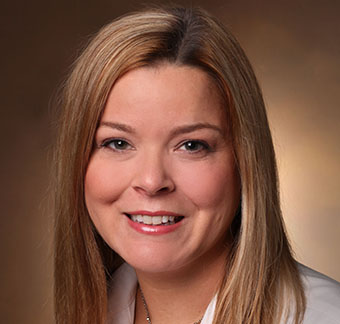 Angela Jefferson (Neurology) and her team are challenging the notion that enlarged perivascular spaces are harmless imaging markers in MRI, as they found that these fluid-filled spaces are associated with worse cognitive performance in older adults. Angela Jefferson (Neurology) and her team are challenging the notion that enlarged perivascular spaces are harmless imaging markers in MRI, as they found that these fluid-filled spaces are associated with worse cognitive performance in older adults.
Reprogramming adult kidney cells

An international group of researchers that includes Matthew Wilson (Medicine) recently used an inducible piggyBac transposon system to reprogram adult kidney cells into nephron progenitor-like cells, a population that is normally lost soon after birth.
DMFO targets cancer but also H. pylori

A team of Vanderbilt researchers including Claus Schneider (Pharmacology) and Paula Luis (Pharmacology) found that the anticaner drug DMFO (difluoromethylornithine) can also reduce the virulence of the gut bacterium.
“Safe” Celebrex linked to heart valve calcification

In a deviation from a well-known study that declared the arthritis drug Celebrex safe, David Merryman (Biomedical Engineering) and his team have found that, of 8,600 VUMC patients, those who took Celebrex had a 35% increased prevalence of heart valve calcification. Watch a video and learn more here.
Modulation of DNA transcription from initiation through termination
 A paper from the lab of Scott Hiebert (Biochemistry) shows that CDK7 inhibition changes the behavior and dynamics of RNA polymerase at the 5′ and 3′ ends of genes. A paper from the lab of Scott Hiebert (Biochemistry) shows that CDK7 inhibition changes the behavior and dynamics of RNA polymerase at the 5′ and 3′ ends of genes.
Psychosis can accelerate brain aging
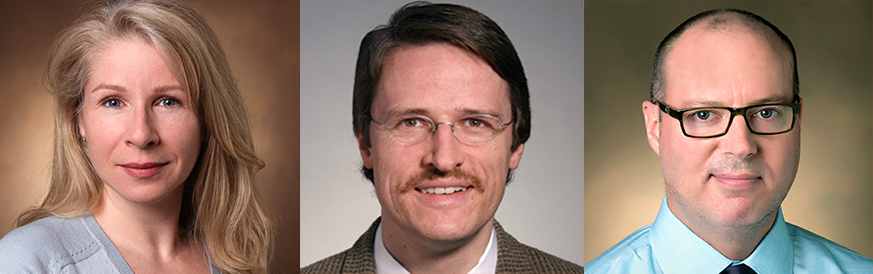
A study by Vanderbilt researchers, including VBS center members Jennifer Blackford (Vanderbilt Brain Institute [VBI], VCAR, PBS), Stephan Heckers (VBI, VCAR, PBS), and Neil Woodward (VBI, PBS), has revealed that psychotic disorders accelerate normal aging patterns in the brain.
iPSCs differentiated into a working blood-brain barrier

In an effort to develop a three-dimensional brain organoid, Center for Stem Cell Biology member Ethan Lippmann (Chemical and Biomolecular Engineering) and collaborators successfully cultured induced pluripotent stem cells into a blood-brain barrier model.
External Funding Opportunities
NIH Guide
If you have not already done so, you are encouraged to subscribe to the NIH Guide email list, which provides a wealth of information on NIH grant programs. Subscribe here.
NCI Cancer Moonshot
The Cancer Moonshot program at the NCI has a variety of funding opportunities available. Details are here.
Basic Experimental Studies with Humans
The NIH has recently announced the publication of new funding opportunities specifically for research involving human subjects that aims to understand the fundamental aspects of phenomena without an immediate or apparent application. See their FAQs here and keep on the lookout for these opportunities.
New NIH F33 grant opens for NIGMS-funded PIs
This F33 is targeted toward experienced scientists who wish to make major changes in the direction of their research careers or who wish to broaden their scientific background by acquiring new research capabilities. Standard application dates apply to this grant. Visit the program announcement for more details.
NIH Director’s Transformative Research Awards (R01 Clinical Trial Optional)
This FOA is a Common Fund initiative for scientists proposing “groundbreaking, exceptionally innovative, original, and/or unconventional research with the potential to create new scientific paradigms, establish entirely new and improved clinical approaches, or develop transformative technologies.” Applications must be submitted by September 20, 2019, at 5:00 PM local time of the applicant organization. More details here.
NIH Director’s Early Independence Awards (DP5 Clinical Trial Optional)
Investigators wishing to forgo the traditional postdoc route after completing their doctoral studies may apply for this grant designed to accelerate their entry into research careers. Applications are due by September 13, 2019, at 5:00 PM local time of the applicant organization.
Limited Submission Opportunities
Information regarding limited submission opportunities may be found at the University website. You can also sign up to receive regular updates by email.
Internal Funding Opportunities
Second Round of Ancora Innovation Proposals
Ancora Innovation has announced a second round of pre-proposals for projects intended to move Vanderbilt discoveries toward possible clinical applications. The pre-application window is March 14-April 15. Apply here.
VU Bridge Program
Primary Basic Sciences faculty with lapses in federal grant support are invited to apply for this program. The next submission deadline for Bridge/Realignment Grant funding is May 15. The instructions for submission of proposals have been completely overhauled and have been posted on the VBS website. It is critical that faculty who wish to apply follow the posted instructions.
Call for Nominations for the 2020 Chancellor’s Public Voices Fellowship
The purpose of this fellowship is to help disseminate the discovery and knowledge of Vanderbilt faculty to broader national and global audiences. The proposed projects must be at or near the promotional stage. The deadline for nominations is May 20.
| ![CAS - Basic Sciences - Internal E-Newsletter [Vanderbilt University]](https://van.preservation.mirrorweb.com/public/20250322094619im_/https://cdn.vanderbilt.edu/vu-URL/wp-content/uploads/sites/119/2021/04/19142723/basically-speaking-banner-04-2021.jpg)
 Dean’s Award for Exceptional Achievement in Graduate Studies
 New on Instagram: Vanderbilt Basic Sciences!
 Graduate Women in Science, Nashville Chapter kickoff event
 ArtLab presents Focal Point: Lights, Lasers, and Lenses

 Histological sections of California sea lion whiskers, trichrome stained and then color manipulated in photoshop. Submitted by Caitlin Sprowls, Research Assistant of Seth Bordenstein’s lab, through


