Williams presented with Founder’s Medal
 Each year during Commencement, Vanderbilt University recognizes one individual from each of its 10 schools with a Founder’s Medal. This year’s awardee from the Graduate School is Ian Williams from the lab of David Wasserman (Molecular Physiology and Biophysics, MPB). A California native, Williams has spent his years in the Wasserman laboratory studying vascular biology, and will continue to pursue his interests through a current postdoc at Stanford University. Congratulations for this phenomenal recognition, and good luck in your future endeavors! Each year during Commencement, Vanderbilt University recognizes one individual from each of its 10 schools with a Founder’s Medal. This year’s awardee from the Graduate School is Ian Williams from the lab of David Wasserman (Molecular Physiology and Biophysics, MPB). A California native, Williams has spent his years in the Wasserman laboratory studying vascular biology, and will continue to pursue his interests through a current postdoc at Stanford University. Congratulations for this phenomenal recognition, and good luck in your future endeavors!
Journal names Hubler paper as 2018 Paper of the Year
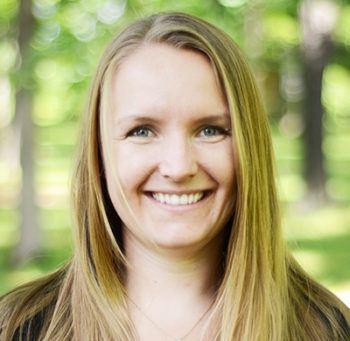 Kudos to Merla Hubler, an MSTP student in the lab of Alyssa Hasty (MPB), who is first author on the paper that The American Journal of Physiology: Cell Physiology has selected as the 2018 Paper of the Year! Kudos to Merla Hubler, an MSTP student in the lab of Alyssa Hasty (MPB), who is first author on the paper that The American Journal of Physiology: Cell Physiology has selected as the 2018 Paper of the Year!
Faculty promotions
 Dean Larry Marnett and Associate Dean Alyssa Hasty recently joined with department chairs, vice chairs, and administrative assistants to celebrate the promotion of five faculty members. From CDB, Ken Lau and Rebecca Cook were promoted to Associate Professor and Andrea Page-McCaw was promoted to Professor. From Pharmacology, Carrie Jones was promoted to Associate Professor and Tina Iverson was promoted to Professor. Congratulations! Dean Larry Marnett and Associate Dean Alyssa Hasty recently joined with department chairs, vice chairs, and administrative assistants to celebrate the promotion of five faculty members. From CDB, Ken Lau and Rebecca Cook were promoted to Associate Professor and Andrea Page-McCaw was promoted to Professor. From Pharmacology, Carrie Jones was promoted to Associate Professor and Tina Iverson was promoted to Professor. Congratulations!
Johnson one of six honored with endowed chairs
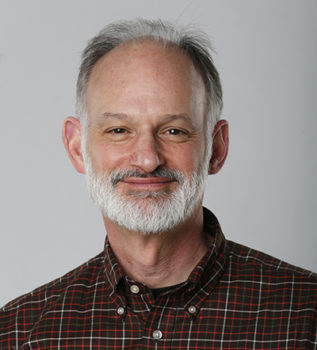 Carl Johnson (Biological Sciences) has recently been named a Cornelius Vanderbilt Chair in the College of Arts & Sciences. Johnson is also a Stevenson Professor of Biological Sciences, has a secondary appointment in MPB, and is a member of VICB. Congratulations! Carl Johnson (Biological Sciences) has recently been named a Cornelius Vanderbilt Chair in the College of Arts & Sciences. Johnson is also a Stevenson Professor of Biological Sciences, has a secondary appointment in MPB, and is a member of VICB. Congratulations!
Biological Sciences appoints Eichman as new chair
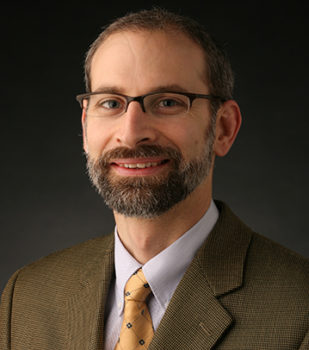 Starting June 1, Brandt Eichman will serve as the new Chair of the Department of Biological Sciences! Also a Professor of Biochemistry and member of the VICB, Eichman has conducted excellent research at Vanderbilt since he first came in 2004. Still, he manages to enjoy his time out of the lab through a variety of activities including home brewing, playing music, and building sets for local public school theater programs. Join us in congratulating him! Starting June 1, Brandt Eichman will serve as the new Chair of the Department of Biological Sciences! Also a Professor of Biochemistry and member of the VICB, Eichman has conducted excellent research at Vanderbilt since he first came in 2004. Still, he manages to enjoy his time out of the lab through a variety of activities including home brewing, playing music, and building sets for local public school theater programs. Join us in congratulating him!
Vanderbilt founding member of National Academies sexual harassment prevention collaborative

The National Academies of Science, Engineering, and Medicine have come together with 42 institutions of higher learning, including Vanderbilt University and VUMC, to found the Action Collaborative on Preventing Sexual Harassment in Higher Education. Faculty members Kathy Friedman (Biological Sciences) and Andrea Page-McCaw (Cell and Developmental Biology, CDB) will serve as the university’s delegates to the action collaborative, and will act as liaisons between it and the Office of the Provost and the Office for Inclusive Excellence.
Trainees travel to San Diego
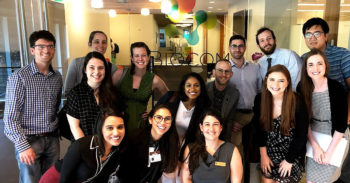 The ASPIRE on the Road field trip took 12 trainees to La Jolla, San Diego, CA, to visit a series of pharmaceutical and biotech companies. Trainees had a chance to learn about the sector and to network in formal and informal settings. The ASPIRE on the Road field trip took 12 trainees to La Jolla, San Diego, CA, to visit a series of pharmaceutical and biotech companies. Trainees had a chance to learn about the sector and to network in formal and informal settings.
Fogarty Fellowship for Fuseini
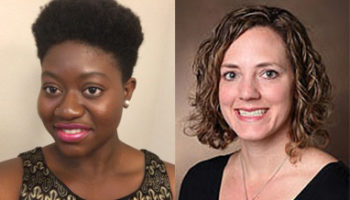 Hubaida Fuseini, recent Ph.D. and former mentee of Dawn Newcomb (Medicine), has been awarded the Fogarty Global Health Fellowship. This one-year, international postdoc fellowship funds clinically oriented research overseas at a site affiliated with the Vanderbilt-Emory-Cornell-Duke (VECD) Fogarty Consortium. Fuseini, who has family in Ghana, will spend a year at the Noguchi Memorial Institute for Medical Research in Accra. Hubaida Fuseini, recent Ph.D. and former mentee of Dawn Newcomb (Medicine), has been awarded the Fogarty Global Health Fellowship. This one-year, international postdoc fellowship funds clinically oriented research overseas at a site affiliated with the Vanderbilt-Emory-Cornell-Duke (VECD) Fogarty Consortium. Fuseini, who has family in Ghana, will spend a year at the Noguchi Memorial Institute for Medical Research in Accra.
Ortega awarded Pearson Fund Fellowship
 Congratulations to Oscar Ortega, a graduate student in the lab of Carlos Lopez (Biochemistry), who has recently been awarded the William N. Pearson Fund Fellowship by the Department of Biochemistry. The Pearson Fund was established in 1969 by multiple donors to support graduate students and postdoctoral trainees who are studying international nutrition at the School of Medicine. The fund was established in memory of Dr. William Pearson, former Professor of Biochemistry. Congratulations to Oscar Ortega, a graduate student in the lab of Carlos Lopez (Biochemistry), who has recently been awarded the William N. Pearson Fund Fellowship by the Department of Biochemistry. The Pearson Fund was established in 1969 by multiple donors to support graduate students and postdoctoral trainees who are studying international nutrition at the School of Medicine. The fund was established in memory of Dr. William Pearson, former Professor of Biochemistry.
Townsend earns 2019 Young Investigator Award
 Our compliments to Steven Townsend (Chemistry), who was one of three faculty recognized by ACS Infectious Diseases. This recognition is for outstanding young investigators in the infectious diseases field who are within 10 years of their last training experience or at the Assistant Professor level. Our compliments to Steven Townsend (Chemistry), who was one of three faculty recognized by ACS Infectious Diseases. This recognition is for outstanding young investigators in the infectious diseases field who are within 10 years of their last training experience or at the Assistant Professor level.
Elion earns research fellowship
 Congratulations to David Elion, of the Rebecca Cook (CDB) lab, who recently earned a research grant from the National Cancer Institute (NCI)! Congratulations to David Elion, of the Rebecca Cook (CDB) lab, who recently earned a research grant from the National Cancer Institute (NCI)!
Yohn, Sappington, Sanders recognized at VPA Symposium
 The Office of Postdoctoral Affairs named Samantha Yohn, a postdoc in the lab of Jeff Conn (Pharmacology), Postdoc of the Year in recognition of her exceptional research scholarship. In addition, Rebecca Sappington (Ophthalmology and Visual Sciences) was recognized as Mentor of the Year and Anneke Sanders, lab of Irina Kaverina (CDB), was awarded the inaugural Service of the Year Award. Yohn, Sappington, and Sanders were recognized at the annual Vanderbilt Postdoctoral Association Symposium held in April. The Office of Postdoctoral Affairs named Samantha Yohn, a postdoc in the lab of Jeff Conn (Pharmacology), Postdoc of the Year in recognition of her exceptional research scholarship. In addition, Rebecca Sappington (Ophthalmology and Visual Sciences) was recognized as Mentor of the Year and Anneke Sanders, lab of Irina Kaverina (CDB), was awarded the inaugural Service of the Year Award. Yohn, Sappington, and Sanders were recognized at the annual Vanderbilt Postdoctoral Association Symposium held in April.
Alvarado featured by Vanderbilt News
 Graduating Ph.D. Gabriela Alvarado was recently featured by Vanderbilt News as part of a series spotlighting students graduating in 2019 and their impacts on the institution and the lives of those around them. Alvarado was a graduate student in the lab of James Crowe (Pediatrics) and now works full time as a staff scientist in IDBiologics, a biotech company Crowe founded in 2017. Graduating Ph.D. Gabriela Alvarado was recently featured by Vanderbilt News as part of a series spotlighting students graduating in 2019 and their impacts on the institution and the lives of those around them. Alvarado was a graduate student in the lab of James Crowe (Pediatrics) and now works full time as a staff scientist in IDBiologics, a biotech company Crowe founded in 2017.
Byndloss invited to Future Leaders Conference
 The NIH Future Research Leaders Conference is a career-development opportunity for talented early-career biomedical and behavioral scientists from diverse backgrounds. Congratulations to Mariana Byndloss (Pathology, Microbiology, and Immunology, PMI), who was one of the ~30 applicants selected to participate out of the more than 120 who applied. The NIH Future Research Leaders Conference is a career-development opportunity for talented early-career biomedical and behavioral scientists from diverse backgrounds. Congratulations to Mariana Byndloss (Pathology, Microbiology, and Immunology, PMI), who was one of the ~30 applicants selected to participate out of the more than 120 who applied.
Huang earns Pearson Fellowship
 Postdoc Hui Huang, from the lab of Chuck Sanders (Biochemistry), has been awarded a fellowship through the the William N. Pearson Fund, established in 1969 by multiple donors to support graduate students and postdoctoral trainees who are studying international nutrition at the Vanderbilt School of Medicine. The fund was established in memory of Dr. William Pearson, a former Assistant Professor of Biochemistry at the School of Medicine. Preference in awarding is first given to international students and then to students who are citizens of the United States. Congratulations to Huang! Postdoc Hui Huang, from the lab of Chuck Sanders (Biochemistry), has been awarded a fellowship through the the William N. Pearson Fund, established in 1969 by multiple donors to support graduate students and postdoctoral trainees who are studying international nutrition at the Vanderbilt School of Medicine. The fund was established in memory of Dr. William Pearson, a former Assistant Professor of Biochemistry at the School of Medicine. Preference in awarding is first given to international students and then to students who are citizens of the United States. Congratulations to Huang!
Wilson appointed to ASGCT board of directors
 The American Society of Gene and Cell Therapy has appointed Matthew Wilson (Medicine) to its board of directors. Wilson, who has been an active member of the ASGCT since 2004, will serve a 3-year term as an at-large director. Congratulations! The American Society of Gene and Cell Therapy has appointed Matthew Wilson (Medicine) to its board of directors. Wilson, who has been an active member of the ASGCT since 2004, will serve a 3-year term as an at-large director. Congratulations!
Medical societies honor VBS physician scientists
 Italo Biaggioni (Medicine) has recently been inducted into the Association of American Physicians. In turn, the American Society for Clinical Investigation (ASCI) has awarded Jim Cassat (Medicine) and Jonathan Kropski (Medicine) with the 2019 Young Physician-Scientist Awards. Congratulations! Italo Biaggioni (Medicine) has recently been inducted into the Association of American Physicians. In turn, the American Society for Clinical Investigation (ASCI) has awarded Jim Cassat (Medicine) and Jonathan Kropski (Medicine) with the 2019 Young Physician-Scientist Awards. Congratulations!
Quaranta illustration chosen for cover of Best of Biophysical Journal
 The 2018 edition of the annual Best of Biophysical Journal depicts slivers from 5 illustrations, including one (second from left) from the lab of Vito Quaranta (Biochemistry). The full image had previously been featured by the journal’s blog. The 2018 edition of the annual Best of Biophysical Journal depicts slivers from 5 illustrations, including one (second from left) from the lab of Vito Quaranta (Biochemistry). The full image had previously been featured by the journal’s blog.
Wisdom from Lopez, dogs
 Carlos Lopez (Biochemistry) was featured in a Q&A in ASBMB Today. Read this Research Spotlight talking about Lopez’s background and what he has learned along the way (including from his own four-legged companions). Carlos Lopez (Biochemistry) was featured in a Q&A in ASBMB Today. Read this Research Spotlight talking about Lopez’s background and what he has learned along the way (including from his own four-legged companions).
Undergraduates in BCB program celebrated for achievements
 The undergraduate program in Biochemistry and Chemical Biology, headed by Brandt Eichman and Brian Bachmann (Chemistry), recently held its end-of-the-year symposium where students had the chance to present a poster or an oral presentation. In addition, three seniors and two juniors were recognized for their scholarly and academic achievements. The graduating seniors will be the first class to complete the program since its inception. The undergraduate program in Biochemistry and Chemical Biology, headed by Brandt Eichman and Brian Bachmann (Chemistry), recently held its end-of-the-year symposium where students had the chance to present a poster or an oral presentation. In addition, three seniors and two juniors were recognized for their scholarly and academic achievements. The graduating seniors will be the first class to complete the program since its inception.
In the shoes of Elvis… and the rest of him, too
 Vanderbilt professors Dale Edgerton (MPB), Nick Adams (Biomedical Engineering), and Bryan Shepherd (Biostatistics) recently embarked on a 100-mile, real-life Etch-a-Sketch journey to cycle the image of Elvis across Nashville, recording their ordeal with GPS devices. Vanderbilt professors Dale Edgerton (MPB), Nick Adams (Biomedical Engineering), and Bryan Shepherd (Biostatistics) recently embarked on a 100-mile, real-life Etch-a-Sketch journey to cycle the image of Elvis across Nashville, recording their ordeal with GPS devices.
Day of Discovery outreach with MNPS
 A partnership between the Vanderbilt Center for Science Outreach and Metro Nashville Public Schools, Day of Discovery, brings middle school students into STEM research once a week. This past March, a group of 7th grade classes had full-day visits to the labs of Vivian Gama (CDB) and Marija Zanic (CDB), where they experienced the magic of TIRF microscopy and learned about microtubule dynamics. A partnership between the Vanderbilt Center for Science Outreach and Metro Nashville Public Schools, Day of Discovery, brings middle school students into STEM research once a week. This past March, a group of 7th grade classes had full-day visits to the labs of Vivian Gama (CDB) and Marija Zanic (CDB), where they experienced the magic of TIRF microscopy and learned about microtubule dynamics.
New Discoveries
Getting more interpretation bang for your GWAS data buck
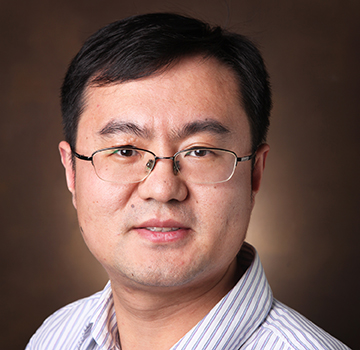 Genome-wide association studies (GWAS) are huge sources of data, but they can be difficult to interpret. In a recent Nature Neuroscience paper, Bingshan Li (MPB) and colleagues describe a new framework, integrative risk gene selector (iRIGS), that probabilistically infers risk genes driving GWAS signals. Genome-wide association studies (GWAS) are huge sources of data, but they can be difficult to interpret. In a recent Nature Neuroscience paper, Bingshan Li (MPB) and colleagues describe a new framework, integrative risk gene selector (iRIGS), that probabilistically infers risk genes driving GWAS signals.
Responding to metal starvation
 In a pair of papers published in Cell Reports and Cell Chemical Biology, the lab of Eric Skaar (PMI) shows how Acinetobacter baumanii responds to zinc and iron starvation, and in the process identifies possible therapeutic targets against this infectious agent. In a pair of papers published in Cell Reports and Cell Chemical Biology, the lab of Eric Skaar (PMI) shows how Acinetobacter baumanii responds to zinc and iron starvation, and in the process identifies possible therapeutic targets against this infectious agent.
Glycine central to GPCR finger loop function
 Seva Gurevich (Pharmacology) and colleagues have identified a critical role for a glycine near the beginning of the finger loop in mediating the GPCR-arrestin interaction. Seva Gurevich (Pharmacology) and colleagues have identified a critical role for a glycine near the beginning of the finger loop in mediating the GPCR-arrestin interaction.
Utilizing the membrane-binding domain of COX-2 to block the opening to the active site
 Larry Marnett’s (Biochemistry) most recent paper, published in JBC, describes how fluorescent cyclooxgenase inhibitors that can be used as probes to diagnose inflammation and cancer bind to the enzyme’s active site. This paper was selected as an Editors’ Pick. Larry Marnett’s (Biochemistry) most recent paper, published in JBC, describes how fluorescent cyclooxgenase inhibitors that can be used as probes to diagnose inflammation and cancer bind to the enzyme’s active site. This paper was selected as an Editors’ Pick.
A new way to treat PTSD
 Jeff Conn (Pharmacology), Craig Lindsley (Pharmacology), and colleagues found that positive allosteric modulators of M1 (a muscarinic acetylcholine receptor) may provide a novel treatment to facilitate exposure therapy for the treatment of post-traumatic stress disorder (PTSD). Jeff Conn (Pharmacology), Craig Lindsley (Pharmacology), and colleagues found that positive allosteric modulators of M1 (a muscarinic acetylcholine receptor) may provide a novel treatment to facilitate exposure therapy for the treatment of post-traumatic stress disorder (PTSD).
Mechanistic insight into a topoisomerase II-targeting antibiotic
 Gepotidacin is a novel drug that targets bacterial type II topoisomerases (gyrase and topoisomerase IV) and that has completed phase II clinical trials, but the details of its interaction with its targets were, until now, unknown. The lab of Neil Osheroff (Biochemistry) has recently characterized the mechanistic and structural interactions of the drug with Staphylococcus aureus gyrase. Gepotidacin is a novel drug that targets bacterial type II topoisomerases (gyrase and topoisomerase IV) and that has completed phase II clinical trials, but the details of its interaction with its targets were, until now, unknown. The lab of Neil Osheroff (Biochemistry) has recently characterized the mechanistic and structural interactions of the drug with Staphylococcus aureus gyrase.
The stuff extracellular vesicles are made of
 A duo of papers published in Cell and Cell Reports presents a better way to isolate and characterize exosomes and non-vesicular particles. This work, led by Robert Coffey (Medicine), forces us to reexamine what we think is true about extracellular vesicles and the types of cargo they carry (or don’t). A duo of papers published in Cell and Cell Reports presents a better way to isolate and characterize exosomes and non-vesicular particles. This work, led by Robert Coffey (Medicine), forces us to reexamine what we think is true about extracellular vesicles and the types of cargo they carry (or don’t).
Making the case for activating mutations in drug resistance
 Joint work between the labs of Christine Lovly (Medicine) and Jens Meiler (Chemistry) has determined that a specific EGFR mutation can lead to drug resistance or to no effect depending on the activating mutation in EGFR-mutant non-small cell lung cancer, suggesting that drug resistance must be considered within the context of the resistance mutation, the drug, and the activating mutation, rather than on the resistance mutation and drug alone. Joint work between the labs of Christine Lovly (Medicine) and Jens Meiler (Chemistry) has determined that a specific EGFR mutation can lead to drug resistance or to no effect depending on the activating mutation in EGFR-mutant non-small cell lung cancer, suggesting that drug resistance must be considered within the context of the resistance mutation, the drug, and the activating mutation, rather than on the resistance mutation and drug alone.
To be or not to be… bone or muscle
 Animal model data from the lab of Jonathan Schoenecker (Orthopaedic Surgery and Rehabilitation) suggest that heterotopic ossification (HO), the formation of bone in soft tissues (e.g. muscles), depends on whether or not macrophages can clear microscopic amounts of nanohydoxyapatite from injured tissue before repair takes place. Animal model data from the lab of Jonathan Schoenecker (Orthopaedic Surgery and Rehabilitation) suggest that heterotopic ossification (HO), the formation of bone in soft tissues (e.g. muscles), depends on whether or not macrophages can clear microscopic amounts of nanohydoxyapatite from injured tissue before repair takes place.
Dendritic pruning may contribute to schizophrenia
 Microglia, the resident macrophages of the central nervous system, help “sculpt” synapses during early postnatal development, but Ariel Deutch (Psychiatry and Behavioral Sciences) shows that overactive microglia might be responsible for excess “pruning” of the dendritic spines of pyramidal cells that is a hallmark of schizophrenia. Microglia, the resident macrophages of the central nervous system, help “sculpt” synapses during early postnatal development, but Ariel Deutch (Psychiatry and Behavioral Sciences) shows that overactive microglia might be responsible for excess “pruning” of the dendritic spines of pyramidal cells that is a hallmark of schizophrenia.
Pancreas size decreases following diabetes diagnosis
 Vanderbilt researchers, including corresponding authors Al Powers (Medicine) and Dan Moore (Pediatrics), have found that the pancreas progressively decreases in size in children and teens newly diagnosed with type 1 diabetes. Vanderbilt researchers, including corresponding authors Al Powers (Medicine) and Dan Moore (Pediatrics), have found that the pancreas progressively decreases in size in children and teens newly diagnosed with type 1 diabetes.
Existence of HANA functional group confirmed
 Jeff Johnston (Chemistry) and his lab report the isolation and characterization of the HaloAminoNitroAlkane (HANA), a new functional group that serves as an intermediate in an unusual synthetic pathway. Jeff Johnston (Chemistry) and his lab report the isolation and characterization of the HaloAminoNitroAlkane (HANA), a new functional group that serves as an intermediate in an unusual synthetic pathway.
Combining big data with zebrafish biology
 A collaboration between external and Vanderbilt faculty, including senior author Nancy Cox (Medicine), Eric Gamazon (Medicine), and Ela Knapik (Medicine), has used a predictive tool linking BioVU patient data and zebrafish biology to find new connections between genes and human disease, such as the genetically predicted decreased expression of GRIK5 associating with comorbid vascular and eye diseases. A collaboration between external and Vanderbilt faculty, including senior author Nancy Cox (Medicine), Eric Gamazon (Medicine), and Ela Knapik (Medicine), has used a predictive tool linking BioVU patient data and zebrafish biology to find new connections between genes and human disease, such as the genetically predicted decreased expression of GRIK5 associating with comorbid vascular and eye diseases.
External Funding Opportunities
NIH Guide
If you have not already done so, you are encouraged to subscribe to the NIH Guide email list, which provides a wealth of information on NIH grant programs. Subscribe here.
NIH S10 Instrumentation Program
Details of the NIH S10 Instrumentation Program for 2019 have been announced. The submission deadline is May 31, but you must have submitted a pre-application to the Office of the Vice Provost for Research by April 2.
NIH Director’s Early Independence Awards (DP5 Clinical Trial Optional)
Investigators wishing to forgo the traditional postdoc route after completing their doctoral studies may apply for this grant designed to accelerate their entry into research careers. Applications are due by September 13, 2019, at 5:00 PM local time of the applicant organization.
NIH Director’s Transformative Research Awards (R01 Clinical Trial Optional)
This FOA is a Common Fund initiative for scientists proposing “groundbreaking, exceptionally innovative, original, and/or unconventional research with the potential to create new scientific paradigms, establish entirely new and improved clinical approaches, or develop transformative technologies.” Applications must be submitted by September 20, 2019, at 5:00 PM local time of the applicant organization. More details here.
NCI Cancer Moonshot
The Cancer Moonshot program at the NCI has a variety of funding opportunities available. Details are here.
Basic Experimental Studies with Humans
The NIH has recently announced the publication of new funding opportunities specifically for research involving human subjects that aims to understand the fundamental aspects of phenomena without an immediate or apparent application. See their FAQs here and keep on the lookout for these opportunities.
New NIH F33 grant opens for NIGMS-funded PIs
This F33 is targeted toward experienced scientists who wish to make major changes in the direction of their research careers or who wish to broaden their scientific background by acquiring new research capabilities. Standard application dates apply to this grant. Visit the program announcement for more details.
Limited Submission Opportunities
Information regarding limited submission opportunities may be found at the University website. You can also sign up to receive regular updates by email.
Internal Funding Opportunities
VU Bridge Program
Primary Basic Sciences faculty with lapses in federal grant support are invited to apply for this program. The next submission deadline for Bridge/Realignment Grant funding is May 15. The instructions for submission of proposals have been posted on the VBS website. It is critical that faculty who wish to apply follow the posted instructions.
Call for Nominations for the 2020 Chancellor’s Public Voices Fellowship
The purpose of this fellowship is to help disseminate the discovery and knowledge of Vanderbilt faculty to broader national and global audiences. The proposed projects must be at or near the promotional stage. The deadline for nominations is May 20.
Small Cell Lung Cancer Pilot Projects
The Phenotype Heterogeneity and Dynamics in Small Cell Lung Cancer Center, Vanderbilt’s NCI Consortium research center, has announced a funding opportunity for innovative pilot projects focused on basic and translational research in SCLC. Projects involving computational and/or experimental methods (ideally in combination) will be considered. For more information and to apply, visit the REDCap survey. Applications are due by May 31. Please contact Amanda Linkous if you have questions.
Call for applications for the Visiting SEC Faculty Travel Grant
The Southeastern Conference (SEC) Visiting Faculty Travel Grant Program is intended to enhance collaboration between faculty at SEC universities, and provides faculty from one SEC member the opportunity to travel to another SEC campus to exchange ideas, develop grant proposals, and conduct research. Please note that these funds are limited to travel expenses. For more information and to apply, click here. Applications must be submitted by June 1, 2019 at 5:00 PM (CDT). Questions should be referred to the Office of the Vice Provost for Faculty Affairs.
Vanderbilt Prize Student Scholar
The Vanderbilt Prize Student Scholar is awarded to a female graduate student in the biomedical sciences at Vanderbilt (Ph.D. or MD/Ph.D. track) who has passed her qualifying exam and who has at least one full year remaining in her Ph.D. training. The awardee will receive a $1,000 cash prize and will be afforded the distinct opportunity of being mentored by the 2019 recipient of the Vanderbilt Prize in Biomedical Science, Christine Seidman, for a year. Nominations are due by June 7, 2019 at 5:00 PM. For more information and to apply, visit the website.
| ![CAS - Basic Sciences - Internal E-Newsletter [Vanderbilt University]](https://van.preservation.mirrorweb.com/public/20250322094747im_/https://cdn.vanderbilt.edu/vu-URL/wp-content/uploads/sites/119/2021/04/19142723/basically-speaking-banner-04-2021.jpg)

 VGM Training Program open for applications
 Each year, Vanderbilt hosts a
  Informational meeting for MacArthur 100 & Change proposals
 The
The  This image was taken by Kensei Taguchi (lab of Craig Brooks, Medicine) at the Cell Imaging Shared Resource Nikon Center of Excellence. Shown is a super-resolution structured illumination microscopy (SIM) image of autophagosomes in kidney tissue using a RFP-GFP-LC3 reporter mouse, which can help visualize the formation of autophagosomes (green/red), and autolysosomes (red only). Tissue sections from ischemic injured kidney were stained for GFP (green), RFP (red), KIM-1 (magenta) and DAPI (blue).


