News
ASPET to recognize Guengerich
 The American Society for Pharmacology and Experimental Therapeutics (ASPET) has selected Fred Guengerich (Biochemistry) as one of its inaugural Fellows. Fellows are selected for their meritorious efforts to advance pharmacology through their scientific achievements, mentorship, and service to ASPET. Read VUMC Reporter article. The American Society for Pharmacology and Experimental Therapeutics (ASPET) has selected Fred Guengerich (Biochemistry) as one of its inaugural Fellows. Fellows are selected for their meritorious efforts to advance pharmacology through their scientific achievements, mentorship, and service to ASPET. Read VUMC Reporter article.
Townsend named to group of Talented 12
 Every year, Chemistry and Engineering News (C&EN) selects 12 individuals who it identifies as exceptional young scientists who are using “clever chemistry” to tackle some of the world’s hardest problems. This year, Steven Townsend (Chemistry) is one of the Talented 12, selected for his research on human milk oligosaccharides, a field that has historically been ignored. Every year, Chemistry and Engineering News (C&EN) selects 12 individuals who it identifies as exceptional young scientists who are using “clever chemistry” to tackle some of the world’s hardest problems. This year, Steven Townsend (Chemistry) is one of the Talented 12, selected for his research on human milk oligosaccharides, a field that has historically been ignored.
Pettepher to be honored at annual AAMC meeting
 Cathy Pettepher (Biochemistry) has been awarded the 2019 Alpha Omega Alpha Robert J. Glaser Distinguished Teacher Award on behalf of the American Association of Medical Colleges (AAMC) for her efforts in adopting a “more integrated approach to the basic sciences and a more collaborative approach to content organization and academic policy” at the School of Medicine. Cathy Pettepher (Biochemistry) has been awarded the 2019 Alpha Omega Alpha Robert J. Glaser Distinguished Teacher Award on behalf of the American Association of Medical Colleges (AAMC) for her efforts in adopting a “more integrated approach to the basic sciences and a more collaborative approach to content organization and academic policy” at the School of Medicine.
Snider recognized by Genetics Society of America
 The GSA has recognized graduate student Chloe Snider (Gould lab, CDB) as a recipient of the DeLill Nasser Award for Professional Development in Genetics. The award is given based on significance of research, productivity, and record of leadership and service through two selection rounds. The GSA has recognized graduate student Chloe Snider (Gould lab, CDB) as a recipient of the DeLill Nasser Award for Professional Development in Genetics. The award is given based on significance of research, productivity, and record of leadership and service through two selection rounds.
Monteggia appointed to IRSF Board of Directors
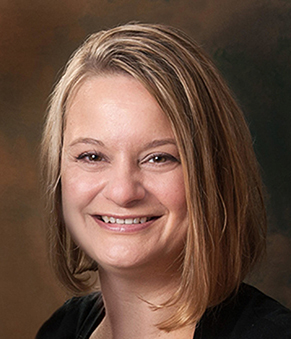 The International Rett Syndrome Foundation recently appointed Lisa Monteggia (Pharmacology) to its board. In her new role, Monteggia will further the organization’s goal of advancing research on Rett Syndrome and connecting affected families to resources and support. The International Rett Syndrome Foundation recently appointed Lisa Monteggia (Pharmacology) to its board. In her new role, Monteggia will further the organization’s goal of advancing research on Rett Syndrome and connecting affected families to resources and support.
Ph.D. students don lab coats in Simple Beginnings ceremony
 The Simple Beginnings ceremony is held each year to welcome and celebrate each new cohort of students in Vanderbilt’s nursing and biomedical Ph.D. programs within the School of Medicine and the College of Arts and Science. If you had relatives who were unable to attend, let them know they can watch the preceding guest session here, and the ceremony here. The Simple Beginnings ceremony is held each year to welcome and celebrate each new cohort of students in Vanderbilt’s nursing and biomedical Ph.D. programs within the School of Medicine and the College of Arts and Science. If you had relatives who were unable to attend, let them know they can watch the preceding guest session here, and the ceremony here.
Trainees earn fellowships
 This month, graduate students Natalie Noll (Merryman lab, Biomedical Engineering) and Breanne Gibson (Shoenecker lab, Orthopaedic Surgery and Rehabilitation) received NHLBI fellowships, Elizabeth Moore (Jefferson lab, Neurology) and James Hutchison (Sanders lab, Biochemistry) received NIA fellowships, and Kelsey McNew (Moore lab, Pediatrics) received an NIDDKD fellowship. Postdoc Lauren Palmer (Skaar lab, PMI) also earned a K99/R00 from the NHLBI. Congratulations to all fellowship recipients! This month, graduate students Natalie Noll (Merryman lab, Biomedical Engineering) and Breanne Gibson (Shoenecker lab, Orthopaedic Surgery and Rehabilitation) received NHLBI fellowships, Elizabeth Moore (Jefferson lab, Neurology) and James Hutchison (Sanders lab, Biochemistry) received NIA fellowships, and Kelsey McNew (Moore lab, Pediatrics) received an NIDDKD fellowship. Postdoc Lauren Palmer (Skaar lab, PMI) also earned a K99/R00 from the NHLBI. Congratulations to all fellowship recipients!
Aspirnaut program celebrates its 10th anniversary
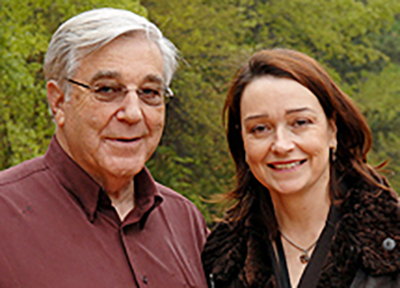 Aspirnaut, which brings rural high school students to Vanderbilt to conduct research for the summer, has marked its 10th year. Started by Billy and Julie Hudson, the program has hosted over 100 students, most of whom have graduated from high school and many of whom are pursuing STEM careers through college and beyond. Aspirnaut, which brings rural high school students to Vanderbilt to conduct research for the summer, has marked its 10th year. Started by Billy and Julie Hudson, the program has hosted over 100 students, most of whom have graduated from high school and many of whom are pursuing STEM careers through college and beyond.
Basic Sciences faculty featured in Medicine

Manny Ascano (Biochemistry), Erin Calipari (Pharmacology), Breann Brown (Biochemistry), and Rebecca Ihrie (CDB) and Jonathan Irish were featured in the latest issue of Vanderbilt’s Medicine magazine. Read on to learn more about your colleagues!
New Discoveries
p73 in cutaneous wound healing
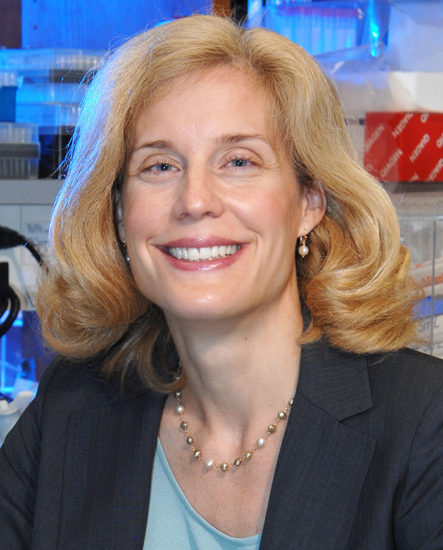 Jennifer Pietenpol’s (Biochemistry) lab has found that p73 regulates basal keratinocyte function and is needed for timely wound healing. Jennifer Pietenpol’s (Biochemistry) lab has found that p73 regulates basal keratinocyte function and is needed for timely wound healing.
Dynamics of catastrophe
 Differences in tubulin heterodimer off-rates give rise to the different dynamics observed at the plus and minus ends of microtubules, according to the lab of Marija Zanic (CDB). This paper was featured on the cover of the Journal of Cell Biology! Differences in tubulin heterodimer off-rates give rise to the different dynamics observed at the plus and minus ends of microtubules, according to the lab of Marija Zanic (CDB). This paper was featured on the cover of the Journal of Cell Biology!
How does salt increase blood pressure?
 A recent collaboration led by Annet Kirabo (Medicine) has shed light on how isolevuglandin-protein adducts and a salt-sensing kinase increase blood pressure following sodium intake. A recent collaboration led by Annet Kirabo (Medicine) has shed light on how isolevuglandin-protein adducts and a salt-sensing kinase increase blood pressure following sodium intake.
Mending the heart
 The healing and repair phases that follow a heart attack are complicated by inflammation and scarring. The Mechanobiology Laboratory of David Merryman (Biomedical Engineering) has found a potential treatment to reduce their negative effects and improve cardiac function after heart attacks. The healing and repair phases that follow a heart attack are complicated by inflammation and scarring. The Mechanobiology Laboratory of David Merryman (Biomedical Engineering) has found a potential treatment to reduce their negative effects and improve cardiac function after heart attacks.
Learning regeneration from zebrafish
 Research from the lab of Jim Patton (Biological Sciences) indicates that suppressing miR-216a, a miRNA, induces the differentiation and regeneration of Müller glia, the source of retinal regeneration in zebrafish. Research from the lab of Jim Patton (Biological Sciences) indicates that suppressing miR-216a, a miRNA, induces the differentiation and regeneration of Müller glia, the source of retinal regeneration in zebrafish.
Lazy cancer cells take path of least resistance
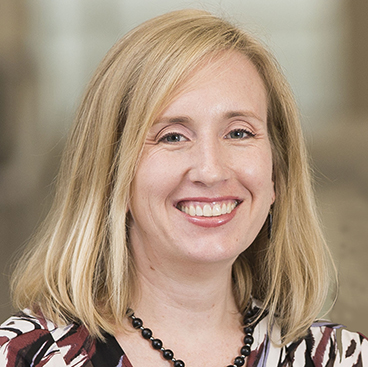 Motile cancer cells choose migration paths based on which ones require the least amount of energy to travel, says Cynthia Reinhart-King (Biomedical Engineering). Motile cancer cells choose migration paths based on which ones require the least amount of energy to travel, says Cynthia Reinhart-King (Biomedical Engineering).
Regulating potassium in vision
The lab of Rebecca Sappington (Ophthalmology & Visual Sciences) has identified pressure-dependent changes in Kir and K2P channels in Müller glia, which are known to be altered in glaucoma and other retinal disorders.
How does the email quarantine system work?
Doug Schmidt (Computer Science) posed some issues of general interest to VUIT, which are addressed below:
- Issue 1: It’s hard to figure out why something gets quarantined.
True. The explicit reason an email ends up in quarantine may often be intentionally obscured. If email hygiene systems were perfectly transparent, they could be easily defeated by nefarious actors. Emails in Quarantine fall into five categories:
- Policy – mail quarantined because it matched a policy set by a mail flow rule
- Bulk – mail identified as bulk mail
- Phish – mail identified as phishing mail
- Malware – mail quarantined because it contains malware
- Spam – mail identified as spam
With the exception of custom policies, we cannot entirely determine these categories for mail flow. Microsoft incorporates cloud-based AI, threat intelligence, collective activity, and behavioral learning across their worldwide service infrastructure to categorize and act on email. If we can collect common examples of emails inaccurately quarantined, we can work with Microsoft and our security team build and test rules or configuration settings that may allow messages of that type to bypass quarantine.
- Issue 2: Marking quarantined emails to “release and allow sender” doesn’t work, i.e., they still get quarantined on replies and on new messages.
The “Release & Allow Sender” single-click link is optimized for Exchange Online mailboxes. Standard advice for mailboxes on premises is for the user to manually add the sender to their mailbox’s safe senders list. Once a user’s mailbox is migrated to O365, this link will work exactly as advertised – with one click.
- Issue 3: Time delay in quarantine is also long and painful, which is impeding research productivity.
Quarantine digest emails are dispatched every 24 hours. This is not adjustable, but users can check their online quarantine at any time here.
Know Your Cores
Did you know that Basic Sciences boasts 19 cores that can help you with an assortment of needs and techniques? We’ll be featuring them each month so that you can get to know them. Maybe they can help you with that project you’ve been putting off… Just don’t forget to acknowledge them in your publications!

The Cell Imaging Shared Resource (CISR) is an institutional, fee-for-service, advanced microscopy resource available to any Vanderbilt researcher. The CISR maintains scheduled access to 13 light and 3 electron microscopes, provides expert imaging and image analysis training and assistance, and performs high-quality electron microscopy (EM) sample preparation. We are excited to bring light-sheet microscopy to the Vanderbilt community through a custom-built lattice light-sheet microscope made possible by a Trans-institutional Project (TIPs) grant collaboration between Vanderbilt Biophotonics, Physics, and Basic Sciences, and through an upcoming NIH S10 equipment grant that will allow us to purchase a Zeiss Lightsheet Z.1.
More information, including detailed equipment descriptions, rates, and staff contact information, may be found on our main website. Scheduling and training requests are done through iLab.
External Funding Opportunities
NIH Guide
If you have not already done so, you are encouraged to subscribe to the NIH Guide email list, which provides a wealth of information on NIH grant programs. Subscribe here.
NCI Cancer Moonshot
The Cancer Moonshot program at the NCI has a variety of funding opportunities available. Details are here.
Basic Experimental Studies with Humans
The NIH has recently announced the publication of new funding opportunities specifically for research involving human subjects that aims to understand the fundamental aspects of phenomena without an immediate or apparent application. See their FAQs here and keep on the lookout for these opportunities.
New NIH F33 grant opens for NIGMS-funded PIs
This F33 is targeted toward experienced scientists who wish to make major changes in the direction of their research careers or who wish to broaden their scientific background by acquiring new research capabilities. Standard application dates apply to this grant. Visit the program announcement for more details.
NSF predoctoral fellowships
The National Science Foundation’s Graduate Research Fellowship Program is open to doctoral students in a variety of STEM disciplines. The deadlines vary, but they cluster in the week of October 21. Make sure to reach out to your administrative officer at least one month before the deadline to begin working on your submission.
DARPA Young Faculty Award
The Defense Advanced Research Projects Agency (DARPA) Young Faculty Award (YFA) program will provide high-impact funding to elite researchers early in their careers to develop innovative new research directions in the context of enabling transformative Department of Defense capabilities. Applications must be submitted by November 19.
NSF Postdoctoral Research Fellowships in Biology
The NSF is soliciting applications for their Postdoctoral Research Fellowships in Biology (PRFB), which must be submitted by 5:00 PM (in the applicant’s local time zone) on November 19. This fellowship is meant for early-career postdocs, so doctoral students are invited to look this grant. Please visit their website to find out all eligibility requirements.
F series NIH fellowships for predoctoral and postdoctoral trainees
The NIH has a series of fellowships available to doctoral students and postdocs that can help you distinguish yourself and support your research. Visit their website to find out more about each type of fellowship. The next deadline is December 8.
Internal Funding Opportunities
Ancora Innovation funding for drug discovery
Ancora Innovation has a request for proposals open for research within all therapeutic modalities of the realm of drug discovery (small molecules, biologics, gene therapies, etc.). Letters of Intent are due October 8.
Call for TIPS Proposals
The Office of the Provost has issued a call for proposals for Trans-Institutional Programs, designed to support new ideas, cutting-edge research, and the development of infrastructure by supporting emerging and existing trans-institutional centers and institutes. Pre-proposals are due October 29. More information is available here.
Academic Pathways Postdoctoral Fellowships
The Academic Pathways Postdoctoral Fellowships program at Vanderbilt is designed to bridge fellows between academic training and entry-level faculty positions. For more information, visit their website. The application window will be open October 1 to November 1.
Call for Chancellor Faculty Fellows Nominations
The Office of the Provost has issued a call for nominations of associate professors to appointment as Chancellor Faculty Fellow, which provides research support of $40,000/year for two years. Nominations are due November 8. More information is available here.
VINSE pilot funding available
The Vanderbilt Institute of Nanoscale Engineering (VINSE) announced that funding is now available to provide Vanderbilt investigators the opportunity to utilize VINSE tools to obtain preliminary results for new research initiatives. Typical awards range from $500 to $2,000 for up to 6 months on a fiscal year basis and are designed to cover VINSE user fees. For more information about this funding opportunity or to apply visit the VINSE website.
Limited Submission Opportunities
Precision Medicine & Health Disparities Collaborative seeks pilot projects
The Precision Medicine & Health Disparities Collaborative (PMHDC) invites pilot projects that meet three key requirements: they have relevance to precision medicine, relevance to health disparities, and community engagement. You can request a pre-application consultation for guidance on preparing your application by September 30. For more information, please refer to the RFA.
Additional LSO information
Information regarding limited submission opportunities may be found on the University and Medical Center websites. You can also sign up to receive regular updates by email. These opportunities are not limited only to faculty. Make sure you check these opportunities out, as some are open to postdocs and graduate and medical students.
| ![CAS - Basic Sciences - Internal E-Newsletter [Vanderbilt University]](https://van.preservation.mirrorweb.com/public/20250322095430im_/https://cdn.vanderbilt.edu/vu-URL/wp-content/uploads/sites/119/2021/04/19142723/basically-speaking-banner-04-2021.jpg)


 2020 Vanderbilt Prize open for nominations

 Software Carpentry Event
 VCAR Science Day
 This image, taken by Romell Gletten (lab of Kevin Schey) at the CISR core, shows a bovine lens posterior suture region stained with wheat germ agglutinin-Alexa 647. You can appreciate the lens fiber cell tips and the lens capsule (the solid red perimeter at the top of the image). See


