Happy New Year – Welcome to 2018!
2017 was a year of building infrastructure and establishing processes to enhance the growth of basic biomedical science throughout the School of Medicine and across the University. We are excited by our new opportunities and look forward to working with our faculty and staff to maximize the synergies of the new environment. The Vanderbilt basic science community comprises a unique blend of fantastic research, exceptional faculty, outstanding training programs, strong administrative support, and aggressive outreach to the community.
As we start off the new year, I would like to call your attention to a new program called the Enabling Innovation Initiative (eI2), which was recently launched through the efforts of Rob Carnahan, Chuck Sanders, and Alan Bentley. The purpose of eI2 is to support innovation and entrepreneurial activity by our faculty by lowering barriers to commercialization. Many basic science discoveries do not lead to immediate application or translation to a marketable product. However, such opportunities do occasionally arise, and it is important for our faculty and students to understand how to exploit them. A goal of eI2 is to increase awareness of the commercialization process and ways that basic scientists can interface with industry. A new seminar series will address these topics. The eI2 website provides the up-to-date seminar schedule in addition to other information about entrepreneurship. I encourage you all to take advantage of this new resource.
My best wishes for an extraordinary 2018.
Larry Marnett
New Year Congratulations!
New Endowed Chairs

Congratulations to Basic Sciences/School of Medicine faculty who recently received endowed chairs. They are Seva Gurevich (Pharmacology), Alyssa Hasty (Molecular Physiology and Biophysics), Richard Simerly (Molecular Physiology and Biophysics), Warren Taylor (Psychiatry), Matt Tyska (Cell and Developmental Biology), Alissa Weaver (Cell and Developmental Biology), and Danny Winder (Molecular Physiology and Biophysics).
Distinguished Investigator
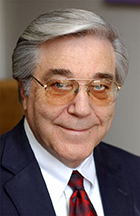 Warmest congratulations to Billy Hudson, recipient of the 2018 Distinguished Investigator Prize from the International Society for Matrix Biology! Warmest congratulations to Billy Hudson, recipient of the 2018 Distinguished Investigator Prize from the International Society for Matrix Biology!
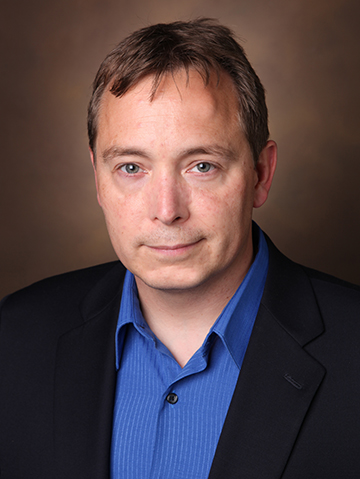 AAAS Pharmaceutical Chair AAAS Pharmaceutical Chair
Kudos to Craig Lindsley, who was elected Chair of the Pharmaceutical Section of AAAS!
New Discoveries
Drivers of Intestinal Tumorigenesis
 Work from Al Reynolds and his colleagues has shown that loss of one gene encoding p120-catenin promotes tumorigenesis in the intestine, whereas loss of both alleles is lethal to tumor cells. Work from Al Reynolds and his colleagues has shown that loss of one gene encoding p120-catenin promotes tumorigenesis in the intestine, whereas loss of both alleles is lethal to tumor cells.
Key to Ubiquitin Turnover
 Recent findings from Jason MacGurn and Walter Chazin show that phosphorylation of ubiquitin at Ser-57 regulates turnover via the endocytic pathway in yeast. Recent findings from Jason MacGurn and Walter Chazin show that phosphorylation of ubiquitin at Ser-57 regulates turnover via the endocytic pathway in yeast.
Tracing Cell Origins
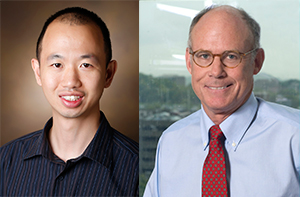 A collaboration between Ken Lau and Bob Coffey has led to the development of pCreode, a computational method for tracing cell differentiation in the intestinal tract. A collaboration between Ken Lau and Bob Coffey has led to the development of pCreode, a computational method for tracing cell differentiation in the intestinal tract.
Lighting Up Iron Metabolism
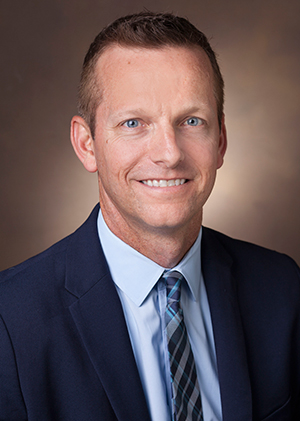 Eric Skaar and his laboratory report a new ferrous-iron-dependent bioluminescent probe that reveals changes in host iron metabolism during bacterial infection. Eric Skaar and his laboratory report a new ferrous-iron-dependent bioluminescent probe that reveals changes in host iron metabolism during bacterial infection.
Molecular Foundation of Memory
 New research from Roger Colbran’s laboratory reveals a role for calmodulin-dependent protein kinase II (CaMKII) in memory formation. New research from Roger Colbran’s laboratory reveals a role for calmodulin-dependent protein kinase II (CaMKII) in memory formation.
New Insight into DNA Damage Repair
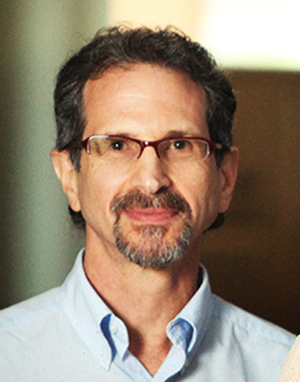 Walter Chazin and his laboratory demonstrate how disease-associated mutations in XPA affect its ability to bind to and modulate the repair of DNA. Walter Chazin and his laboratory demonstrate how disease-associated mutations in XPA affect its ability to bind to and modulate the repair of DNA.
The BRET Office of Career Development Annual Report
The Annual Report of the BRET Office of Career Development is available on the Basic Sciences website. All are encouraged to take a look to see what services are available to graduate students and postdocs through this valuable resource! Links to prior reports are also available at the website.
External Funding Opportunities
2018 NIH S10 Shared and High-End Instrumentation Grants
The NIH will post information for the 2018 S10 Shared and High-end Instrumentation Grants in the next few weeks. These funding mechanisms are intended for instrument purchases in the range of $50k – $2M. In addition, NIH sometimes requests proposals for unique award programs in a specific area of interest (e.g., the Shared Instrumentation for Animal Research in 2017). Submission of an S10 proposal to the NIH requires institutional pre-approval. For Basic Science faculty, this is obtained by submitting a pre-proposal to the Office of the Dean of Basic Sciences via a REDCap survey. Required items to provide with your pre-proposal include a 5-year operational budget, a list of major users, an instrument quote, and a statement of support from a department or center. During the Dean’s review, matching funds are allocated that can be used to help offset the operational costs for the first 5 years of the instrument as long as the instrument is placed in and maintained by a Vanderbilt core. Once the programs are announced, you will be provided with additional instructions. If approved to move forward in the process, final submissions to the NIH are typically due in late May. Throughout the application process, please direct all questions related to the S10 program to Anthony Tharp. This announcement is provided to encourage planning for submission of a pre-proposal once NIH issues the formal program announcement.
AAAS Martin and Rose Wachtel Cancer Research Award
Young cancer researchers are encouraged to submit an application to AAAS to compete for the $25,000 Martin and Rose Wachtel Award. The application involves writing a 1500 word essay on the nominee/applicant’s research. The deadline is Feb. 1, 2018.
L’Oréal USA for Women in Science
L’Oréal USA partners with AAAS to provide funding to support the research of five female postdoctoral scientists per year. Research in the biomedical and natural sciences is supported. The application deadline is Feb. 2nd.
Agilent Early Career Professor Award
Agilent Technologies provides an award of $100,000 to support the research of an early career investigator who is working to develop and advance techniques and approaches for the study of the human microbiome and host/microbiome interactions. The application deadline is Feb. 28th.
Internal Funding Opportunities
Basic Sciences Bridge Funding
Applications for the next round of Bridge Funding should be submitted no later than Jan 15th. Information on the Bridge Program and the on-line submission system can be found here. Primary Basic Sciences faculty are encouraged to take advantage of this mechanism to help them either maintain project momentum during temporary lapses of funding or to scientifically realign projects to embrace new directions.
Pilot and Feasibility Grants for Diabetes and Obesity Research
The deadline is Jan. 15th to apply for Pilot and Feasibility grants from the Vanderbilt Diabetes Center, the Vanderbilt Diabetes Research and Training Center (DRTC), and the Vanderbilt Center for Diabetes Translation Research (CDTR). Grants are available in the areas of Translational or Behavioral Research, Basic or Clinical Research, or pilot studies that utilize the High-Throughput Screening Facility, Mass Spectrometry Research Center, or BioVU.
Pilot and Feasibility Grants for Disgestive Disease Research
The deadline is Jan. 19th to apply for Pilot and Feasibility grants from the Vanderbilt Digestive Diseases Research Center (VDDRC). Opportunities include Pilot and Feasibility Grants and a Young Investigator Award.
Discovery Grants
Applications are being accepted until Jan. 29th for the Discovery Grant Program, which provides funding for new, cutting edge research as a catalyst to significant external funding. Basic Sciences faculty are encouraged to take advantage of this way to advance their research into new areas.
| ![CAS - Basic Sciences - Internal E-Newsletter [Vanderbilt University]](https://van.preservation.mirrorweb.com/public/20250322095937im_/https://cdn.vanderbilt.edu/vu-URL/wp-content/uploads/sites/119/2021/04/19142723/basically-speaking-banner-04-2021.jpg)


