Heartfelt Congratulations!
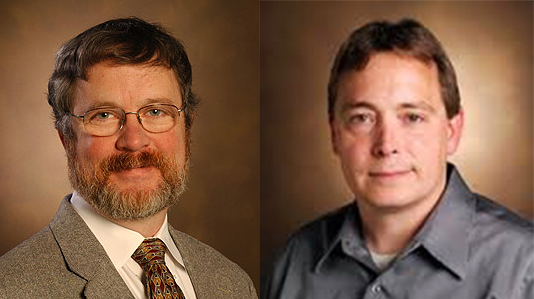
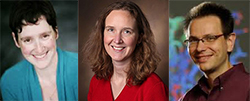 Congratulations go out to Melanie Ohi (Cell & Developmental Biology) for her recent appointment as a Chancellor Faculty Fellow, Borden Lacy (Pathology, Microbiology & Immunology) for her appointment as Deputy Director of the Center for Structural Biology, and Jens Meiler (Center for Structural Biology, VICB) for his election as a member of the Saxon Academy of Sciences in Leipzig Germany. Jens received this honor as a result of his work to foster a vibrant and ongoing collaboration between Vanderbilt and Leipzig University Congratulations go out to Melanie Ohi (Cell & Developmental Biology) for her recent appointment as a Chancellor Faculty Fellow, Borden Lacy (Pathology, Microbiology & Immunology) for her appointment as Deputy Director of the Center for Structural Biology, and Jens Meiler (Center for Structural Biology, VICB) for his election as a member of the Saxon Academy of Sciences in Leipzig Germany. Jens received this honor as a result of his work to foster a vibrant and ongoing collaboration between Vanderbilt and Leipzig University
Inaugural Discovery Science Emerging Scholars Lecture
 The Inaugural Discovery Science Emerging Scholars Lecture will be held March 16. This new series features the most promising young scientists who are making notable discoveries as postdoctoral fellows or early career faculty. The first speaker in the series will be Rene Raphemot, Ph.D. (Vanderbilt, 2014), NIH postdoctoral fellow in the laboratory of Emily Derbyshire at Duke University. Dr. Raphemot studies host-parasite interactions during the liver-stage of malaria infection. His goal is to understand host-related factors that are exploited by the parasite. The title of his lecture, to be held at 4:00 PM in PRB 206 is “A Genomic Screen Reveals New Host Factors Critical to Liver-Stage Malaria”. The lecture is sponsored by the Vanderbilt University Office of Equity, Diversity, and Inclusion. The Inaugural Discovery Science Emerging Scholars Lecture will be held March 16. This new series features the most promising young scientists who are making notable discoveries as postdoctoral fellows or early career faculty. The first speaker in the series will be Rene Raphemot, Ph.D. (Vanderbilt, 2014), NIH postdoctoral fellow in the laboratory of Emily Derbyshire at Duke University. Dr. Raphemot studies host-parasite interactions during the liver-stage of malaria infection. His goal is to understand host-related factors that are exploited by the parasite. The title of his lecture, to be held at 4:00 PM in PRB 206 is “A Genomic Screen Reveals New Host Factors Critical to Liver-Stage Malaria”. The lecture is sponsored by the Vanderbilt University Office of Equity, Diversity, and Inclusion.
March for Science
The March for Science is being held on April 22 in Washington, D.C., with satellite events in many other cities, including Nashville and Chicago (during the Experimental Biology meeting). While Basic Sciences has no official position on these events, as citizen-scientists their merit, and the possibility of your own participation, may be worthy of your consideration. For more information see:
March for Science Washington
March for Science Nashville
March for Science Chicago
Science News
DNA Charge Transfer Drives Primase Regulation
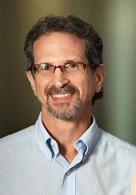
Walter Chazin’s lab demonstrates how charge transfer in DNA modulates the activity of DNA primase through oxidation and reduction of its [4Fe4S] cluster. Read more
New Weapon to Battle Disease-Carrying Mosquitoes
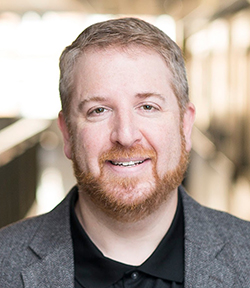 Researchers in Seth Bordenstein’s lab have learned how to harness genes from Wolbachia bacteria to induce infertility in mosquito populations. Read more Researchers in Seth Bordenstein’s lab have learned how to harness genes from Wolbachia bacteria to induce infertility in mosquito populations. Read more
Cross-Talk Between Bacterial Signaling Systems
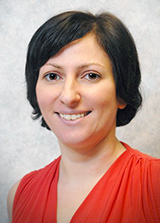 New research from the lab of Maria Hadjifrangiskou shows how bacterial two-component systems can interact to promote antibiotic resistance. Read more New research from the lab of Maria Hadjifrangiskou shows how bacterial two-component systems can interact to promote antibiotic resistance. Read more
Phospholipase D as a Therapeutic Target
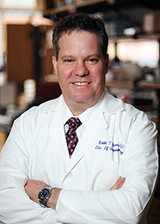
Alex Brown and Craig LIndsley review PLD as a target for cancer, infection, and neurodegenerative diseases in Nature Reviews Drug Discovery.Nature Reviews Drug Discovery. Read more
New Potential Target to Combat H. pylori Infection
 Keith Wilson’s lab has shown that an enyme of polyamine metabolism facilitates H. pylori infection, suggesting that inhibition of this enzyme might provide new therapeutic approaches to combat the pathogen. Read more Keith Wilson’s lab has shown that an enyme of polyamine metabolism facilitates H. pylori infection, suggesting that inhibition of this enzyme might provide new therapeutic approaches to combat the pathogen. Read more
The Bacterial Circadian Clock
 The biochemistry underlying circadian rhythms in bacteria is the subject of a new review from Carl Johnson in Nature Reviews Microbiology. The biochemistry underlying circadian rhythms in bacteria is the subject of a new review from Carl Johnson in Nature Reviews Microbiology.
Optimized Malignant Behavior in Metastatic Pancreatic Cancer
 Work from the lab of Oliver McDonald shows how metastatic foci of pancreatic cancer are reprogrammed for maximal malignancy and identifies a small molecule that prevents the process. Read more Work from the lab of Oliver McDonald shows how metastatic foci of pancreatic cancer are reprogrammed for maximal malignancy and identifies a small molecule that prevents the process. Read more
Exploring the Integrity of Integrins
 Studies in the laboratories of Chuck Sanders and Roy Zent reveal new insights into the structure and function of integrins and their interactions with collagen. Read more Studies in the laboratories of Chuck Sanders and Roy Zent reveal new insights into the structure and function of integrins and their interactions with collagen. Read more
New Approach to Targeted Cancer Chemotherapy
 The high levels of expression of the enzyme cyclooxygenase-2 in many cancer cells provides the foundation for targeting anti-tumor agents to tumors as conjugates of cyclooxygenase-2 inhibitors as reported by Jashim Uddin and Larry Marnett. Read more The high levels of expression of the enzyme cyclooxygenase-2 in many cancer cells provides the foundation for targeting anti-tumor agents to tumors as conjugates of cyclooxygenase-2 inhibitors as reported by Jashim Uddin and Larry Marnett. Read more
Targeting Aurora Kinase A in Gastrointestinal Cancers
 Recent work from Wael El-Rifai’s lab indicates that blocking the activity of overexpressed AURKA may offer hope for cancers that are particularly difficult to treat by conventional means. Read more Recent work from Wael El-Rifai’s lab indicates that blocking the activity of overexpressed AURKA may offer hope for cancers that are particularly difficult to treat by conventional means. Read more
Insights Into the Pathogenesis of Autism
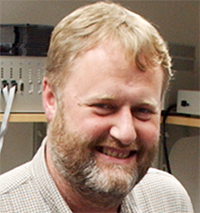 Work from the laboratory of Roger Colbran reveals that mutation in the CAMK2-alpha gene is associated with the neurological abnormalities seen in autism spectrum disorder. Read more Work from the laboratory of Roger Colbran reveals that mutation in the CAMK2-alpha gene is associated with the neurological abnormalities seen in autism spectrum disorder. Read more
Importance of Interleukin 15 in Septic Shock
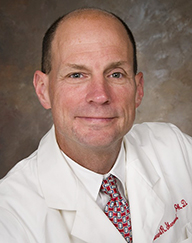 Research from Edward Sherwood and colleagues shows that IL-15 plays a key role in the pathophysiology of septic shock in mice. Read more Research from Edward Sherwood and colleagues shows that IL-15 plays a key role in the pathophysiology of septic shock in mice. Read more
How Helpful is the GRE?
 Recent findings from Roger Chalkley and his colleagues at Peabody College indicate that the GRE is a poor predictor of success in graduate school. Read more Recent findings from Roger Chalkley and his colleagues at Peabody College indicate that the GRE is a poor predictor of success in graduate school. Read more
More News!
Casagrande’s Life Celebrated
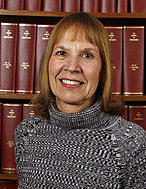 We honor and celebrate the contributions of Vivien Casagrande, internationally renowned neuroscientist, respected teacher, valued colleague. She will be missed by all. Read more We honor and celebrate the contributions of Vivien Casagrande, internationally renowned neuroscientist, respected teacher, valued colleague. She will be missed by all. Read more
First Graduate of the Physician Science Doctoral Program
 Congratulations to Bradley Richmond, M.D., who earned his Ph.D. in Cell and Developmental Biology under the mentorship of Timothy Blackwell, M.D. Read more Congratulations to Bradley Richmond, M.D., who earned his Ph.D. in Cell and Developmental Biology under the mentorship of Timothy Blackwell, M.D. Read more
Neuert & Weaver Make Film Debuts at Biophysical Meeting
 Gregor Neuert (Molecular Physiology & Biophysics) and Alissa Weaver (Cancer Biology) both made a splash at the recent Biophysical Society meeting by being interviewed on Biophysical Society TV! Gregor Neuert (Molecular Physiology & Biophysics) and Alissa Weaver (Cancer Biology) both made a splash at the recent Biophysical Society meeting by being interviewed on Biophysical Society TV!
Vanderbilt Ranked High in Innovation
Vanderbilt was recently ranked #20 in Reuters Top 100 list of the most innovative universities, up from #34 last year. Read more
VU BreakThru Blog
A new blog site provides Vanderbilt faculty involved with the university’s internal funding programs—TIPs, University Courses, Discovery Grants and Research Scholar Grants—a platform from which they can communicate some of the most relevant aspects of their projects. Read more
| ![CAS - Basic Sciences - Internal E-Newsletter [Vanderbilt University]](https://van.preservation.mirrorweb.com/public/20250322101930im_/https://cdn.vanderbilt.edu/vu-URL/wp-content/uploads/sites/119/2021/04/19142723/basically-speaking-banner-04-2021.jpg)
 March: Discovery Lectures:
 Frontiers of Biomedical Imaging Science VI:
