Job Architecture Components
-
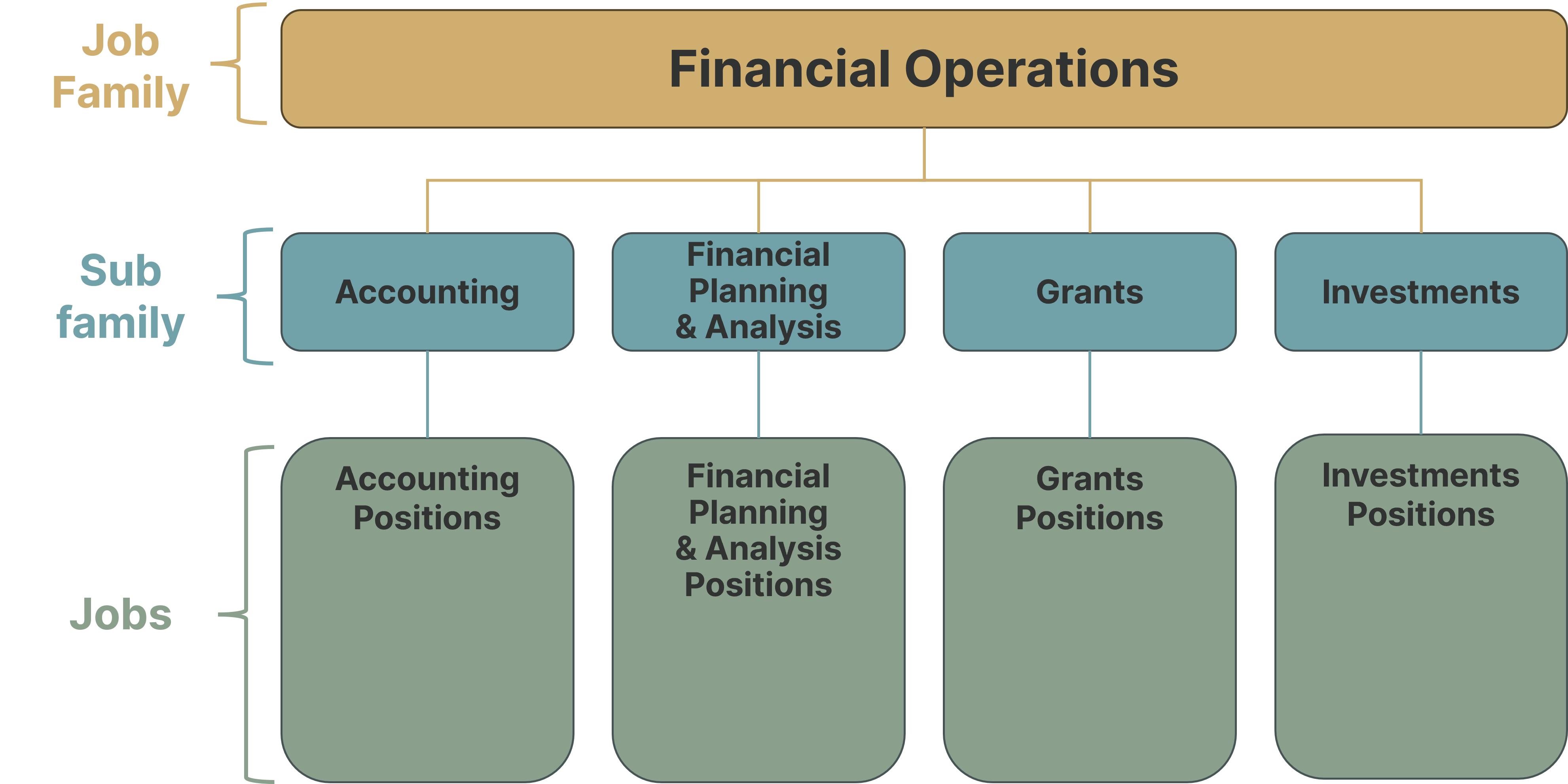
Job Families and Sub Families:
Jobs that relate to each other and provide career growth pathsEach job is aligned with a job family and sub family. This allows staff the ability to see what growth opportunities are within their job family and area of expertise.
Example:
-
Job Level:
Designates the stage of the career journey at VUEach job will be assigned a specific level within the job architecture, reflecting its position in the overall structure. These levels will range from entry-level roles to the Chancellor.
-
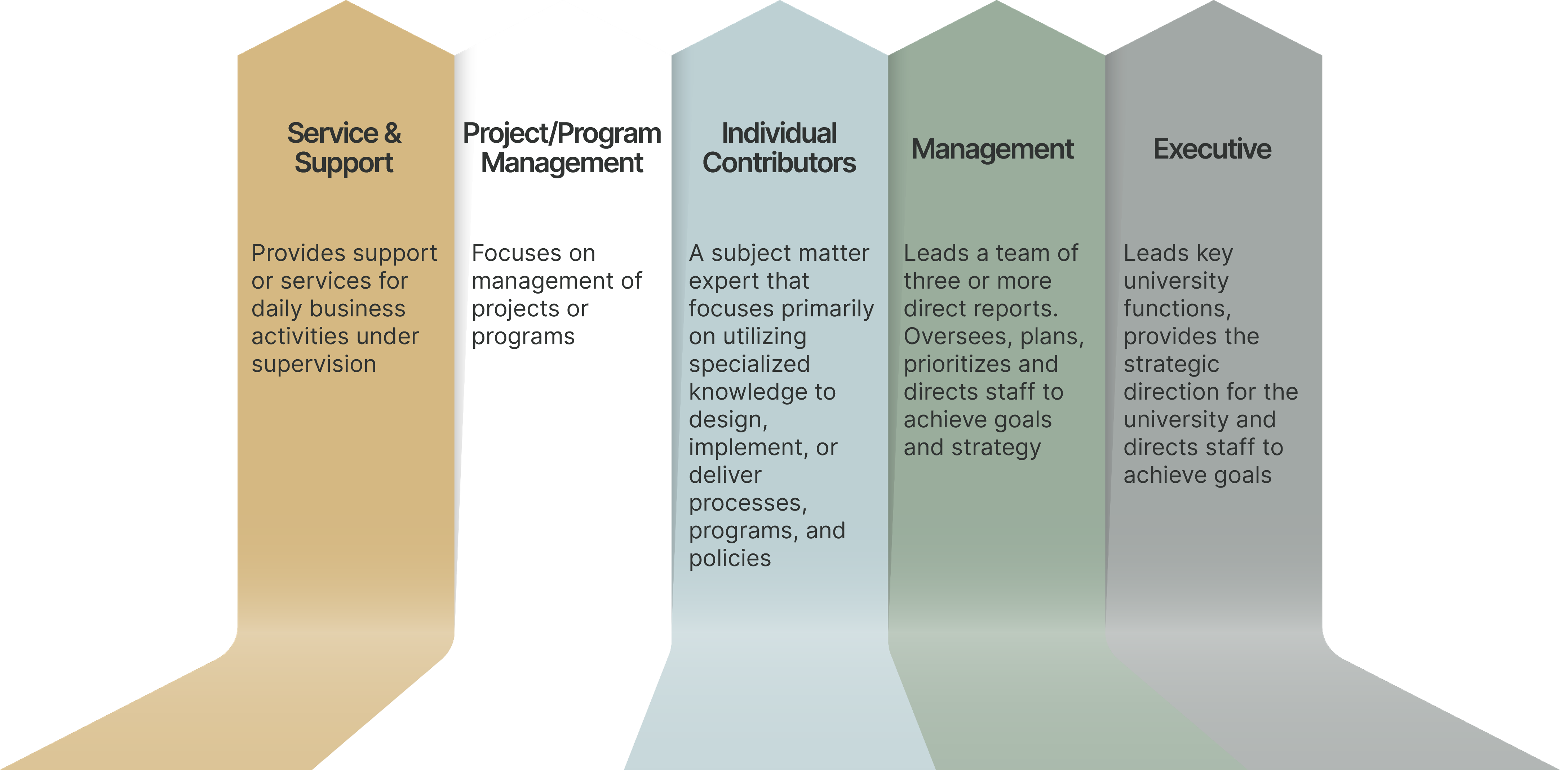
Growth Streams:
Designates the career growth typeGrowth streams reflect the career type within the institution, characterized by unique responsibilities. Vanderbilt University's Job Architecture includes five Growth Streams (Service & Support, Project / Program Management, Individual Contributor, Management, and Executive), defined below:
-
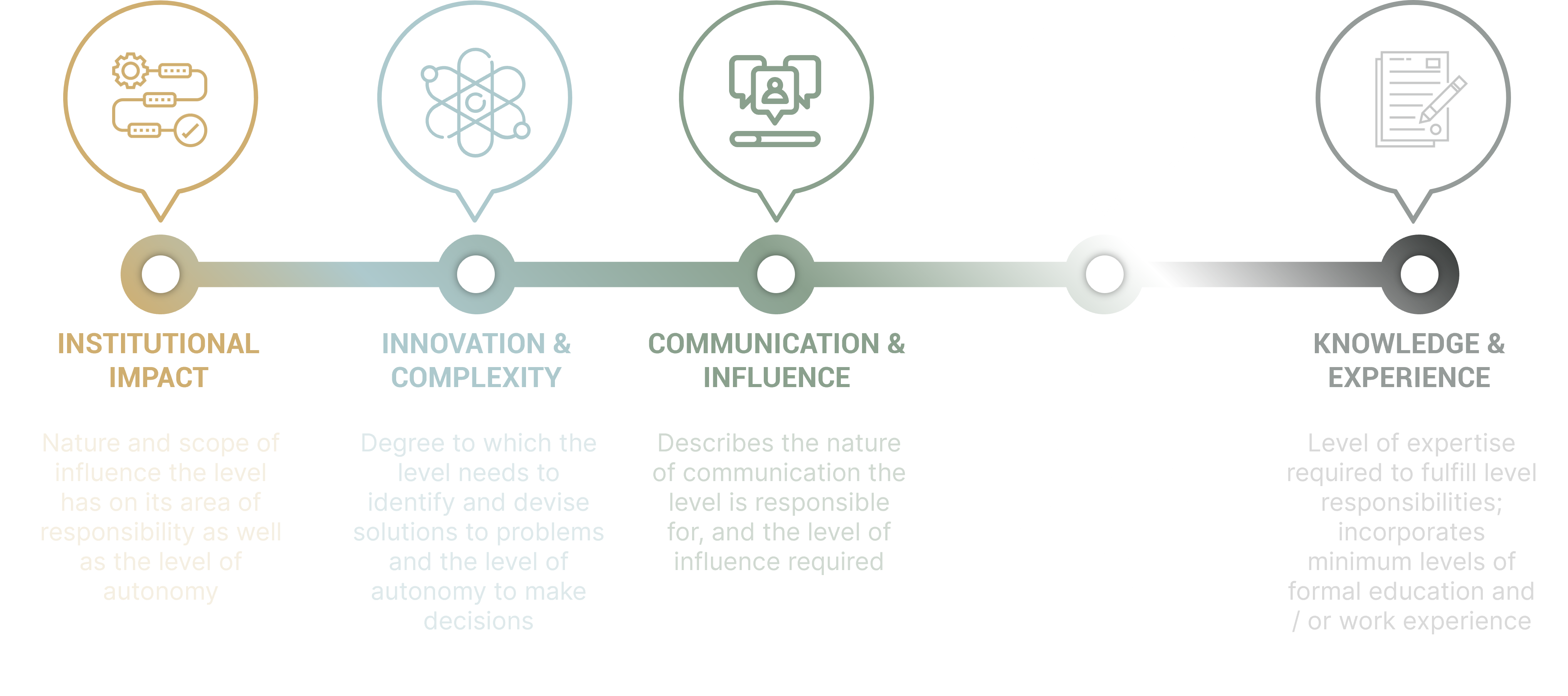
Growth Levels:
Designates the stage of the career growth journey within the growth streamEach Growth Level within Vanderbilt University includes the below work dimensions in order to differentiate each level. These dimensions reflect the expectations of jobs within a given level, defined using a common framework across the institution.
-
Jobs:
Specific role within the growth stream and growth levelThis is simply the job code and job title
-
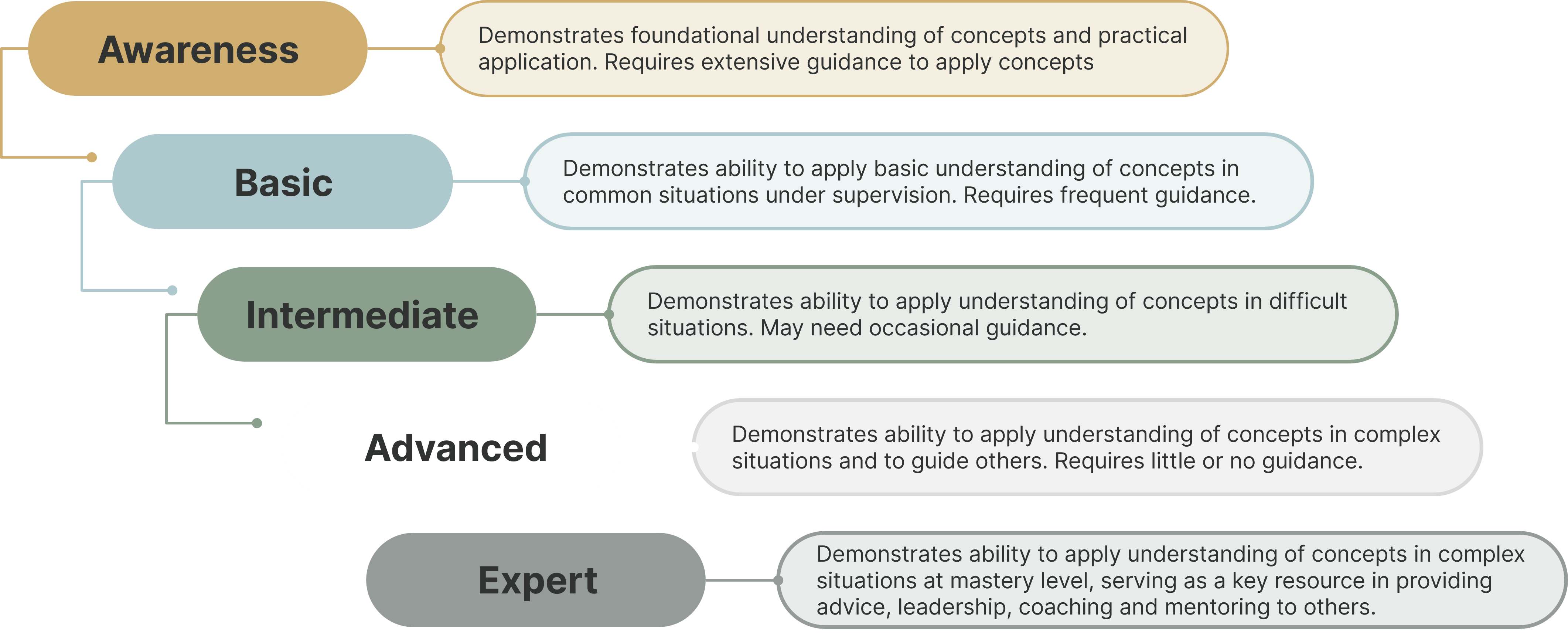
Skills:
A skill is an ability or knowledge possessed by a person, which may be critical to perform a task, assignment, job, or role. Skills are usually developed through experience, practice, training, or education.Each job will have a list of skills that are needed to be successful in that role. In addition to the list of skills each skill will include a proficiency level.
Frequently Asked Questions
-
What is the new skills-based job architecture and why is Vanderbilt introducing it?
It's a new way of organizing roles based on skills, responsibilities, and career paths to promote visibility of career opportunities across the university.
-
Does the skills-based job architecture affect all staff
Yes, all jobs at Vanderbilt University will be reviewed and aligned to our new job architecture. Our approach in reviewing jobs is focused on the role itself, the skills it requires, and its scope of responsibility. Our job mapping process does not consider any individual employee’s performance when aligning jobs to the structure
-
When will these changes take effect?
A pilot begins June 23, 2025, and the full rollout is scheduled for July 28, 2025.
-
Why is Vanderbilt University introducing growth streams? Can employees move between them?
Yes, career mobility is expected and supported by this framework.
Establishing growth streams will enable Vanderbilt University to clearly illustrate options for career paths; differentiate jobs that manage teams or people versus those that manage processes, projects or subject matter; and clarify what skills are needed to make moves between roles in different growth streams.
-
Will an employee’s career path change? What will happen to employees who were close to being promoted
We are introducing standardized growth streams as part of our new job architecture, but that does not mean an employee’s broader career trajectory is changing. We encourage employees to use this framework to plan for future growth opportunities as career path options will be clearer. This will help staff navigate their career opportunities and see pathways for development that may not have been obvious before. Employees will still be evaluated based on their individual efforts during the performance review and promotion process at Vanderbilt University
-
How are job families different from business units?
The business unit view reflects reporting structure within the organization (e.g., all positions reporting into a specific leader), while job families represent a work design perspective based on the common nature of work within a specific discipline. Job families can exist within a single business unit or span multiple business units across the University. In summary, while business units may change annually, a well-defined job architecture remains stable despite these changes.
-
The Oracle / job title is changing, does this qualify an employee for more pay? Does this impact working titles?
No, the title change is not a promotion (or a demotion), and it does not qualify an employee for any immediate rewards or compensation adjustments. All employees will remain at their same pay level within the organization and will continue using their current working title.
-
Where will I be able to see my new title? Will Outlook show the new Oracle title?
The new Oracle titles will be visible in the “Me” section of Oracle. Employees will be able to see their new Oracle title along with the job family, sub family, growth stream and growth level associated with the role that they are in. The address book in Outlook will also reflect the Oracle title. PCB is currently looking into options to also display working titles in the future.
-
Since the Oracle/job titles are changing, will roles or responsibilities change as well?
Some titles may change as a result of this process; however, day-to-day roles and responsibilities will not change even when there is a title change. Titles will change if it is determined they are inconsistent with individuals in similar positions, both within the organization and in the external market.
-
How does the skills-based job architecture relate to my compensation?
Through our job architecture, we will be better able to classify and benchmark our jobs against the market, ultimately ensuring that we remain aligned to the markets we operate in. It’s important to note that while the job architecture will inform our total rewards strategy, this effort is not about changing compensation within the organization at this time.
-
How does the skills-based job architecture support my growth and career development? How do I advance within the framework?
Our skills-based job architecture will provide employees with increased visibility into both lateral and vertical career paths and potential growth opportunities across Vanderbilt. It outlines the expected competencies and responsibilities of every role, making it easier to set goals and create development plans. Find time with your team to discuss how the skills-based job architecture can enable them to explore different growth opportunities.
-
How does this change support my career growth
It makes career paths more visible and skill requirements clearer, so you can make informed decisions about your development.