. 2017 Jan 5;35(2):329-336.
doi: 10.1016/j.vaccine.2016.11.059. Epub 2016 Dec 3.

Greater activation of peripheral T follicular helper cells following high dose influenza vaccine in older adults forecasts seroconversion

Affiliations

Greater activation of peripheral T follicular helper cells following high dose influenza vaccine in older adults forecasts seroconversion

Mark A Pilkinton et al. Vaccine. .

Abstract

Background: Influenza related morbidity and mortality disproportionately impacts older adults. The serologic response to vaccine is diminished in older adults; however, high dose inactivated influenza vaccine (HD IIV) has shown improved rates of seroconversion compared to standard dose (SD IIV). We hypothesize this may be due to the superior ability of high dose vaccine to activate T follicular helper (Tfh) cells and provide B cell dependent T cell help.

Methods: We measured peripheral Tfh (pTfh) activation in 50 community dwelling adults 65years or older who were randomly assigned to receive either the HD IIV or SD IIV.

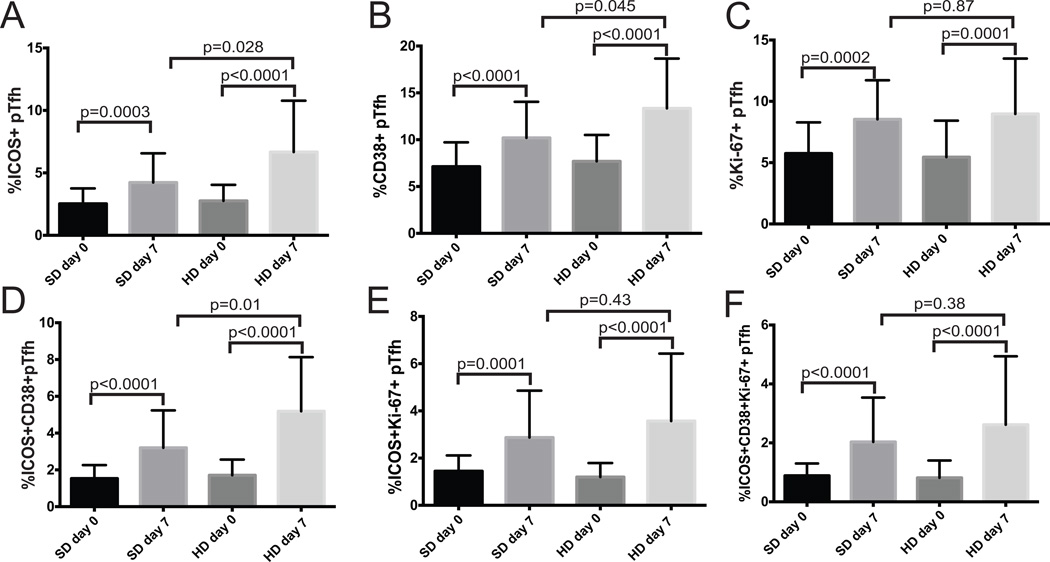
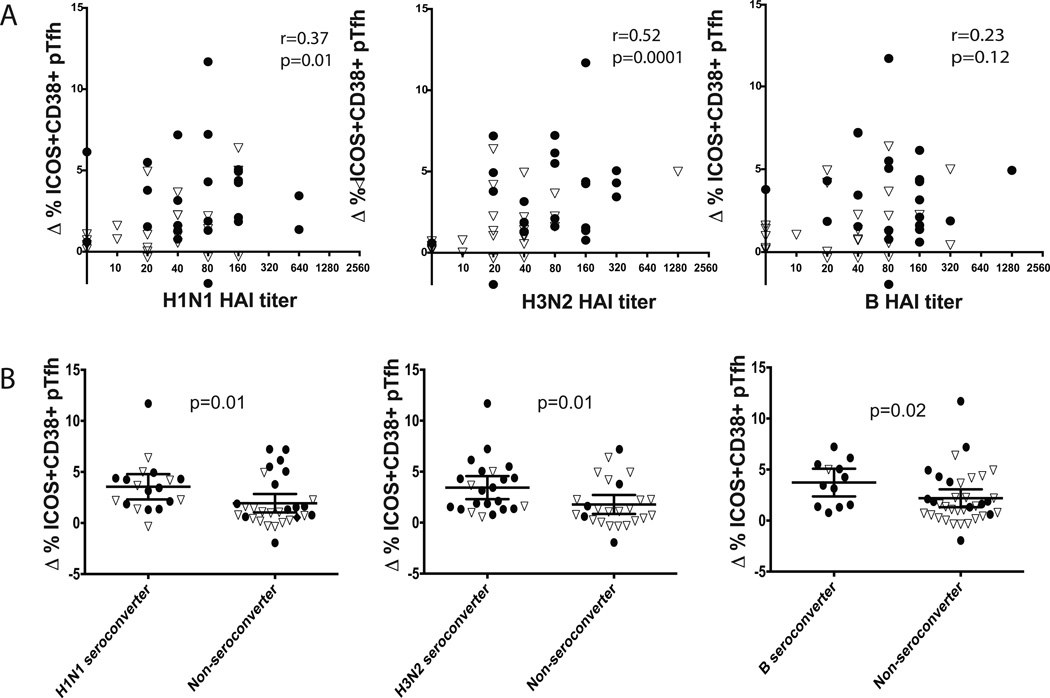
Results: The HD vaccination elicited significantly higher levels of ICOS expression on pTfh cells, at day 7 compared to SD vaccination (p=0.02). The magnitude of the increase in ICOS+ pTfh cells from baseline to day 7 was predictive of seroconversion for both influenza A and B vaccination.

Conclusion: Strong Tfh activation in response to influenza vaccination forecasts successful seroconversion in older adults, and HD IIV elicits greater Tfh activation than SD IIV. Future vaccine studies should focus on ways to further optimize the Tfh response.

Keywords: High dose influenza vaccine; Influenza vaccine; T follicular helper cells; Tfh; viSNE.


Figures

Figure 1
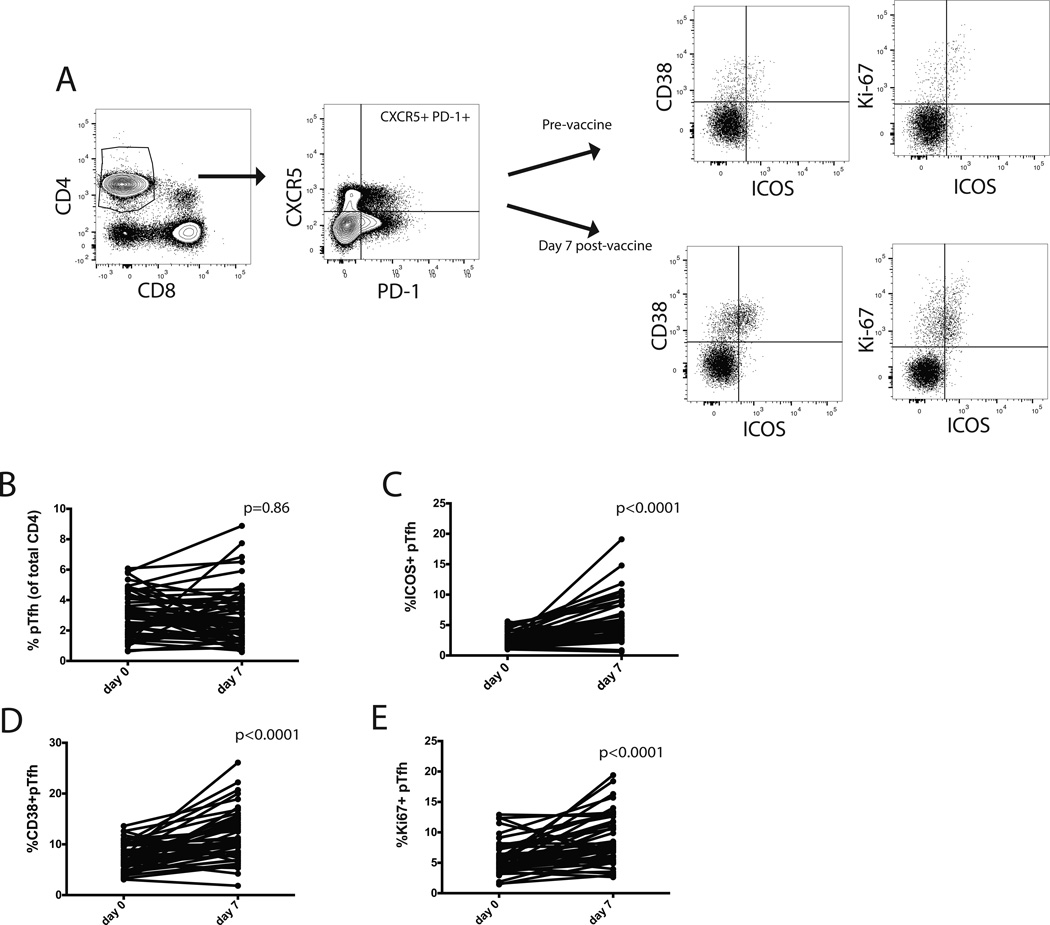
Figure 1. Vaccination increases the frequency of activated pTfh cells
A) Gating strategy to identify pTfh cells, defined by co-expression of PD-1 and CXCR5 on CD4+ T cells. We measured ICOS, CD38, and Ki-67 on pTfh cells. A representative individual pre and post-vaccination is shown. B) The frequency of CD4+ T cells with the pTfh phenotype did not significantly change pre and post-vaccination for the pooled cohort. C–E) The frequency of ICOS+ pTfh cells (C) CD38+ pTfh cells (D) and Ki67+ pTfh cells increase increased post-vaccination. (Wilcoxon signed rank test).
Figure 2
Figure 2. High dose vaccine recipients had a greater increase in activated pTfh cells
The frequency of pTfh cells with individual activation markers (A–C) or combinations of activation markers (D–F) for standard dose (SD) and high dose (HD) vaccine recipients before (day 0) and after (day 7) vaccination.
Figure 3
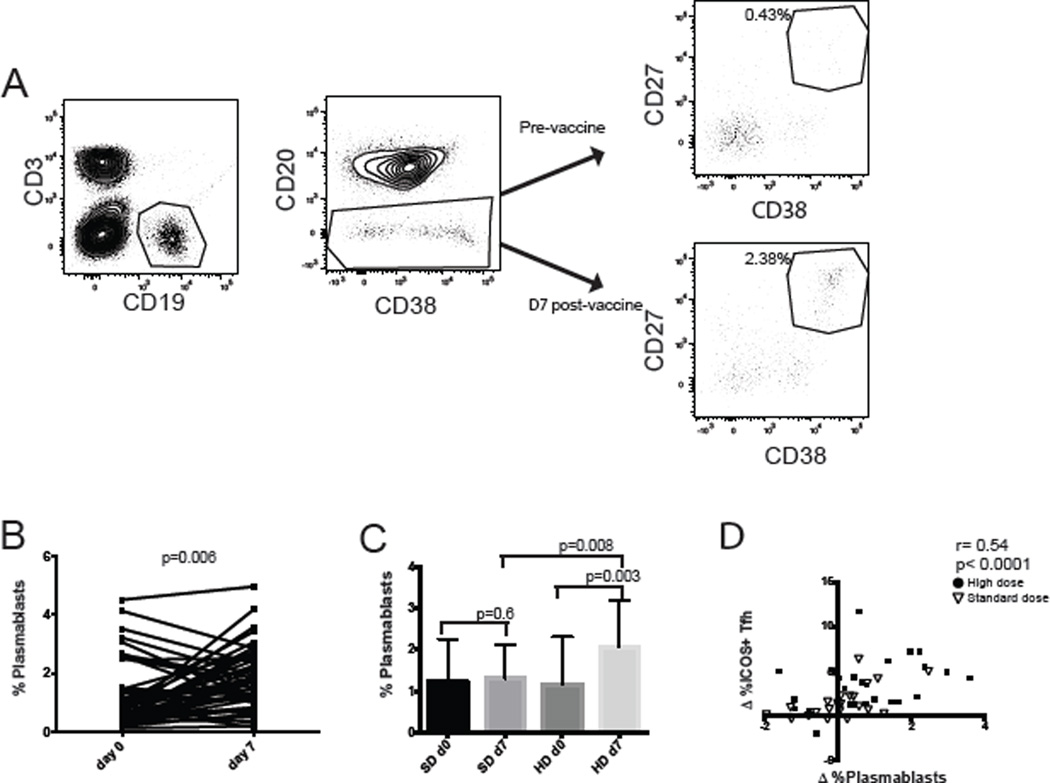
Figure 3. Plasmablast frequency increases proportionally to the increase in frequency of ICOS+ pTfh cells after vaccination
A) Plasmablasts, defined as CD19+ CD20lowCD38highCD27high. cells were measured before and after vaccination. B) The frequency of plasmablasts before and after vaccination for each individual. C) The change in plasmablast frequency from day 0 to day 7 correlated directly with the change in ICOS+ pTfh cells. Spearman’s rank correlation was performed on the whole cohort Subjects who received standard dose or high dose are indicated. D) Plasmablast frequency for either the SD IIV or the HD IIV group before and after vaccination.
Figure 4
Figure 4. The change in frequency of ICOS+ pTfh cells day 7 after vaccination correlated with day 28 HAI titers and predicted seroconversion
A) The change in ICOS+ pTfh cells directly correlated with the day 28 HAI titer for both strains of influenza A but not influenza B (Spearman’s rank). B) The change in ICOS+ pTfh cells was significantly greater in seroconverters compared to non-converters (Mann-Whitney U test). Open triangles indicate standard dose recipients; closed circles are high dose recipients.
Figure 5
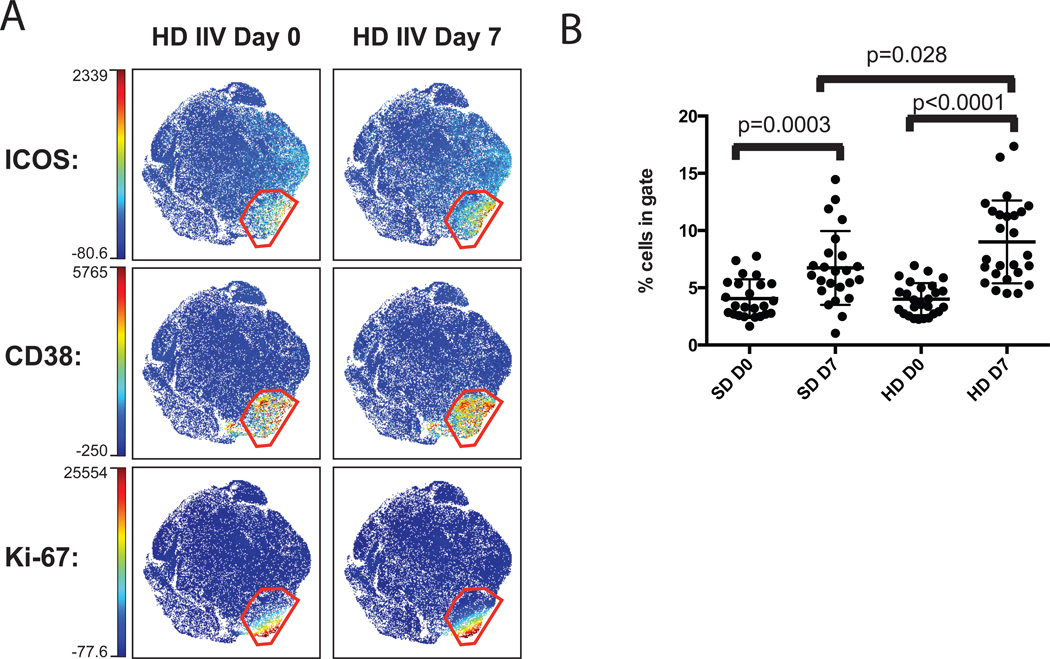
Figure 5. viSNE analysis reveals multi-dimensional phenotype of activated pTfh cells that are significantly more frequent in HD IIV recipients at Day 7
(A) viSNE maps displaying live pTfh cells highlight expression of ICOS, CD38, and Ki-67 for day 0 and day 7 of HD IIV. Intensity scales indicate the range of expression for each marker. Maps display cells from the concatenated files of groups indicated above the plots. The red gate was drawn based on dual CD38 and ICOS expression. (B) Statistical analysis of the frequency of cells within the red gated population for all individuals. Wilcoxon signed rank test between day 0 and day 7 for paired samples; Mann-Whitney test for comparison between groups

References

    1. Fulton RB, Varga SM. Effects of aging on the adaptive immune response to respiratory virus infections. Aging health. 2009;5:775. - PMC - PubMed
    1. Goodwin K, Viboud C, Simonsen L. Antibody response to influenza vaccination in the elderly: a quantitative review. Vaccine. 2006;24:1159–1169. - PubMed
    1. Thompson WW, Shay DK, Weintraub E, Brammer L, Cox N, Anderson LJ, et al. Mortality associated with influenza and respiratory syncytial virus in the United States. JAMA : the journal of the American Medical Association. 2003;289:179–186. - PubMed
    1. Couch RB, Winokur P, Brady R, Belshe R, Chen WH, Cate TR, et al. Safety and immunogenicity of a high dosage trivalent influenza vaccine among elderly subjects. Vaccine. 2007;25:7656–7663. - PMC - PubMed
    1. DiazGranados CA, Dunning AJ, Jordanov E, Landolfi V, Denis M, Talbot HK. High-dose trivalent influenza vaccine compared to standard dose vaccine in elderly adults: safety, immunogenicity and relative efficacy during the 2009–2010 season. Vaccine. 2013;31:861–866. - PubMed

Publication types

Substances