


Association of uterine fibroids with birthweight and gestational age
- PMID: 32741603
- PMCID: PMC8009686
- DOI: 10.1016/j.annepidem.2020.06.012
Association of uterine fibroids with birthweight and gestational age
Abstract
Purpose: To determine if fibroids or their characteristics are associated with birthweight and/or gestational age, and to assess the impact of race or ethnicity.
Methods: Right from the Start (2000-2012) is a prospective cohort that enrolled women from the southern US in early pregnancy. Transvaginal ultrasounds were used to measure fibroid characteristics and confirm gestational age. Date of birth and birthweight were obtained from vital or medical records. We assessed whether fibroid presence, number, type, and volume were associated with birthweight and/or gestational age using multivariate analysis of covariance, accounting for a priori confounders.
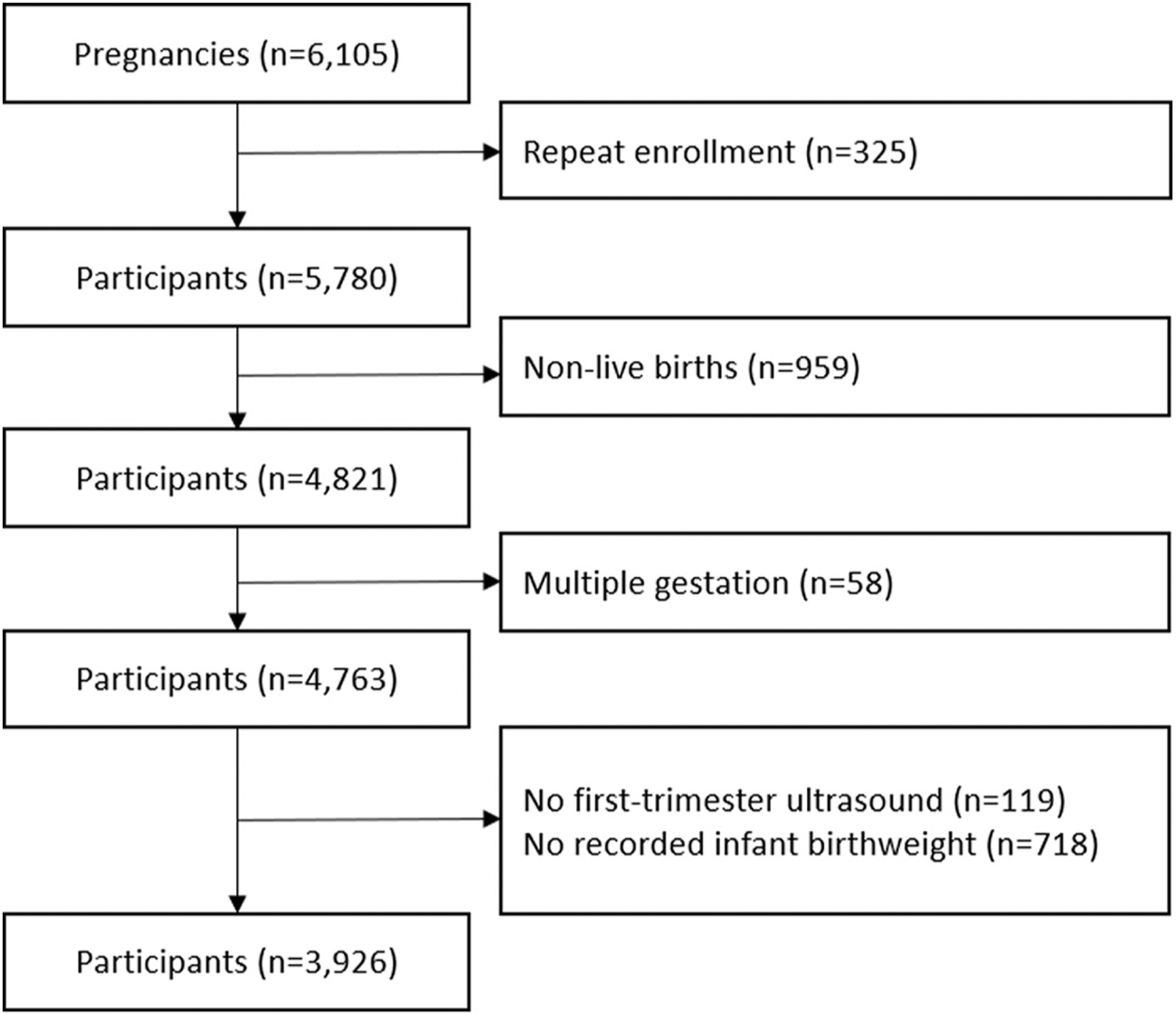
Results: Among 3926 women, 416 had one or more fibroids. Mean infant birthweight and gestational age were similar among women with and without fibroids. When adjusting for race or ethnicity, all associations were attenuated. Overall, women with and without fibroids had infants of similar birthweight (-20 grams, 95% confidence interval [CI] -77, 36) and gestational age (0.4 days, 95% CI -0.9, 1.8). Women with three or more fibroids were more likely to have lighter infants (-201 grams, 95% CI -345, -58).
Conclusions: Race or ethnicity substantially confounds the associations. The clinical belief that uterine fibroids impair fetal growth is supported only by a significant decrease in birthweight for women with multiple fibroids.
Keywords: Birthweight; Confounding factors; Gestational age; Leiomyoma; Pregnancy; Prospective studies.
Copyright © 2020 Elsevier Inc. All rights reserved.
Figures
References
-
- Wilcox AJ. On the importance–and the unimportance–of birthweight. Int J Epidemiol 2001;30(6):1233–41. - PubMed
-
- Martin JA, Hamilton BE, Osterman MJ, Driscoll AK, Drake P. Births: final data for 2016. National Vital Stat Rep 2018;67(1):1–55. - PubMed
-
- United Nations Children’s Fund, World Health Organization. Low birthweight: country, regional and global estimates. New York: UNICEF; 2004.
-
- Rogers LK, Velten M. Maternal inflammation, growth retardation, and preterm birth: insights into adult cardiovascular disease. Life Sci 2011;89(13–14): 417–21. - PubMed
Publication types
MeSH terms
Grants and funding
LinkOut - more resources
Full Text Sources
Medical
