


Loss of Nrf2 promotes alveolar type 2 cell loss in irradiated, fibrotic lung
- PMID: 28870520
- PMCID: PMC5623074
- DOI: 10.1016/j.freeradbiomed.2017.08.026
Loss of Nrf2 promotes alveolar type 2 cell loss in irradiated, fibrotic lung
Abstract
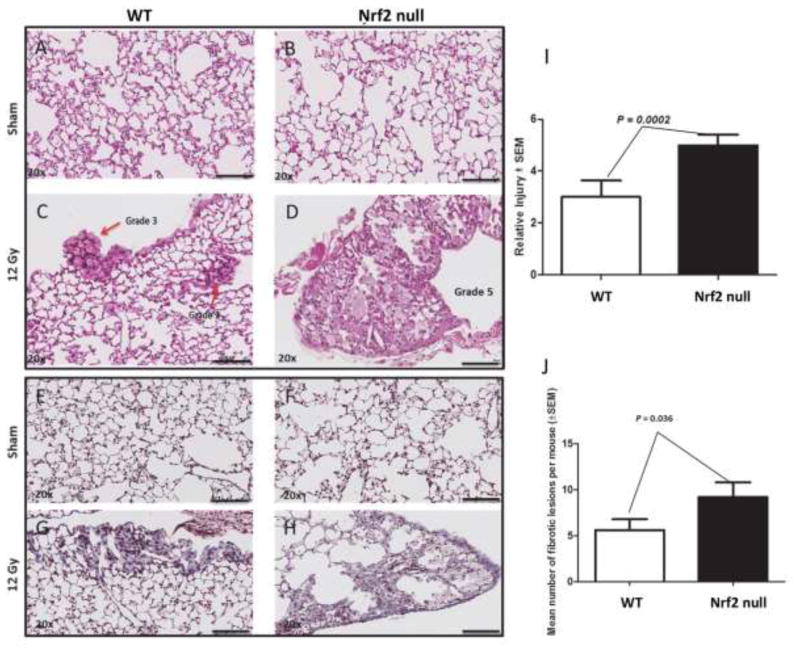
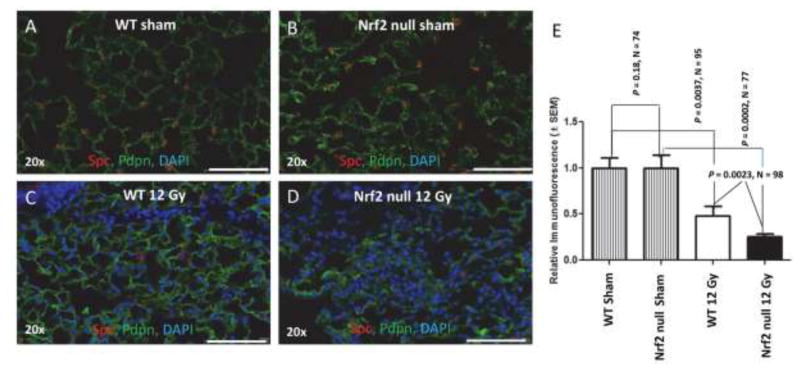
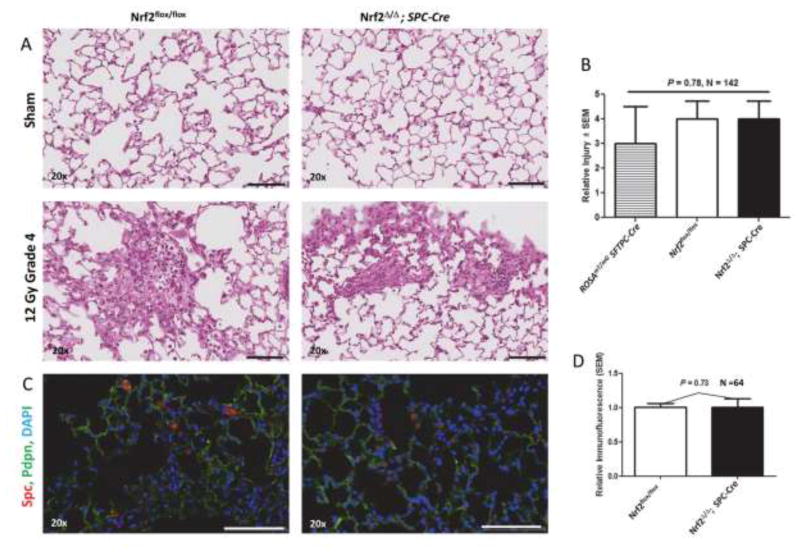
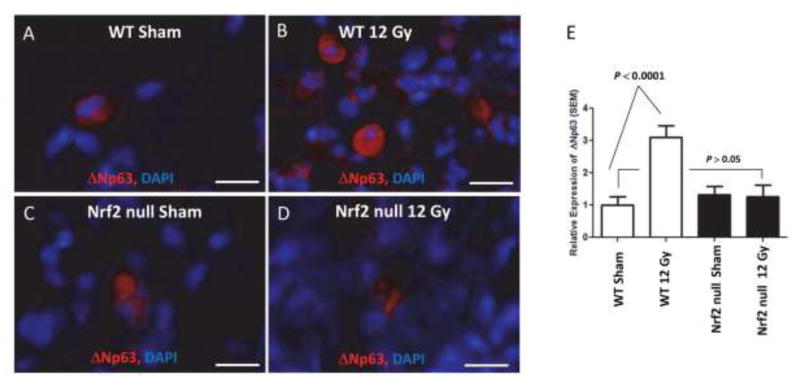
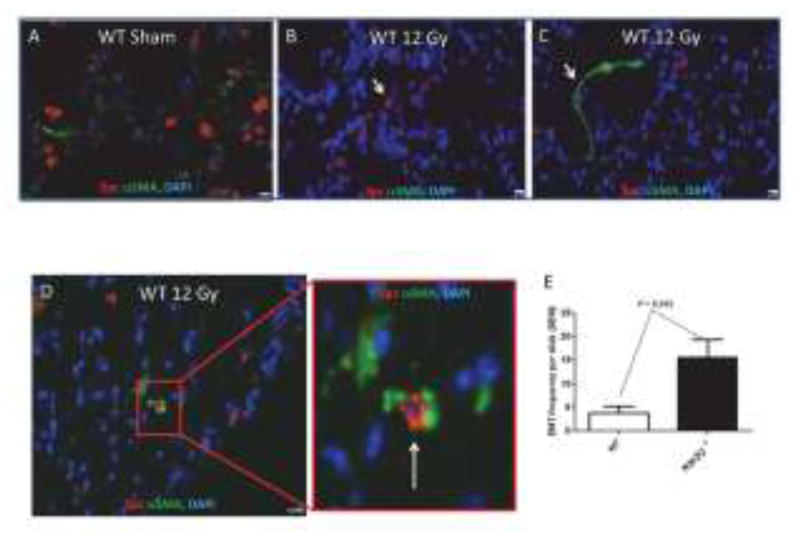
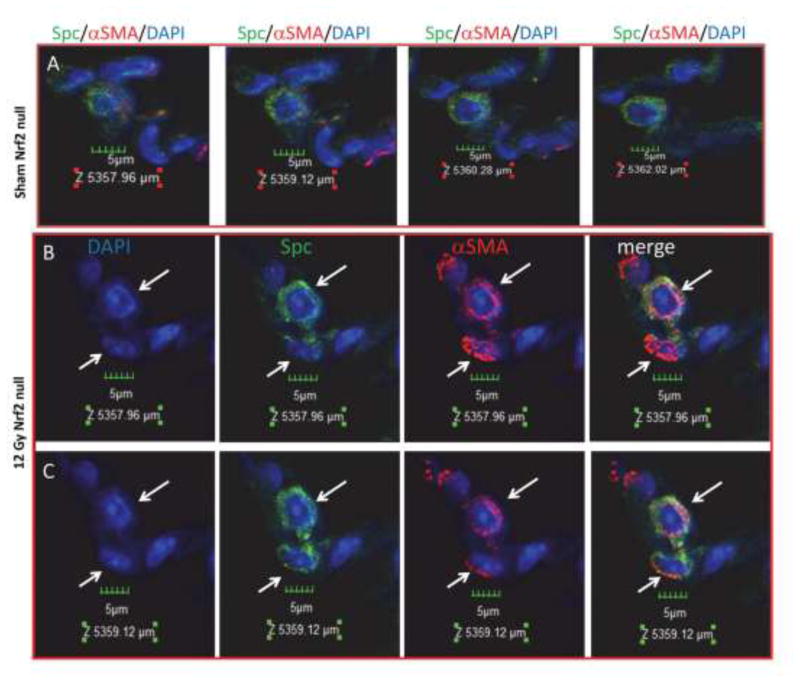
The development of radiation-induced pulmonary fibrosis represents a critical clinical issue limiting delivery of therapeutic doses of radiation to non-small cell lung cancer. Identification of the cell types whose injury initiates a fibrotic response and the underlying biological factors that govern that response are needed for developing strategies that prevent or mitigate fibrosis. C57BL/6 mice (wild type, Nrf2 null, Nrf2flox/flox, and Nrf2Δ/Δ; SPC-Cre) were administered a thoracic dose of 12Gy and allowed to recover for 250 days. Whole slide digital and confocal microscopy imaging of H&E, Masson's trichrome and immunostaining were used to assess tissue remodeling, collagen deposition and cell renewal/mobilization during the regenerative process. Histological assessment of irradiated, fibrotic wild type lung revealed significant loss of alveolar type 2 cells 250 days after irradiation. Type 2 cell loss and the corresponding development of fibrosis were enhanced in the Nrf2 null mouse. Yet, conditional deletion of Nrf2 in alveolar type 2 cells in irradiated lung did not impair type 2 cell survival nor yield an increased fibrotic phenotype. Instead, radiation-induced ΔNp63 stem/progenitor cell mobilization was inhibited in the Nrf2 null mouse while the propensity for radiation-induced myofibroblasts derived from alveolar type 2 cells was magnified. In summary, these results indicate that Nrf2 is an important regulator of irradiated lung's capacity to maintain alveolar type 2 cells, whose injury can initiate a fibrotic phenotype. Loss of Nrf2 inhibits ΔNp63 stem/progenitor mobilization, a key event for reconstitution of injured lung, while promoting a myofibroblast phenotype that is central for fibrosis.
Keywords: Alveolar type 2 cell; Nrf2; Pulmonary fibrosis; Radiation; ΔNp63.
Copyright © 2017 Elsevier Inc. All rights reserved.
Conflict of interest statement
None of the authors has a conflict of interest.
Figures
References
-
- Kong FM, Ao X, Wang L, Lawrence TS. The use of blood biomarkers to predict radiation lung toxicity: a potential strategy to individualize thoracic radiation therapy. Cancer Control. 2008;15:140–150. - PubMed
-
- Malhotra D, Portales-Casamar E, Singh A, Srivastava S, Arenillas D, Happel C, Shyr C, Wakabayashi N, Kensler TW, Wasserman WW, Biswal S. Global mapping of binding sites for Nrf2 identifies novel targets in cell survival response through ChIP-Seq profiling and network analysis. Nucleic acids research. 2010;38:5718–5734. - PMC - PubMed
-
- Hayes JD, Dinkova-Kostova AT. The Nrf2 regulatory network provides an interface between redox and intermediary metabolism. Trends Biochem Sci. 2014;39:199–218. - PubMed
Publication types
MeSH terms
Substances
Grants and funding
- P60 DK020593/DK/NIDDK NIH HHS/United States
- R01 CA214025/CA/NCI NIH HHS/United States
- P30 DK058404/DK/NIDDK NIH HHS/United States
- P30 HD015052/HD/NICHD NIH HHS/United States
- R01 CA152799/CA/NCI NIH HHS/United States
- R25 GM062459/GM/NIGMS NIH HHS/United States
- P30 EY008126/EY/NEI NIH HHS/United States
- P30 DK020593/DK/NIDDK NIH HHS/United States
- P30 CA068485/CA/NCI NIH HHS/United States
- R01 HL112286/HL/NHLBI NIH HHS/United States
- R01 CA168292/CA/NCI NIH HHS/United States
- U24 DK059637/DK/NIDDK NIH HHS/United States
- R01 CA152601/CA/NCI NIH HHS/United States
- T32 CA093240/CA/NCI NIH HHS/United States
LinkOut - more resources
Full Text Sources
Other Literature Sources
Medical
Molecular Biology Databases
