


Real-time clinical note monitoring to detect conditions for rapid follow-up: A case study of clinical trial enrollment in drug-induced torsades de pointes and Stevens-Johnson syndrome
- PMID: 33120413
- PMCID: PMC7810433
- DOI: 10.1093/jamia/ocaa213
Real-time clinical note monitoring to detect conditions for rapid follow-up: A case study of clinical trial enrollment in drug-induced torsades de pointes and Stevens-Johnson syndrome
Abstract
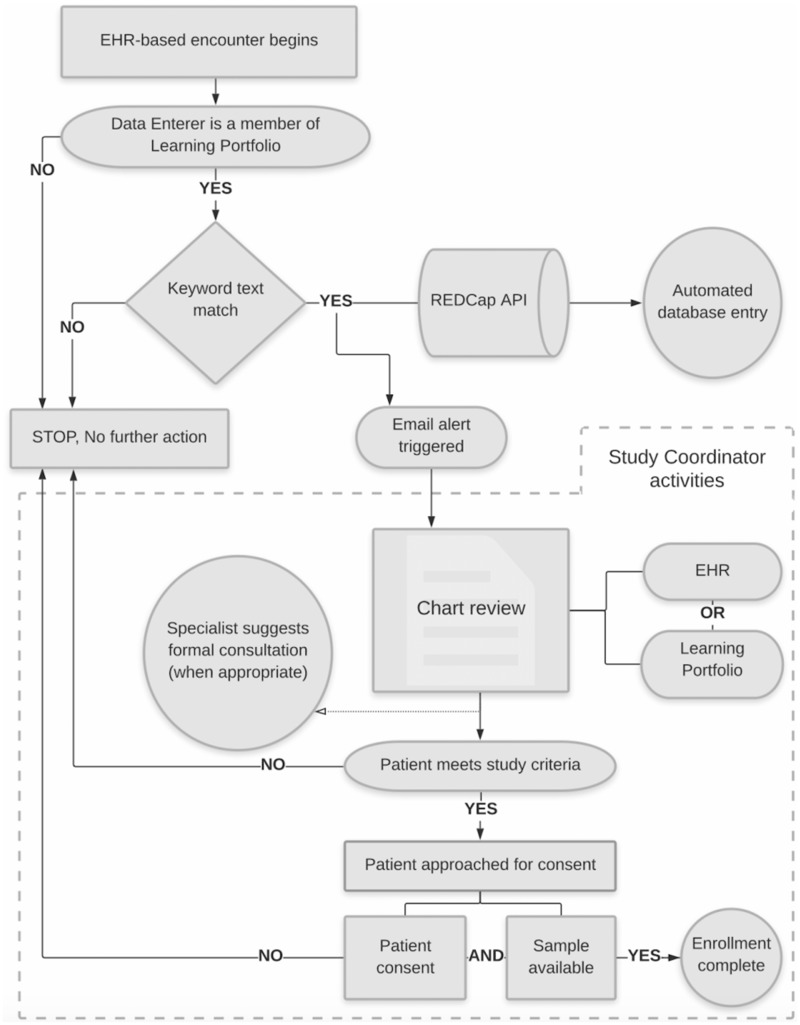
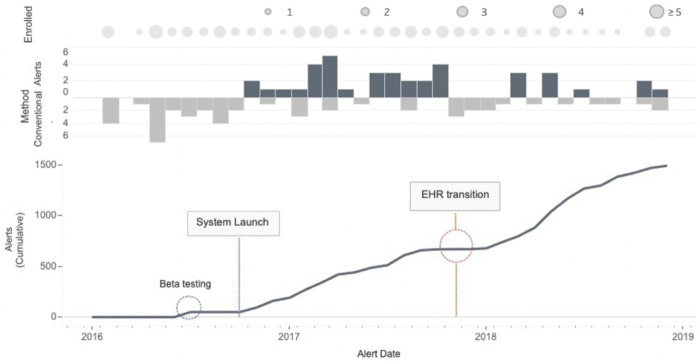
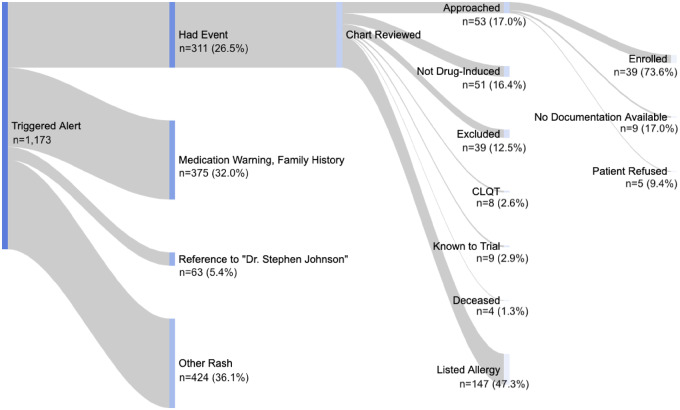
Identifying acute events as they occur is challenging in large hospital systems. Here, we describe an automated method to detect 2 rare adverse drug events (ADEs), drug-induced torsades de pointes and Stevens-Johnson syndrome and toxic epidermal necrolysis, in near real time for participant recruitment into prospective clinical studies. A text processing system searched clinical notes from the electronic health record (EHR) for relevant keywords and alerted study personnel via email of potential patients for chart review or in-person evaluation. Between 2016 and 2018, the automated recruitment system resulted in capture of 138 true cases of drug-induced rare events, improving recall from 43% to 93%. Our focused electronic alert system maintained 2-year enrollment, including across an EHR migration from a bespoke system to Epic. Real-time monitoring of EHR notes may accelerate research for certain conditions less amenable to conventional study recruitment paradigms.
Keywords: data mining; electronic health records; natural language processing; patient selection; precision medicine; rare diseases.
© The Author(s) 2020. Published by Oxford University Press on behalf of the American Medical Informatics Association. All rights reserved. For permissions, please email: journals.permissions@oup.com.
Figures
References
-
- Shen Y, Floratos A, Pirmohamed M, et al. Genome-wide association study of serious blistering skin rash caused by drugs. Pharmacogenomics J 2012; 12 (2): 96–104. - PubMed
Publication types
MeSH terms
Grants and funding
LinkOut - more resources
Full Text Sources
Medical
